
REVIEW · FARO
Small Group Dolphin and Wildlife Watching Tour in Faro
The best part of this Faro dolphin tour is its small scale. With no more than nine people aboard, you get a better view of the animals and more time to ask the marine biologists about what you are seeing. The trip begins among the waterways of Ria Formosa before heading into the open Atlantic, where common and bottlenose dolphins are the main targets.
I like two things here. First, the crew keeps a respectful distance from wildlife and uses sightings to collect research data. Second, the early departure helps you avoid the worst heat and often puts you on the water when marine life is active. The main drawback is the boat itself: this is a fast RIB with jockey-style seating, not a broad, cushioned sightseeing boat.
Key points to know before booking
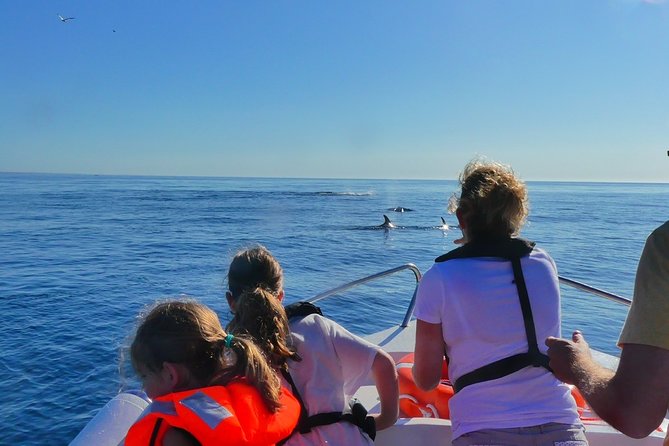
- Small group of nine or fewer: You get a much more personal outing than on a large dolphin-watching vessel.
- Marine biologists on board: Guides explain species, behavior, and conservation while recording useful field data.
- Dolphins are the likeliest prize: Common and bottlenose dolphins are regularly sought, while whales, orcas, turtles, and sunfish are possible extras.
- RIB boat and open sea: The ride can be exciting, but rough water may be hard on your back or stomach.
- Morning departure helps: The 8:30 a.m. trip is cooler and can offer good conditions for wildlife watching.
- Ethical approach: The crew follows wildlife protection rules and avoids forcing animals to approach the boat.
Leaving Faro through Ria Formosa
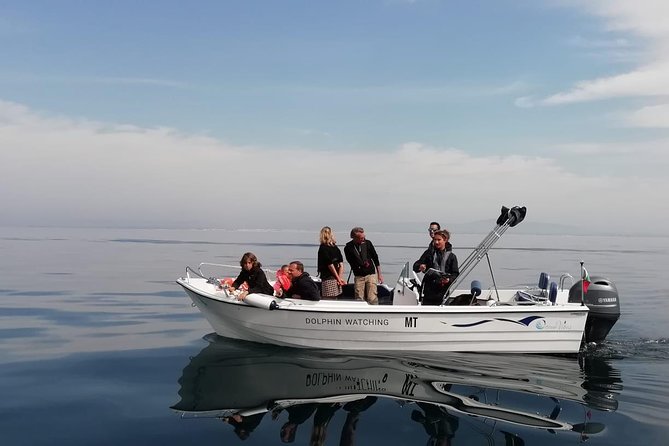
The tour starts at Ginásio Clube Naval on Estrada do Passeio Ribeirinho, close to Faro’s waterfront and public transportation. You return to this same meeting point after roughly two and a half hours.
The opening section is not simply a transfer to the ocean. You cruise through the Ria Formosa Natural Park, a protected coastal wetland with islands, channels, and bird habitat. It gives you a calmer start and lets you see a side of Faro that is easy to miss when you stay in the old town.
The crew then points the boat toward the Atlantic. This change matters. Inside the estuary, the water is more sheltered and the scenery is low and coastal. Outside, the ride becomes faster and more exposed, and the search for cetaceans begins in earnest.
Arrive ready to start on time. One practical nuisance is that the office may be empty if another trip is still out on the water. A sign or notice would make the meeting point clearer, so give yourself a little extra time to find the correct departure area.
More Dolphin and Wildlife Eco Tours in Portugal
- Faro: Dolphin and Wildlife Watching in the Atlantic Ocean
★ 4.8 · 637 reviews - Algarve Dolphin Watching & Marine Life Eco Tour
★ 5.0 · 16 reviews - Dolphin watching and wildlife from Faro
★ 5.0 · 6 reviews
What the RIB ride feels like
This is a small rigid inflatable boat, built for speed and open-water handling rather than lounging. You sit on raised jockey seats, holding your position as the boat moves. Several people have found the ride comfortable, even at higher speed, while others have found the seats stiff and hard on the neck or back.
That difference often comes down to sea conditions and personal tolerance. On a calm day, the boat makes the journey feel lively and lets the crew cover more water. In rough seas, it can feel like a roller coaster. One family reported that both children became sick during a high-wave trip, even though the wildlife watching was successful.
I would not book this if you dislike small boats or have a back problem. The crew can slow down when conditions worsen, and the skipper is described as quick and careful around unexpected waves, but nobody controls the Atlantic. A change in wind can make the return ride much rougher than the outward journey.
Bring a warm layer even on a sunny Algarve morning. Once the RIB picks up speed, the wind makes the ocean feel cold. A jacket or sweatshirt is one of the simplest ways to make the trip more comfortable.
Searching for dolphins in the Atlantic
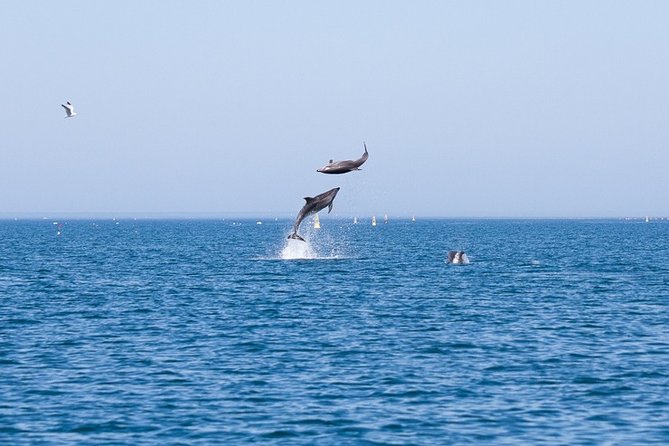
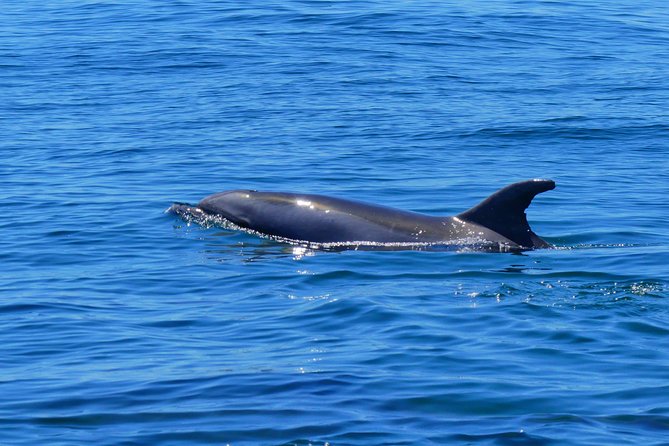
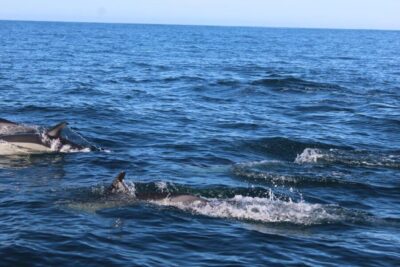
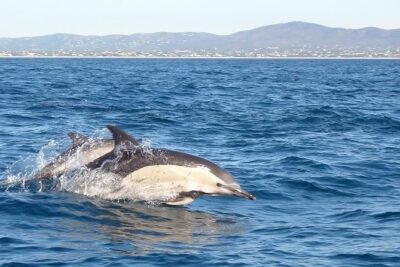
Once outside Ria Formosa, the crew scans the water for fins, splashes, and seabird activity. The main species are common dolphins and bottlenose dolphins. Striped dolphins have also been seen, and porpoises may appear before the boat reaches deeper water.
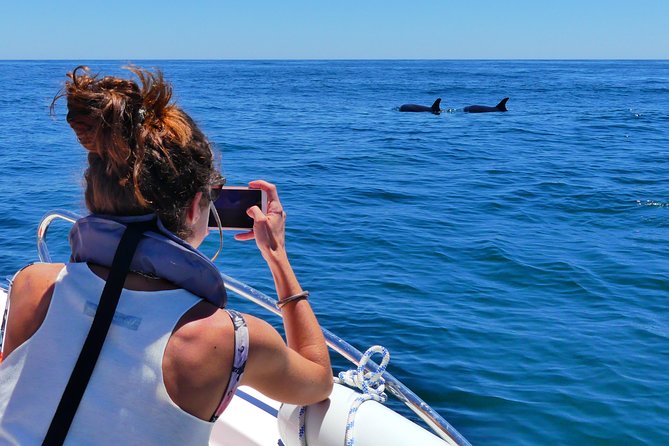
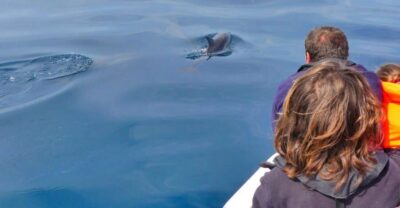
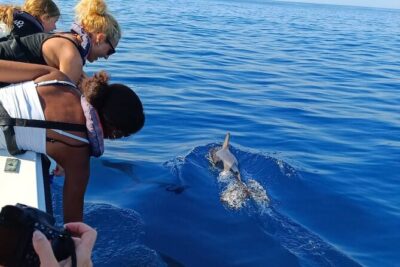
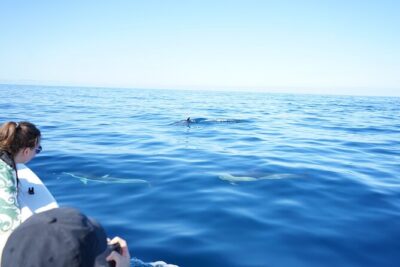
Dolphin sightings are not staged. The animals choose how close to come, and sometimes they stay at a distance. That is part of the value of seeing them in the wild. You may watch a pod travel beside the RIB, pass underneath it, or scatter across the surface. You may also spend time scanning empty water.
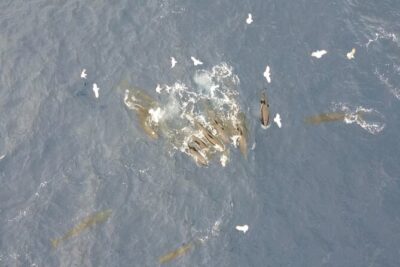
The strongest sightings can be spectacular. Groups of hundreds have been seen, including adults with young. On other departures, the crew has found several pods and spent time observing them without crowding the animals. The small passenger count helps here because you can move your gaze easily and do not have to compete with a packed boat for a view.
The crew also avoids treating dolphins as a performance. They do not try to force an approach or chase a pod at close range. After finding cetaceans, the biologists explain the species and behavior, then collect information for research before moving on.
That approach is worth paying for. You are not just buying a fast ride and a chance at a photograph. You are supporting a company that places wildlife welfare and data collection beside the sightseeing element.
Whales, turtles, sunfish, and seabirds
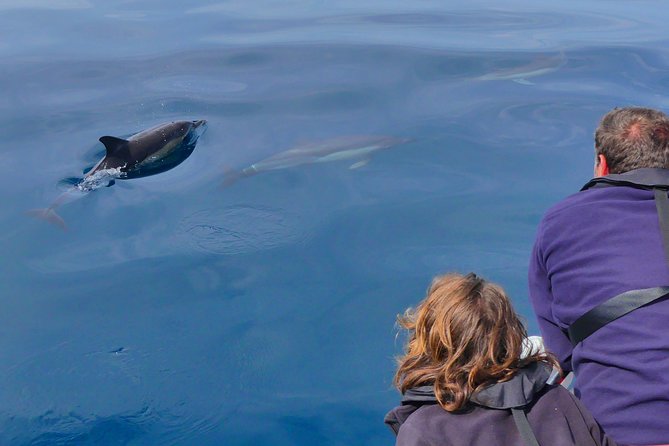
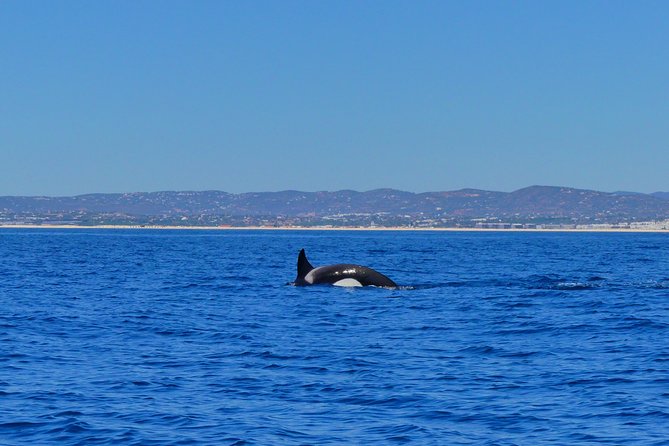
Dolphins are the most realistic goal, but the Atlantic can offer a longer list of sightings. Possible animals include fin whales, minke whales, orcas, ocean sunfish, Atlantic bluefin tuna, sharks, and marine turtles.
These sightings are never guaranteed. A trip may produce dolphins and seabirds but no whale. Another morning might bring a fin whale after the crew has already found a large dolphin pod. Reports from different outings include minke whales, turtles, a basking shark, sunfish, and a Portuguese man-of-war.
Season matters, although the sea does not follow a fixed schedule. Whale sightings are associated especially with spring, while some warmer-water species may also appear in summer and autumn. Orcas are possible but should be treated as a very lucky bonus, not as the reason to book.
Birdlife adds interest during quieter stretches. Keep watch for northern gannets, shearwaters, storm petrels, and ospreys. A good guide will help you notice birds that you might otherwise dismiss as distant specks. For many people, the variety makes the outing worthwhile even when the biggest animals stay away.
More Dolphin and Wildlife Eco Tours in Faro:
- Akaroa Dolphins ~ Harbour Nature Cruise
★ 5.0 · 2,143 reviews - Auckland: Whale and Dolphin Watching Half-Day Eco Cruise
★ 4.5 · 1,072 reviews - Cocoa Beach Dolphin and Wildlife Tour
★ 5.0 · 1,052 reviews - Dolphin and Wildlife Adventure of St. Augustine
★ 5.0 · 864 reviews
Guides who explain what you see
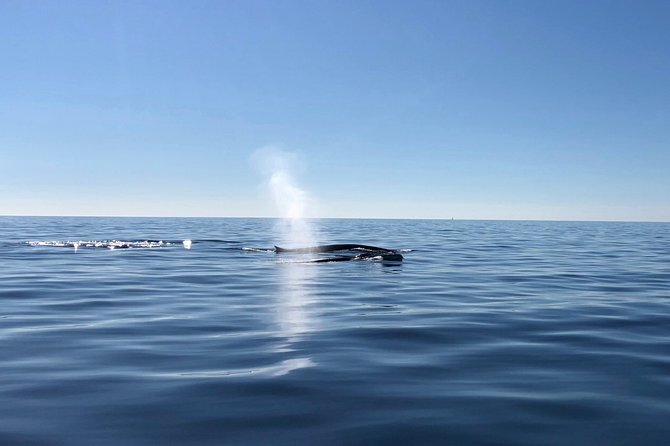
The guiding team includes marine biologists, and several names connected with the outings include Miguel, Pedro, Diogo, and Susanne. Their role is more useful than simply pointing at a fin. They explain the differences between common, bottlenose, and striped dolphins, discuss behavior, and help you understand why the boat keeps a certain distance.
The strongest part of the guiding is the enthusiasm without the circus atmosphere. The crew is excited when a whale or a large pod appears, but the animals remain the focus. Guides have also spoken several languages during a trip, which helps when the group includes people from different countries.
The research element gives the experience more purpose. After a sighting, the team can record information before returning toward Faro. You will not receive a formal science lesson in a classroom setting, but the explanations connect your holiday outing with ongoing observation of marine life.
That makes this a good choice for families with curious children. Young children have enjoyed seeing dolphins, but the boat ride itself can be demanding. A child who becomes carsick or dislikes wind and spray may struggle, especially if the ocean turns rough.
How much value do you get for $66.51?
At $66.51 per person, this is not the cheapest way to get onto the water. The value comes from the small group, the specialist crew, the fast RIB, and the chance to see wildlife without using a large, crowded vessel.
You also get about two and a half hours on the water, with the Faro departure saving you the trouble of arranging transport to another Algarve resort. That central starting point matters if you are staying in Faro and want to keep the rest of your day free.
The price is easier to justify if you care about responsible wildlife watching. A low-cost trip may still find dolphins, but here the crew’s training and research work add something beyond the sighting itself. You are paying for interpretation, a more intimate setting, and an operator that treats the animals as wild creatures rather than attractions.
The price cannot guarantee a spectacular encounter. The sea may be empty, the weather may change, and whales or orcas may remain absent. If you need a guaranteed animal sighting, no responsible ocean tour can offer that. If you value the search and the setting as much as the photograph, the cost is fair.
Who should book this Faro tour?
I would choose this for adults, couples, families with older children, and anyone who wants a wildlife trip with a clear conservation angle. It suits people who enjoy learning as they go and who can accept that nature sets the schedule.
You should be comfortable with:
- A small, open RIB boat
- Raised jockey-style seating
- Wind, spray, and changing sea conditions
- The possibility of no whale or only distant dolphins
- Spending most of the trip outside Faro in search of animals
The outing is less suitable for anyone who strongly dislikes small boats, gets motion sick easily, or needs soft seating and a stable deck. Reviews describe both smooth, comfortable rides and very rough returns, so you should take the sea seriously.
Most people can participate, and service animals are allowed. The activity is offered in English and has a maximum of nine participants. Confirmation arrives when you book.
Timing, weather, and cancellation rules
The morning departure is a smart choice. The 8:30 a.m. outing has been praised for its cooler temperature and calmer feel before the day heats up. It also leaves your afternoon open for Faro’s old town, the market, or a longer meal.
Weather can cancel the trip. If that happens, you are offered another date or a full refund. The same applies if the minimum number of participants is not reached. If you need to cancel, do so at least 24 hours before the start time for a full refund. Changes or cancellations inside that window are not accepted.
The timing of the return can shift if the sea becomes rough. Slowing down for safety may extend the outing, which is better than racing through difficult waves, but it can make the trip longer than expected. Avoid scheduling a tight airport transfer or another fixed activity immediately afterward.
My verdict on Ocean Vibes Algarve
I like this tour because it puts the wildlife first without taking away the excitement of a fast boat ride. The marine biologists, small group, and careful viewing rules give it more substance than a basic coastal cruise.
Book it if you want a real chance to see dolphins around Faro and you are comfortable with an open boat. Choose the early departure, bring a warm layer, and keep your expectations focused on wild animals rather than guaranteed whales.
Skip it if raised seating, rough water, or motion sickness will ruin your day. For everyone else, this is a strong-value wildlife outing, especially if seeing dolphins ethically matters as much as seeing them at close range.
FAQ
Where does the dolphin tour start and finish?
It starts at Ginásio Clube Naval, Estrada do Passeio Ribeirinho 58, 8000-541 Faro, Portugal. The tour ends back at the same meeting point.
How long does the experience last?
The trip lasts approximately two hours and 30 minutes.
How many people can join the boat?
The maximum group size is nine participants.
Is the tour offered in English?
Yes. The experience is offered in English.
What animals might I see?
Possible sightings include common and bottlenose dolphins, striped dolphins, porpoises, whales, orcas, northern gannets, shearwaters, storm petrels, sunfish, bluefin tuna, sharks, and marine turtles. Sightings depend on nature and are not guaranteed.
Are marine biologists on board?
Yes. Marine biologists provide information about the animals and collect data for research after cetacean sightings.
Is the boat comfortable in rough weather?
The RIB can feel comfortable at speed in some conditions, but it has jockey-style seating and may be hard on your back or neck in rough seas. Children or adults prone to seasickness may find high waves difficult.
Can I cancel for a full refund?
Yes, if you cancel at least 24 hours before the experience start time. If weather causes the operator to cancel, you are offered another date or a full refund.
Just added around Faro
- Sunset Dolphin Watching with Marine Biologists★ 5.0 · 25 reviews
- FARO Fantastic Dolphin Observation Tour and Marine Life★ 5.0 · 8 reviews
- Dolphin watching and wildlife from Faro★ 5.0 · 6 reviews
- Dolphin Watching from Faro★ 4.5 · 22 reviews
- Observing Dolphins in Faro★ 5.0 · 21 reviews
- Dolphin Watching from Fuzeta★ 4.5 · 31 reviews
- Algarve Dolphin Watching & Marine Life Eco Tour★ 5.0 · 16 reviews
- Faro: Funtastic Dolphin Watching Boat Tour★ 4.9 · 15 reviews
Faro Dolphin Tours, compared.
Faro: Dolphin and Wildlife Watching in the Atlantic Ocean
Read our review →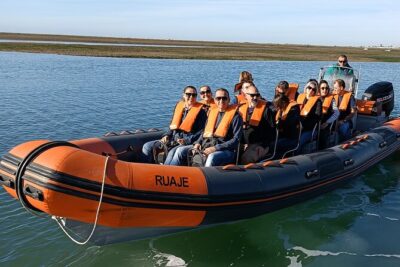
Browse the lists this tour appears in