
REVIEW · WHALE & DOLPHIN WATCHING TOURS
Durban: Durban: Whale and Dolphin Watching Boat Tour
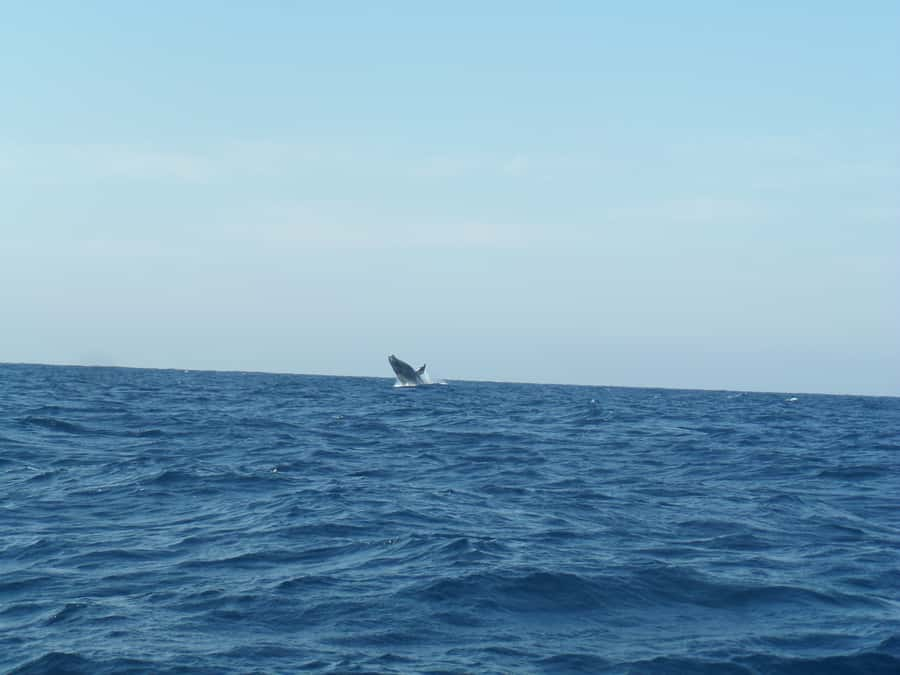
Durban’s best whale encounters happen far from the harbor, where humpback whales travel through the Indian Ocean on their yearly migration. From June to November, you may see breaches, tail slaps, mothers with calves, and whales surfacing close enough to hear them breathe when the sea is calm.
I like the small 11-passenger boat, which gives you a better view than a large sightseeing vessel. I also like the guides’ respect for the animals, especially skipper Bennie, whose enthusiasm and careful positioning have helped create memorable sightings. The main drawback is simple: wildlife is wild. Summer trips may bring dolphins and other sea life, but whales have moved on, and rough weather can limit the route.
Key points to know before you book
- Whales pass Durban from May to November, with the strongest whale-watching season falling in the cooler months.
- The 11-passenger boat keeps the outing personal, although another vessel may be used if weather, maintenance, or passenger numbers require it.
- Dolphins can appear all year, while turtles, seabirds, fish, manta rays, orcas, and sharks are occasional possibilities rather than promises.
- Guide Bennie is a memorable part of the experience, offering facts, enthusiasm, and photo or video help when conditions allow.
- Calm, windless weather matters, both for comfort and for spotting animals at the surface.
- The tour costs $102 per person for two hours, a fair price if close whale sightings matter to you, but a gamble outside whale season.
Setting out from Wilson’s Wharf
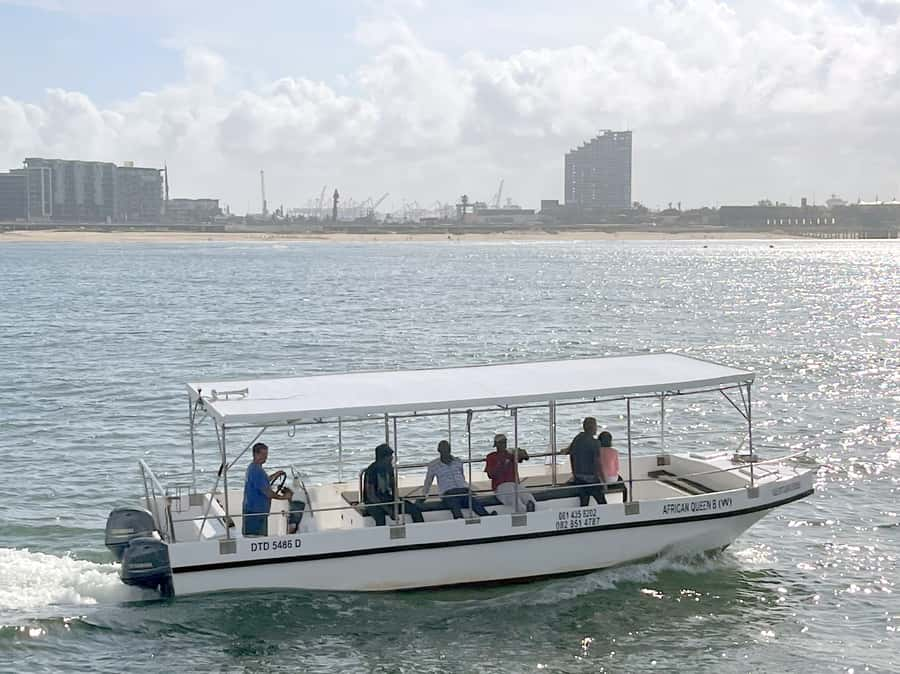
You meet at the Isle of Capri Cruises office at Wilson’s Wharf Marina, beside the Casadena Spur end of the complex. Bring your ticket to the office or kiosk 30 minutes before departure. That early arrival matters because the boat needs to load on time, and the route depends on sea conditions.
The marina is the practical starting point, not the main attraction. Once aboard, you settle into front-facing seats while the skipper and crew work behind you. This arrangement gives you a clear view ahead, useful when the boat slows near dolphins or whales.
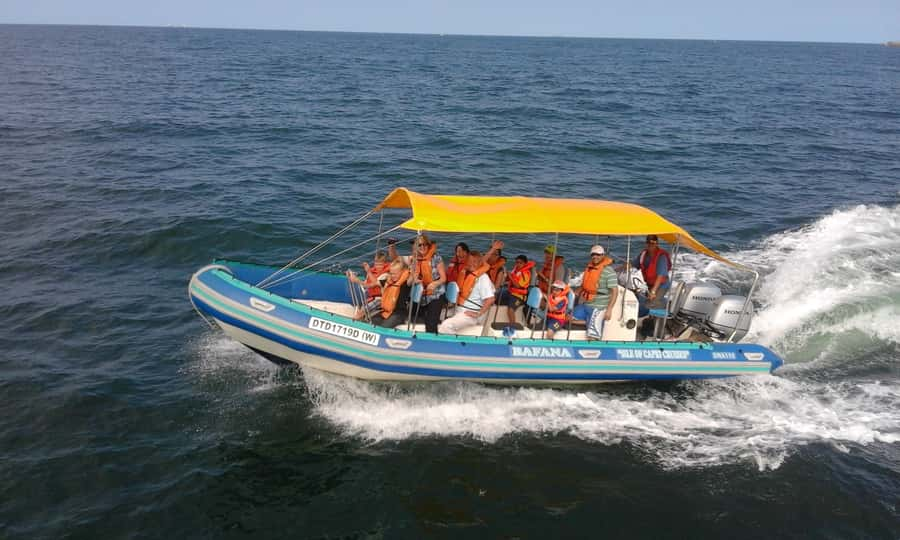
The vessel usually carries 11 passengers, creating a much more focused outing than a big harbor cruise. You are not packed into a crowd, and the guide can explain what you are seeing as the boat moves toward the Mozambican Current. Still, the operator does not promise one specific boat for every departure. A pool of vessels covers changing weather, seasonal demand, and maintenance.
That sounds less tidy than having a named boat, but it does not change the basic experience. You still get an open-ocean trip with front-facing seats, a skipper, and a qualified guide. If you care about the exact vessel, ask at the office before departure. The important point is that the boat may vary, not that the wildlife experience changes.
More Whale and Dolphin Watching Tours in the world:
- Tenerife: Eco-Yacht Whale and Dolphin Watching and Swimming
★ 4.7 · 15,619 reviews - Los Cristianos Respectful No-Chase Whale and Dolphin Safari
★ 4.6 · 12,782 reviews - From Funchal: Ecological Catamaran Dolphin Whale Watching
★ 4.5 · 8,204 reviews
Two hours on the Indian Ocean
The tour lasts about two hours, so this is easy to fit into a Durban sightseeing day. It is also long enough to move beyond the immediate harbor area and search for animals in open water.
The ride can feel lively. You are not on a calm canal or sheltered bay. The boat heads into the Indian Ocean, and the route may change with wind, swell, and visibility. People with back problems, mobility impairments, or pregnancy should not book this trip. It is also not recommended for toddlers, and the activity is not wheelchair-friendly.
Wear practical clothes and bring a hat, sunscreen, water, and a scarf. A camera is worth carrying, but keep it ready rather than buried in a bag. Wildlife appearances can last only a few seconds. Weather-appropriate clothing matters too, since the boat can feel cooler and wetter than the marina.
Swimming is not allowed. This is a watching trip, not an animal encounter in the water. That rule protects both you and the marine life, and it keeps the outing focused on observing animals in their own surroundings.
The winter whale migration
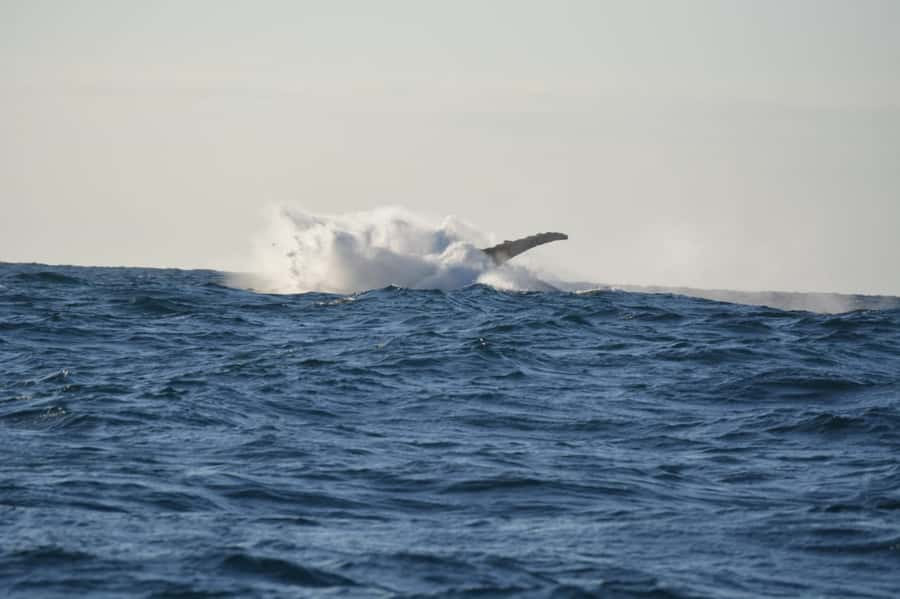
The main reason to book is the humpback migration. Whales pass Durban annually from May to November, traveling between the Southern Oceans and warmer tropical waters for mating and giving birth. The information for this trip highlights June through November as the key period for watching them.
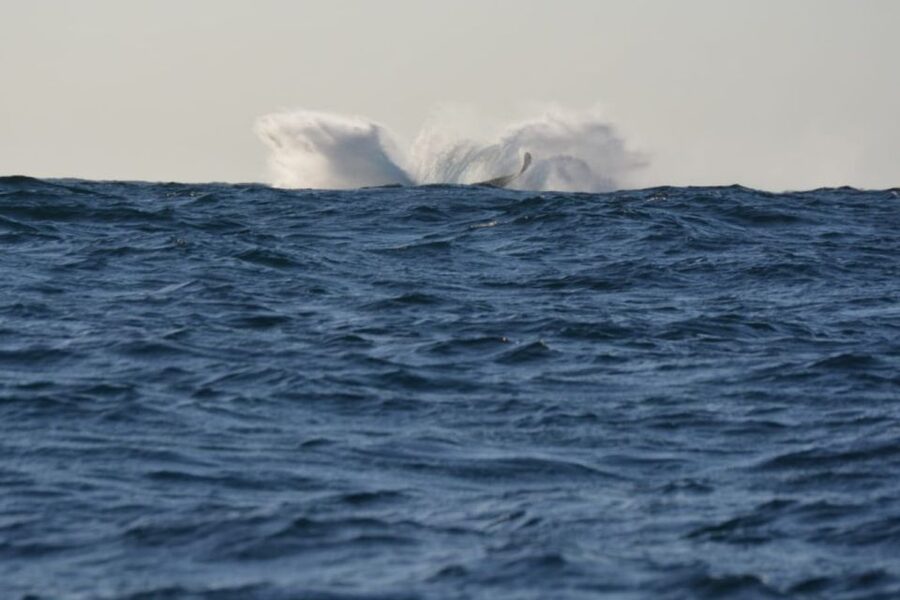
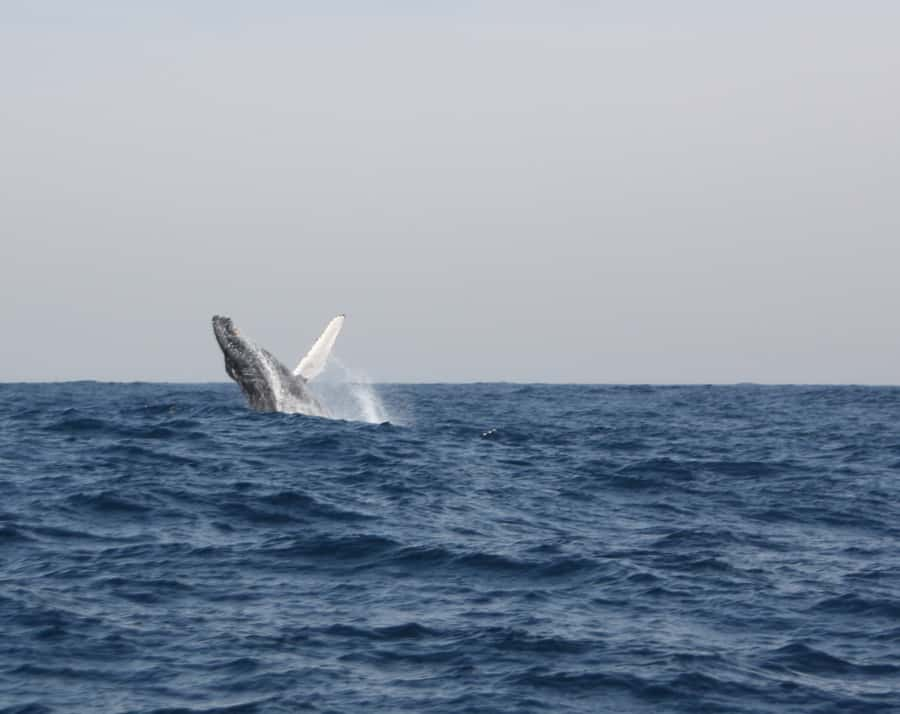
Humpback whales can reach about 15 meters, or 49 feet, and weigh around 30 tons. Size alone does not prepare you for a full breach. The whale may rise almost vertically, clear the water, and crash down with a force you feel as much as see. Tail slaps and partial breaches are more common possibilities, but even a quiet surfacing can be striking.
You might see a single whale, a pair, or a mother and calf. Younger whales may play near adults, making short jumps or rolling at the surface. The boat may stay with a group for a while when the animals’ behavior allows it. One especially good sighting can fill an hour, as happened on a late-season trip when seven whales were found and three produced repeated breaches and tail slaps.
Do not treat those displays as part of the schedule. The boat goes looking, but the whales set the timetable. A late-season departure can still be excellent, yet there is no guarantee that October or November will produce more action than an earlier date. A windless day with small swells gives you the best chance of comfortable viewing, but it cannot order a whale to perform.
Dolphins, turtles, birds, and the occasional surprise
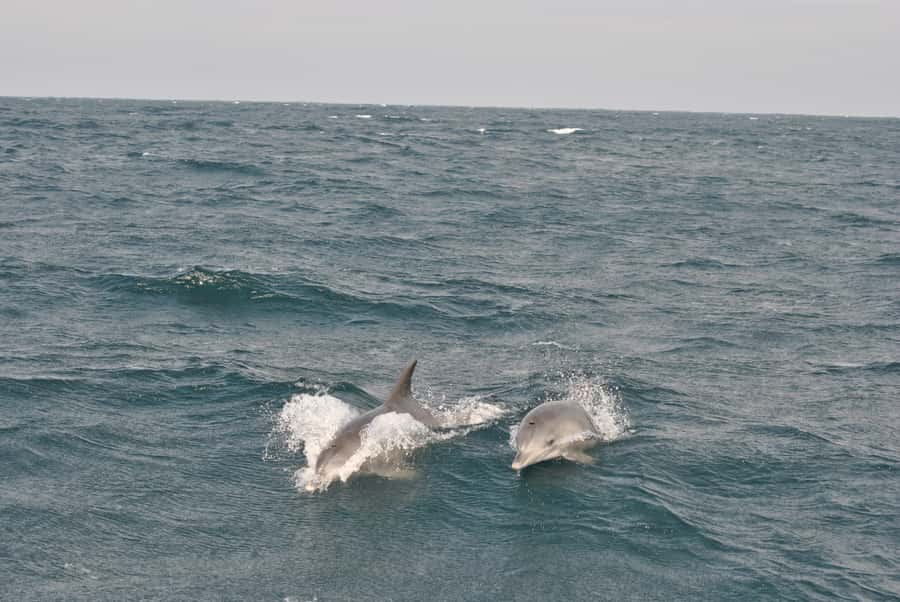
Dolphins are the main alternative when whales are absent. They can be seen in the area all year, and summer trips focus on dolphin watching because the whales migrate elsewhere. Dolphins may move alongside the boat, play in the swells, or appear briefly before vanishing into the open sea.
That seasonal distinction is important when choosing your date. If your priority is humpbacks, plan between May and November, with June through November presented as the core period. If you visit in summer, do not assume the cruise is pointless. You are booking a different kind of wildlife trip, with dolphins and other marine life as the main targets.
Turtles may rise from the depths to feed at the surface. You may also see fish and seabirds throughout the trip. Manta rays, orcas, and large sharks are listed as occasional sightings. They are exciting possibilities, not standard features, so keep your expectations broad.
This variety gives the two-hour cruise more value. Even when whales do not appear, the open ocean remains active. But I would not book solely for the chance of an orca or manta ray. Those animals are a bonus on top of the more realistic targets, whales in season and dolphins year-round.
A few more dolphin trips around the world worth a look
- Albufeira: 2.5-Hour Benagil Caves & Dolphin Watching
★ 4.6 · 10,710 reviews - Albufeira: Benagil Caves & Dolphin Watching Speed Boat Tour
★ 4.6 · 6,316 reviews - Benalmadena: Dolphin Watching Boat Tour
★ 4.4 · 5,786 reviews - Funchal: Dolphin and Whale Watching Catamaran Cruise
★ 4.5 · 5,697 reviews
A guide who adds more than directions
The guide makes a large difference on a wildlife trip. A good guide spots animals before you do, explains what they are doing, and knows how to position the boat without pressing too close.
Bennie is the guide name most closely linked with the strongest outings. His appeal is not just a list of facts. He brings visible enthusiasm to the work, even after years at sea, and helps keep the mood lively during the waiting periods. He has also shared videos with passengers after trips, a useful extra when your own camera misses a breach.
His approach to the animals matters more than showmanship. On successful outings, he worked to give people a clear view while respecting the whales’ behavior. That balance is exactly what you want. The best wildlife guide does not chase an animal for a photograph or force it to remain near the boat.
The listed live guide languages are English and Afrikaans. The included services also mention an English guide and a Zulu guide, so ask the operator if language support is important to you. The core information confirms that guidance and interpretation are part of the trip, rather than leaving you to watch in silence.
What the best sightings can look like
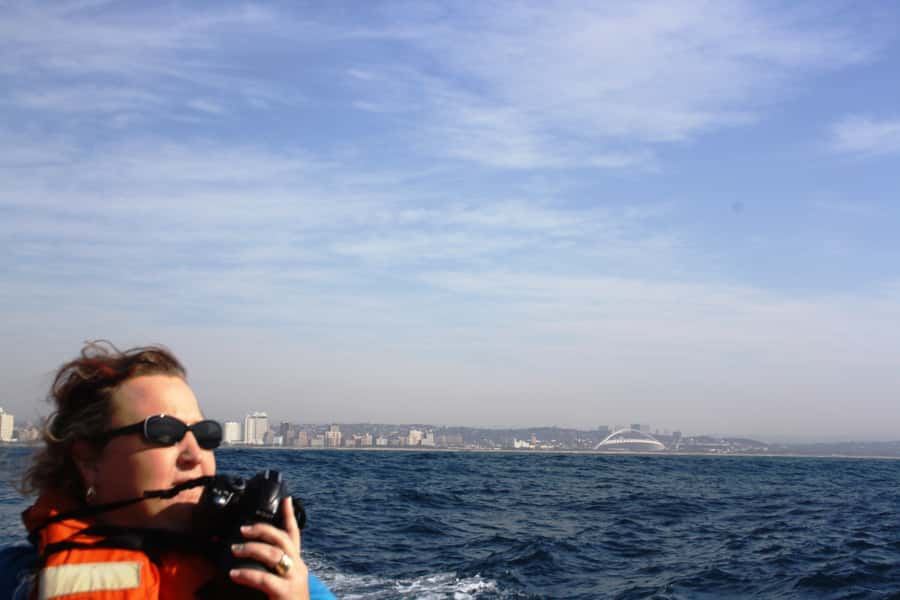
A strong outing may begin with a slow search, followed by a sudden call from the skipper. You look across the water, often at a small dark shape, then wait for the whale to surface again. That pause is part of the experience. Humpbacks do not remain visible like animals in an aquarium.
When the sea is calm, you may hear a whale breathe before you see it. That small sound can be more moving than a distant photograph because it reminds you that the animal is right there, moving through its own environment.
Close sightings can include mother and calf pairs, male and female pairs, and several whales in the same area. The boat may remain with three whales while they breach and slap their tails. At other times, you may see a whale only once and spend the rest of the trip searching.
Your photos will be unpredictable. A phone or camera is fine, but you will need patience and quick reactions. Keep watching with your own eyes. A perfect image is nice, but staring at a screen while a 15-meter whale surfaces beside the boat is a poor trade.
The price and the question of value
At $102 per person, this is not a casual harbor ride. You are paying for a small boat, open-ocean access, a guide, and the chance to see large migratory animals in their natural habitat. If you are visiting Durban during whale season and close sightings are high on your list, the price can feel justified after one good encounter.
The value is less certain outside the whale season. Summer visitors receive dolphin watching and the chance to spot turtles, birds, fish, or other marine life, but the main attraction has changed. If you are mainly interested in humpbacks, spend the money during the migration months rather than expecting dolphins to make up for their absence.
The small group is part of the calculation. An 11-passenger boat offers a more personal feel and makes it easier to face the water from the front. The operator may use a different available vessel, so do not pay extra in your mind for a guaranteed named boat.
Food and drinks are not included. Bring water and eat before or after the trip. The two-hour length keeps the cost and time commitment manageable, especially if you have only a short stay in Durban.
Timing, weather, and comfort
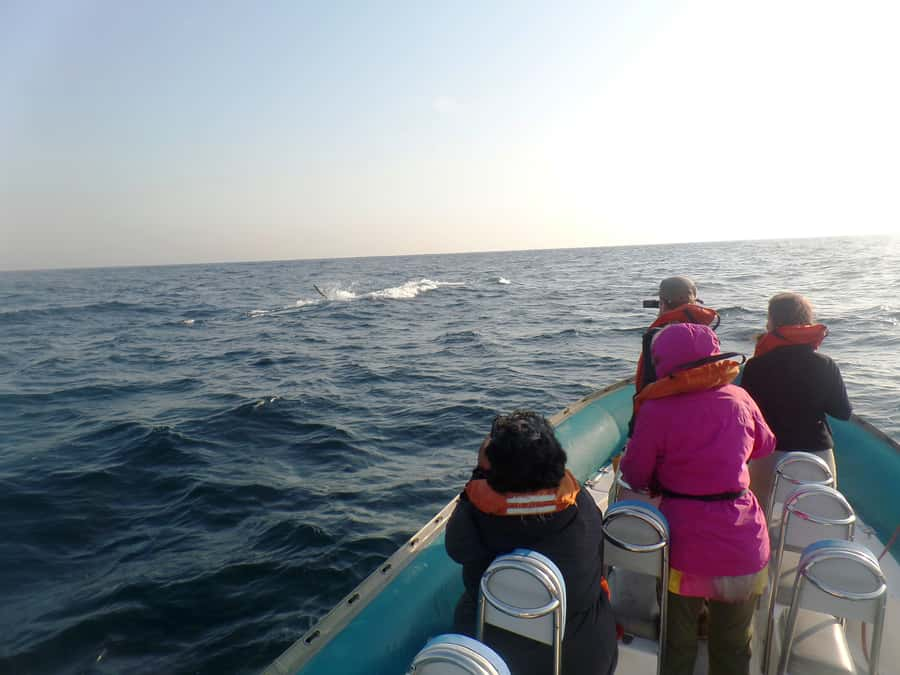
A calm day is your friend. Wind and swell affect the route, the comfort of the boat, and how easy it is to spot a whale’s back or blow. The cruise route is subject to weather conditions, so the exact distance and viewing area cannot be fixed in advance.
I would check the forecast before choosing a departure time if you have flexibility. Windless conditions with small swells offer the clearest chance of hearing whales and keeping your camera steady. Bad conditions do not necessarily mean a canceled outing, but they can make the ride harder and reduce the quality of sightings.
This is not a good choice if you are sensitive to motion, have back trouble, or need step-free access. The operator specifically lists pregnancy, mobility impairments, and back problems as reasons the activity may not suit you. Toddlers are also discouraged, with parental responsibility noted.
Bring sunscreen even in cool weather. Add a scarf and a warm layer, since the ride can feel brisk once the boat leaves the marina. Comfortable clothes are more useful than anything formal, and a hat should fit securely.
Booking details that matter
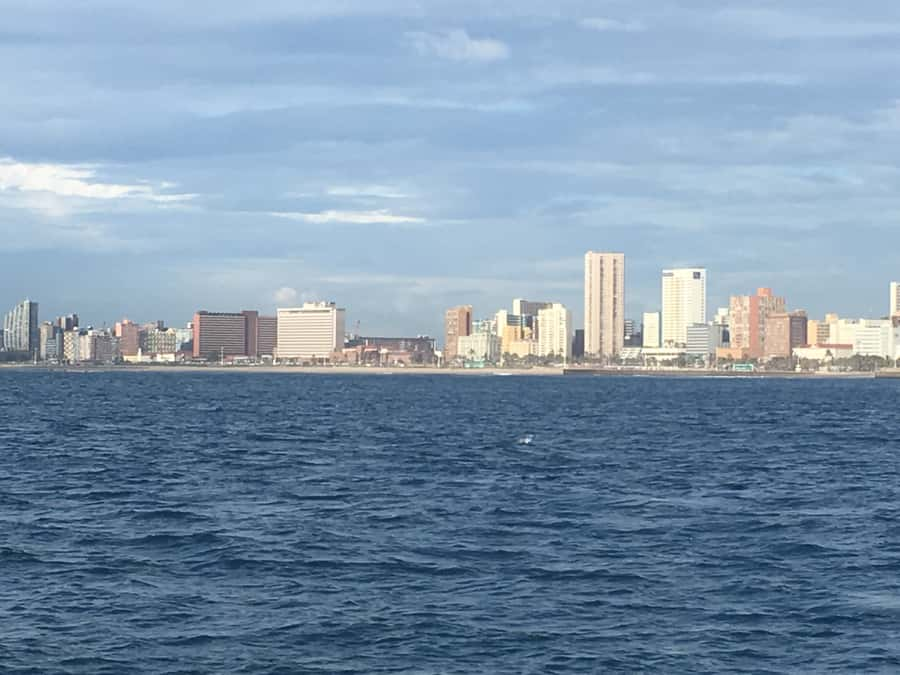
Show your ticket at the Isle of Capri Cruises office 30 minutes before departure. Starting times vary, so check availability for your date. The operator allows cancellation up to 24 hours in advance for a full refund, and you can reserve now and pay later.
The vessel may be assigned from a group of available boats. Maintenance, weather, and passenger numbers all affect that choice. You may not receive the exact boat you imagined from a photograph, but the promised format remains a two-hour whale and dolphin cruise with open-ocean sailing and a guide.
There are two boats that can leave in overlapping time slots. That helps the operator handle demand, but it also means the total number of people at the marina may be larger than the capacity of one boat. Your own vessel is still described as an 11-passenger boat.
Who should book this Durban cruise?
I would choose this outing if you enjoy wildlife without needing a guaranteed checklist. It suits people who can handle open water, want a small boat, and are happy to wait for a natural moment rather than a staged show.
It is especially appealing during the whale season, from May through November, with June to November the clearest focus for humpback sightings. Families with older children may enjoy it, provided everyone is comfortable on a moving boat. Photographers should bring equipment, but patience matters more than expensive gear.
I would think twice if you need a fully predictable itinerary, dislike boat movement, or are visiting in summer only to see whales. The cruise may still produce dolphins and other marine life, but a whale sighting is seasonal and never guaranteed.
Should you book it?
Book this tour if you are in Durban during whale season and the thought of seeing humpbacks breach in open water is worth a calculated gamble. The strongest reasons are the small boat, the experienced whale-watching format, and guides such as Bennie, who combine facts with real enthusiasm and careful animal viewing.
Book it in summer only if dolphins and general marine life sound just as appealing. Skip it if you need accessible boarding, cannot manage ocean motion, or want a guaranteed wildlife performance. For the right conditions and the right expectations, $102 buys a rare chance to watch some of the ocean’s largest animals behaving freely, not behind glass.
FAQ
How long is the whale and dolphin boat tour?
The cruise lasts two hours, including open-ocean sailing from Wilson’s Wharf.
When is the best time to see whales?
Whales pass Durban from May to November each year. The main whale-watching period is described as the winter months, especially June through November.
Can I see dolphins outside whale season?
Yes. Dolphins can be seen all year, and summer trips focus on dolphins and other marine life because the whales migrate elsewhere.
Where do I meet the boat?
Meet at the Isle of Capri Cruises office at Wilson’s Wharf Marina, next to the Casadena Spur end of the complex. Present your ticket 30 minutes before departure.
Is the tour suitable for wheelchair users or people with back problems?
No. The activity is not wheelchair-friendly and is not suitable for people with mobility impairments or back problems. It is also not recommended for pregnant women or toddlers.
What should I bring?
Bring a hat, camera, sunscreen, water, comfortable clothes, a scarf, and weather-appropriate clothing. Food and drinks are not included, and swimming with the animals is not permitted.
Just added around the world
- Zanzibar: Mnemba Island Snorkeling & Dolphin★ 5.0 · 4 reviews
- Zanzibar Swimming with Dolphins and snorkeling★ 4.5 · 5 reviews
- Zanzibar: Mnemba atoll, dolphin & snorkelling tour★ 5.0 · 2 reviews
- Zanzibar: Mnemba Island Snorkeling and Dolphin Tour★ 4.4 · 28 reviews
- Zanzibar: Mnemba Island Snorkeling and Dolphin Tour★ 4.1 · 9 reviews
- X Plorer – Caves (Benagil) & Dolphins Cruise★ 4.5 · 116 reviews
- Zanzibar dolphins+ snokling at mnemba with turles swimming★ 4.3 · 9 reviews
- Zanzibar: Mnemba Dolphins Tour with Snorkeling and Sandbank★ 4.0 · 3 reviews
Whale & Dolphin Watching Tours, compared.
Tenerife: Eco-Yacht Whale and Dolphin Watching and Swimming
Read our review →
Los Cristianos Respectful No-Chase Whale and Dolphin Safari
Read our review →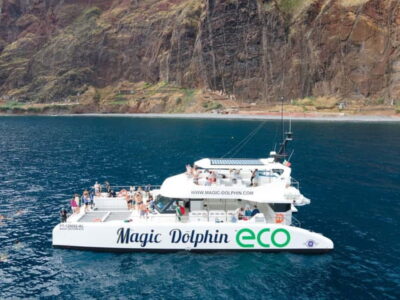
From Funchal: Ecological Catamaran Dolphin Whale Watching
Read our review →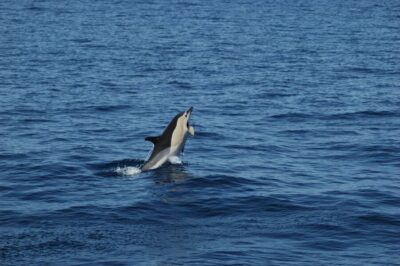
Funchal: Dolphin and Whale Watching Catamaran Cruise
Read our review →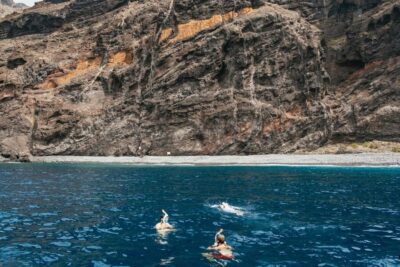
Costa Adeje: Whale & Dolphin Eco-Cruise with Snacks & Drinks
Read our review →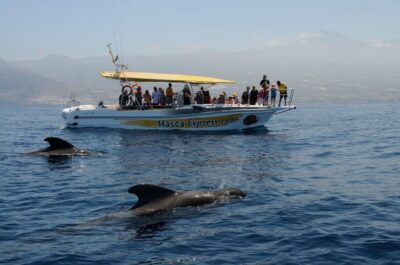
Los Gigantes: Dolphin & Whale Watching Cruise with Swim Stop
Read our review →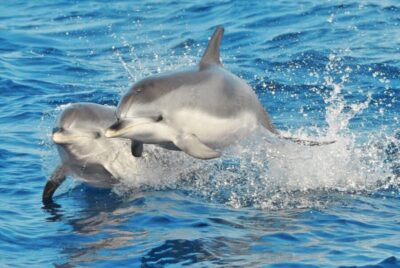
Morro Jable: Dolphin & Whale Watching Cruise, Drinks & Swim
Read our review →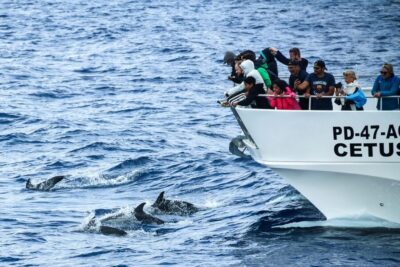
From Ponta Delgada: Whale and Dolphin Watching Trip
Read our review →Browse the lists this tour appears in