
REVIEW · FARO
Faro: Dolphin and Wildlife Watching in the Atlantic Ocean
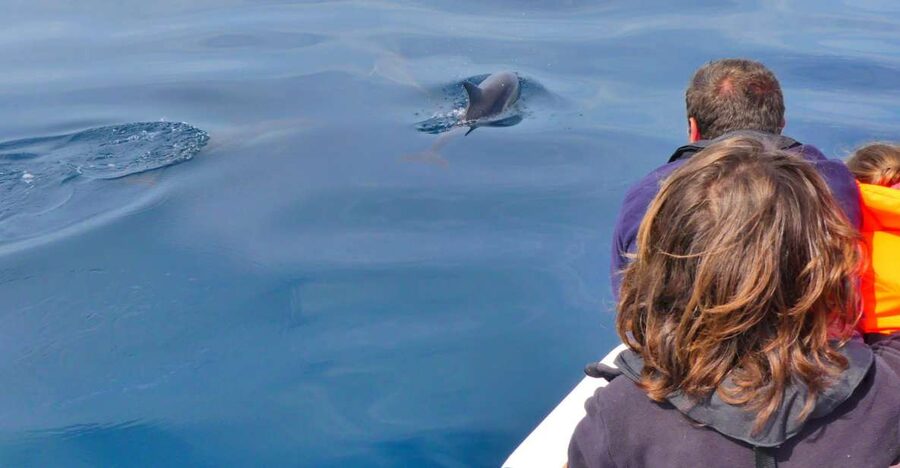
Wild dolphins are the main event here, but the trip is really a lesson in reading the ocean. From Faro, you cross the Ria Formosa to the Atlantic with marine biologists scanning for fins, seabirds, and movement on the water. Miguel, Pedro, Ines, Alfredo, and other guides have led trips praised for clear explanations and patient searching.
I like the small-boat feel and the serious respect shown toward the animals. I also like that the guides explain how dolphin data is collected, rather than simply pointing and shouting when a fin appears. The tradeoff is simple: wildlife is free to leave, and the fast boat can be wet, windy, and rough on your back.
Key points to know before booking
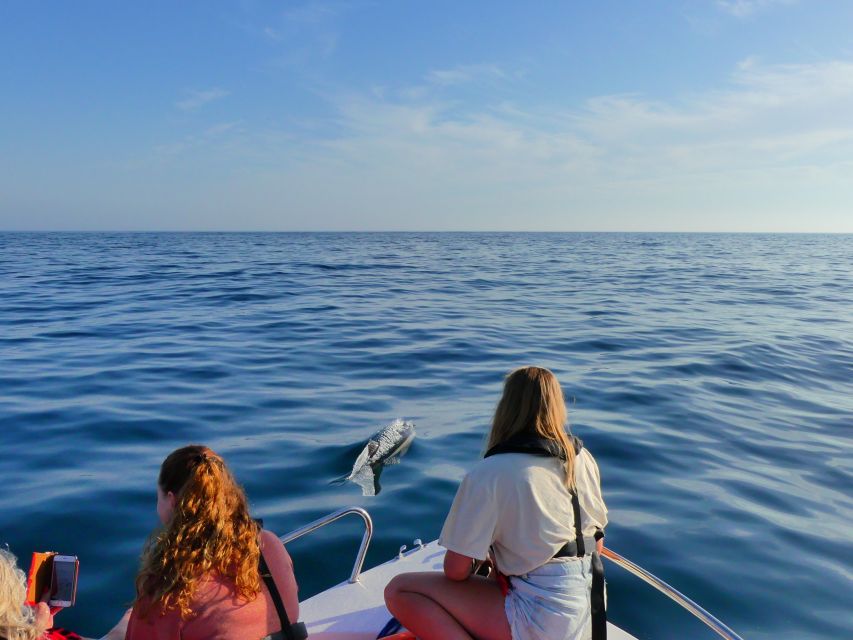
- Dolphins live here year-round, while the best stated whale season is February through May.
- The Atlantic crossing can be bumpy, with waves, wind, and firm boat seats.
- You get up to 30 minutes with a dolphin group, helping limit pressure on the animals.
- The guides are marine biologists, and tours run in English, French, Portuguese, and Spanish.
- Orcas, whales, sharks, turtles, and sunfish are possible sightings, not promises.
- The trip costs $76 per person and lasts about 2.5 hours, with no hotel pickup included.
From Faro Marina to the Atlantic
The meeting point is easy to identify once you know what to look for: the Ocean Vibes Algarve office, in a shared store marked with an Ocean Emotions banner at Faro harbour or marina. There is no hotel pickup, so allow time to reach the marina and find the office before departure.
The first part of the trip takes you through Ria Formosa Natural Park. This protected coastal area gives you a gentler start, with views of marshes and the Barrier Islands, especially Deserta and Culatra. It is more than a transfer route. It shows you the sheltered side of the Algarve before the boat reaches the open Atlantic.
The change can be noticeable. Inside the lagoon, the water and scenery are calmer. Beyond the barrier islands, the boat picks up speed and the sea can become much rougher. Several people describe the ride as exciting or even rollercoaster-like, while others note sore legs or an uncomfortable seat by the end.
You should wear comfortable clothes and bring a jacket, even on a warm day. Wind can feel cold once the boat is moving, and spray may reach you on a windy outing. Water and sun cream are also basic supplies worth packing.
More Dolphin and Wildlife Eco Tours in Portugal
- Small Group Dolphin and Wildlife Watching Tour in Faro
★ 5.0 · 578 reviews - Algarve Dolphin Watching & Marine Life Eco Tour
★ 5.0 · 16 reviews - Dolphin watching and wildlife from Faro
★ 5.0 · 6 reviews
Finding wildlife in open water
Once the boat reaches the Atlantic, the guides begin searching the surface for signs of life. A fin, a splash, a change in the movement of birds, or a distant group of seabirds can all help point the crew in the right direction.
This is not an aquarium visit, and that matters. Dolphins do not appear on a schedule, and the company gives an approximate success rate of nine out of ten tours rather than promising every group a sighting. One of the most useful things about this trip is that the guides continue searching carefully instead of treating a quiet sea as a failure.
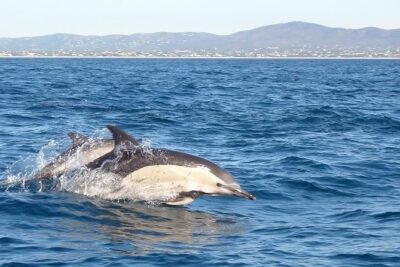
A few groups have waited around 45 minutes before finding animals. On other outings, dolphins appeared quickly, sometimes in large pods. You might see common dolphins or bottlenose dolphins, and some trips have included several species in one outing.
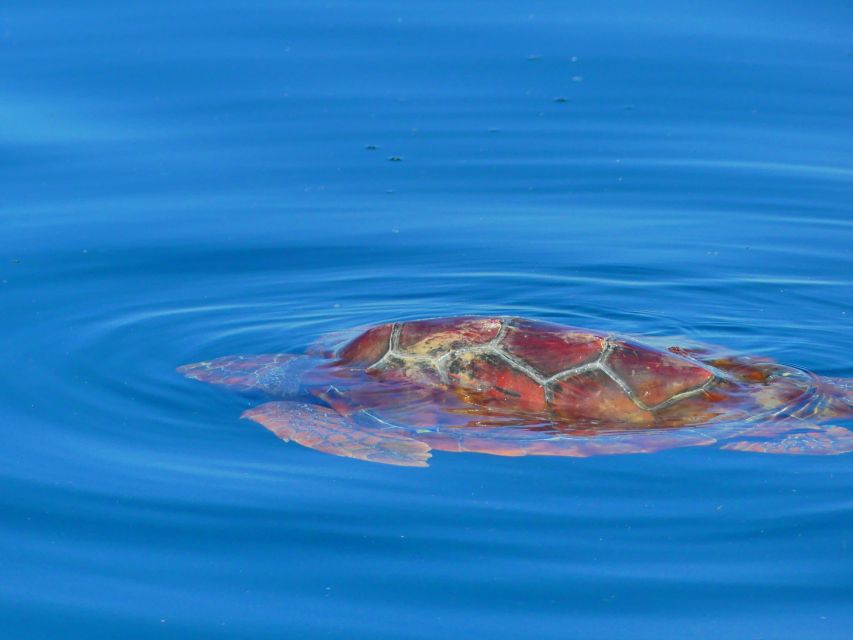
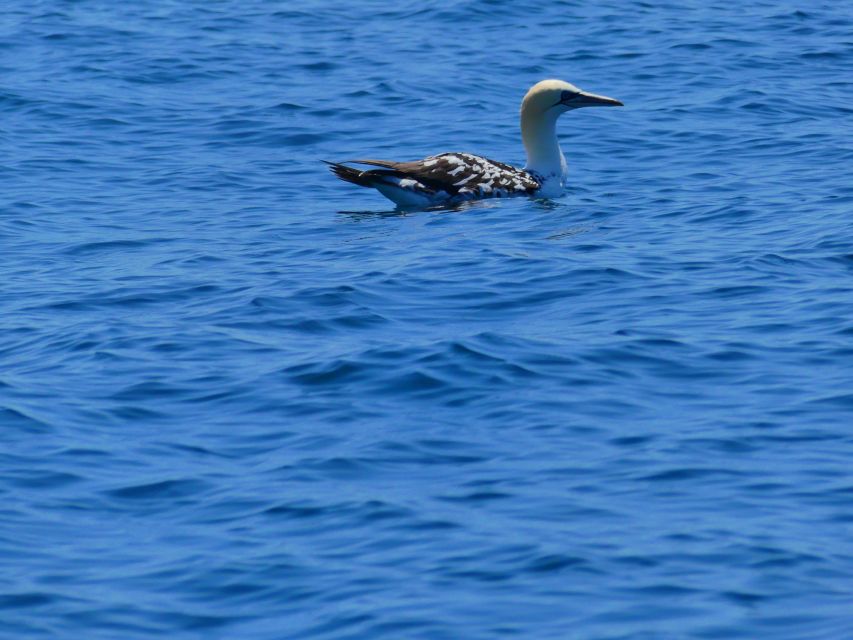
The possible list is wide. Dolphins, porpoises, whales, and even orcas may pass through these waters. The information provided for the tour names ocean sunfish, blue sharks, hammerhead sharks, and marine turtles among the possible fish and reptiles. Gannets and shearwaters may fly overhead.
You should keep expectations sensible. A whale or orca would be an extraordinary sight, but it is not the basic product you are buying. You are buying time on the Atlantic with a crew actively searching for wild marine life. The boat ride, seabirds, islands, and open-water experience still make up much of the outing if the animals stay hidden.
Why the marine biologists matter
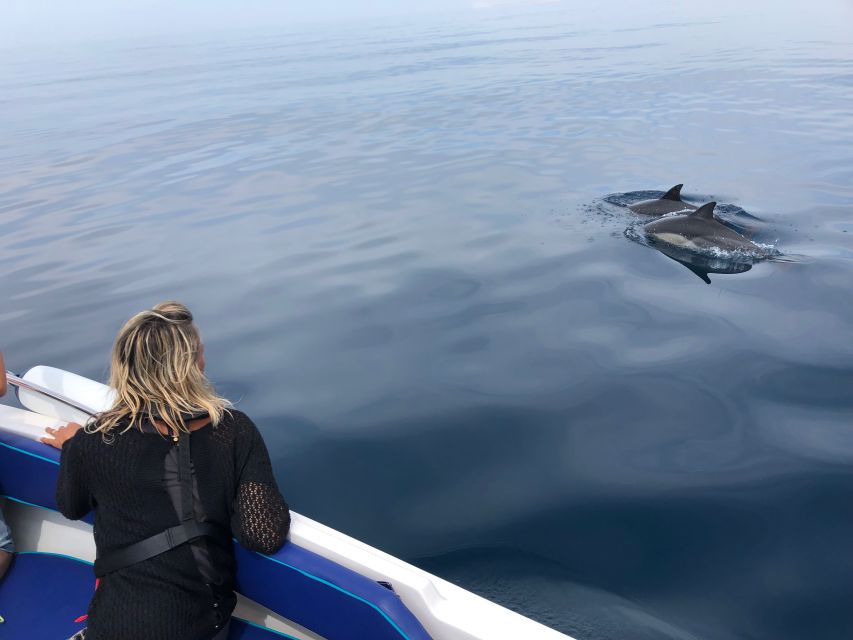
The guides are the heart of this experience. Names vary by departure, but Miguel, Pedro, Ines, Alfredo, Susanna, and other members of the team have been singled out for their humor, patience, and clear explanations.
Their role is not limited to steering toward a fin. They explain dolphin behavior, identify species, discuss the local ecosystem, and describe how scientists gather data about dolphin populations. That gives you something useful to watch for: the way a group travels, surfaces, feeds, or reacts to a boat.
The crew also explains the rules before the trip. You are not allowed to feed animals, touch animals, or touch marine life. Smoking and pets are not allowed, except for assistance dogs. These rules may sound obvious, but they help keep the outing focused on observation rather than interaction.
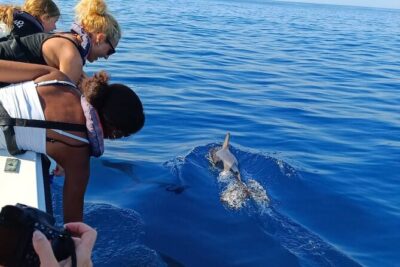
The approach to the animals is another important point. The guides aim to keep enough space for the animals to feel safe, and they respect a maximum observation period of about 30 minutes with a pod. Some dolphins may choose to approach the boat, but the crew does not try to force that behavior.
This makes the trip more satisfying than a simple chase for photographs. You learn why the boat pauses, why it leaves a group, and why a close encounter is not always the best encounter. The focus stays on wild animals behaving naturally.
The 30-minute dolphin watch
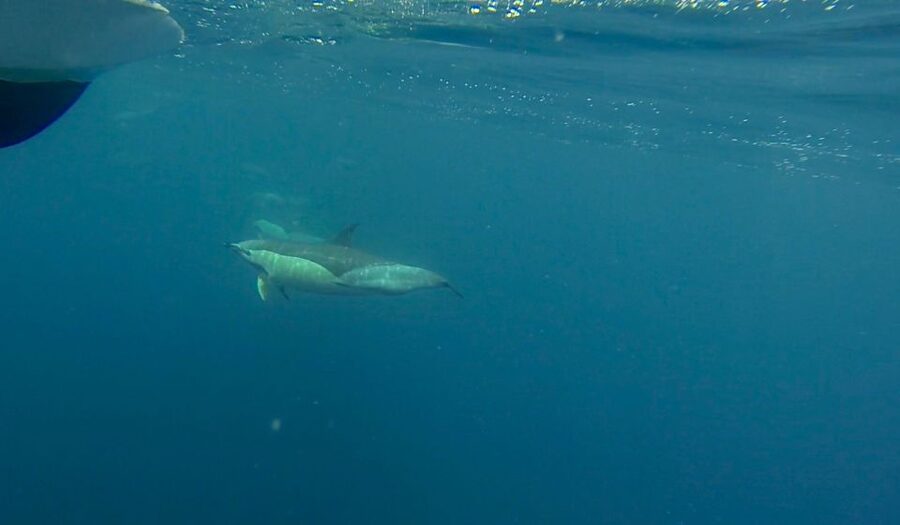
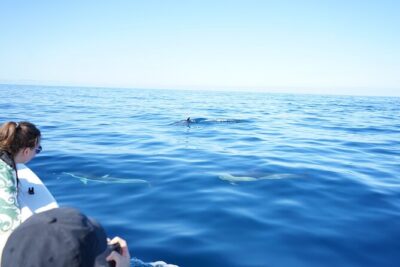
After a group is found, the boat can spend about 30 minutes watching it. This is the clearest set piece of the outing, and it gives you time to stop scanning nervously and simply pay attention.
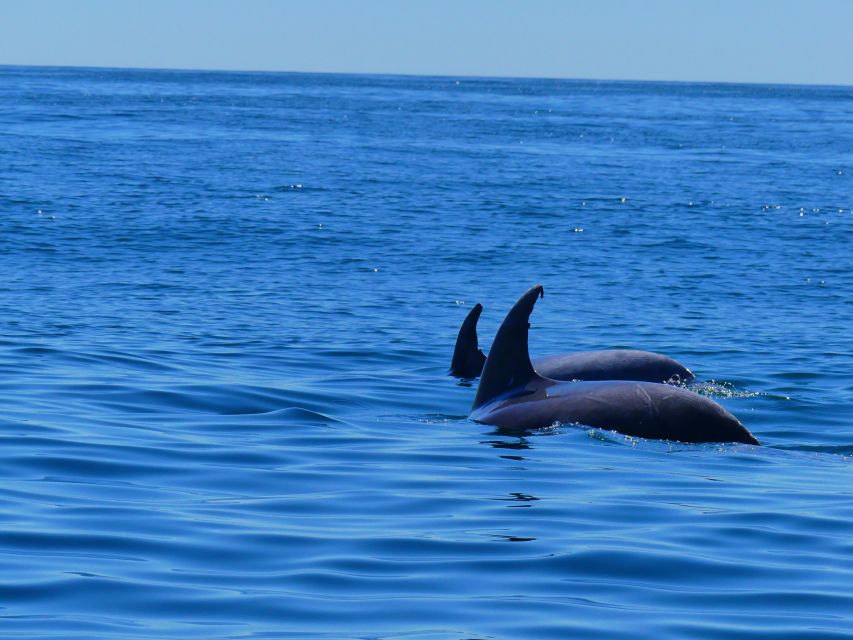
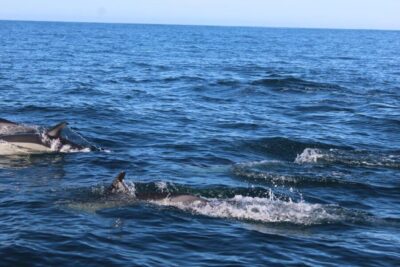
Common dolphins may travel in large, lively groups. Bottlenose dolphins can appear close to the boat. A mother and calf have been seen together, and some groups have followed the boat for part of the return journey.
You will want a camera, but do not spend the whole half hour staring at a screen. Dolphins surface quickly, and the best moment can be over before you frame it. Watch the water first, then take a few photographs when the animals are near.
The observation period also gives you time to ask questions. You can ask about species, social behavior, research methods, or the wider food chain. The guides are especially good at turning a sighting into a short field lesson, which is why the educational part may stay with you longer than a single photograph.
On some departures, the crew has stayed out a little longer when conditions and sightings allowed it. You should not count on extra time, though. If you have a meal, train, airport transfer, or another booked activity afterward, leave a buffer.
More Dolphin and Wildlife Eco Tours in Faro:
- Akaroa Dolphins ~ Harbour Nature Cruise
★ 5.0 · 2,143 reviews - Auckland: Whale and Dolphin Watching Half-Day Eco Cruise
★ 4.5 · 1,072 reviews - Cocoa Beach Dolphin and Wildlife Tour
★ 5.0 · 1,052 reviews - Dolphin and Wildlife Adventure of St. Augustine
★ 5.0 · 864 reviews
What else you might see
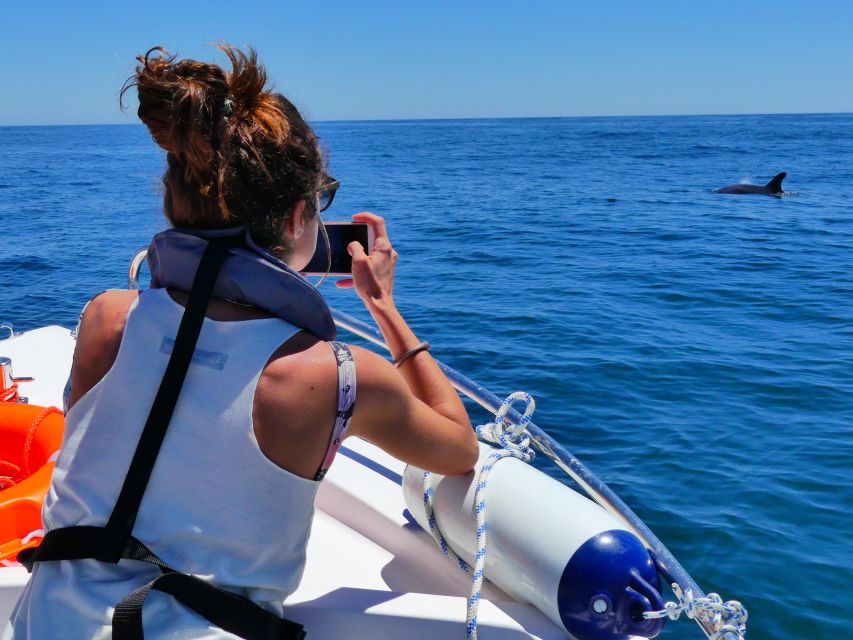
Dolphins get the billing, but the Atlantic can offer a broader wildlife list. Whale sightings are most associated with February through May according to the tour information. Sightings have included fin whales, a Bryde’s whale, and a mother and calf.
The timing is not a guarantee, and the ocean does not follow a tourist calendar. Still, February through May is the period to consider if whales are your main goal. Dolphins remain the more dependable target because they live in the area year-round.
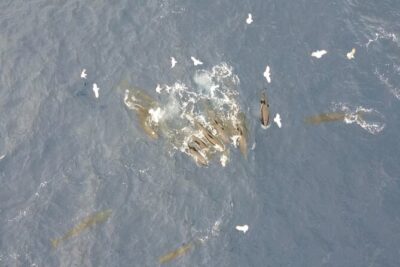
Orcas have also been seen on certain outings, including groups with young animals. That is rare and thrilling, but it should be treated as a bonus rather than a reason to demand a particular result from the crew.
Look upward as well as outward. Gannets and shearwaters may be flying over the water, and guides can point out how seabirds fit into the marine system. Ocean sunfish, sharks, tuna, and turtles are also possible. You might see only a few of these, or none, but the search keeps your eyes moving across the whole scene.
The tour is at its best when you enjoy the full natural setting rather than measure success by the biggest animal seen.
How rough is the boat ride?
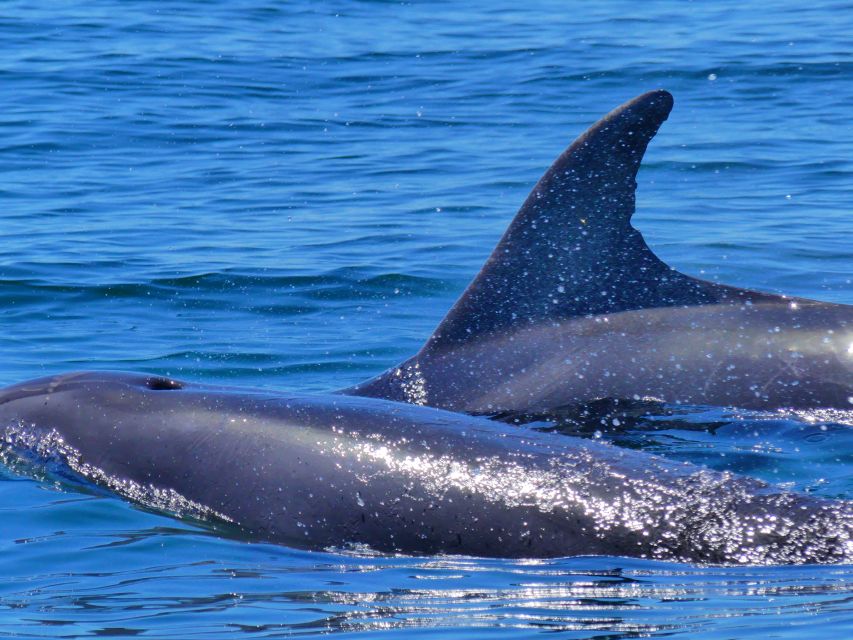
This is not a placid sightseeing cruise. The boat is fast, and reaching the open ocean means dealing with Atlantic swell. Several accounts describe the ride as bumpy, exhilarating, and fun. Others point out that the seats can become uncomfortable after a couple of hours.
You may get wet on windy days. A jacket is essential, and comfortable clothing is more practical than anything delicate. If you are prone to motion sickness, the supplied information does not promise special arrangements, so you should plan your own precautions.
The physical demands are significant enough that the tour is not recommended for people with limited mobility, back problems, or mobility impairments. It is also not suitable for pregnant women or children under two. Those restrictions are worth taking seriously. The combination of a fast boat, uneven movement, and open-water conditions is not a good match for everyone.
For able-bodied adults and older children who enjoy active boat rides, the motion is part of the appeal. You get to cover a large area of sea in a short time, which improves the chance of finding wildlife. Just do not mistake a wildlife trip for a comfortable cruise.
Price, timing, and overall value
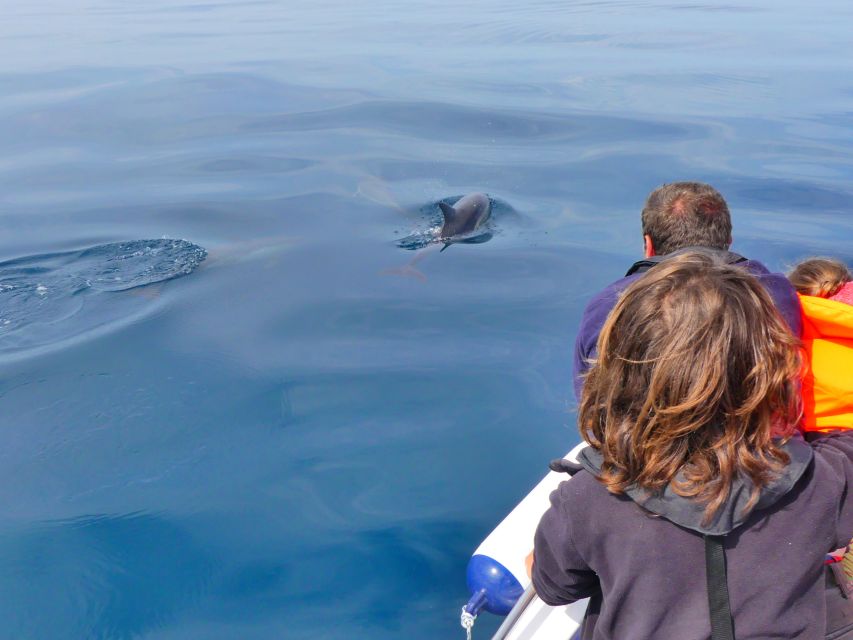
At $76 per person for 2.5 hours, this is not the cheapest way to spend time around Faro. It is a fair price if you value the marine biologist guides, the small-boat format, and the chance to see animals in the wild rather than in a marine park.
The fee includes the guided boat tour, marine biologist guide, and life jacket. Hotel pickup and drop-off are not included. You also need to bring your own water, sun cream, and suitable clothing.
Value depends on your expectations. If you need a guaranteed dolphin photograph, no boat trip can honestly provide that. If you want a fast ride, Atlantic views, expert interpretation, and a real chance of seeing wild dolphins, the cost makes sense.
The high rating of 4.8 from 637 bookings fits the strongest pattern here: the guides are praised for effort, enthusiasm, safety, and respect for the animals. The more important point is that even an outing without a sighting can still offer a memorable boat ride and an unusual look at the Atlantic. That does not erase the disappointment of seeing no wildlife, but it makes the risk easier to accept.
Free cancellation up to 24 hours before departure and reserve-now, pay-later booking also make it easier to fit into a changing Algarve schedule.
Who should book this Faro boat trip?
I would choose this for anyone who wants a wildlife experience with real instruction, not just a quick boat ride to a photo opportunity. It suits couples, families with children over two who can manage a lively boat, and anyone interested in marine conservation.
It is especially appealing if you are staying in Faro and want to connect the city with the Ria Formosa and Atlantic coast in one outing. The views of Deserta and Culatra add something even during a quiet wildlife search.
I would think twice if you dislike wind, spray, open water, or sudden movement. I would also skip it if you have back trouble, reduced mobility, or need a guaranteed timetable. The boat may run longer when a special sighting develops, and the sea can make the scheduled 2.5 hours feel physically demanding.
The strongest reason to book is the combination of wildlife and science. You are not merely hoping for dolphins. You are learning how to observe them responsibly and how researchers think about their populations.
Should you book Ocean Vibes Algarve?
Yes, if you can accept the basic bargain of wildlife watching: you get a serious search, not a promise. The guides work hard, respect distance from the animals, and explain what you are seeing. Dolphin sightings are common, while whales, orcas, sharks, turtles, and sunfish remain possible extras.
Book during February through May if whales are your priority, but choose any season if dolphins are the main goal. Bring a warm layer, water, sun cream, and patience. Leave spare time after the tour in case the crew extends the outing or the return takes longer than expected.
I would not book it for a quiet, polished cruise. I would book it for a spirited Atlantic ride led by people who care about the animals and want you to understand them.
FAQ
Where does the dolphin tour meet in Faro?
Meet at the Ocean Vibes Algarve office in Faro harbour or marina. Look for the shared store with a banner marked Ocean Emotions.
How long does the experience last?
The tour lasts about 2.5 hours. Starting times vary, so check availability when booking.
What animals might I see?
Possible sightings include dolphins, porpoises, whales, orcas, gannets, shearwaters, ocean sunfish, blue sharks, hammerhead sharks, marine turtles, and other fish.
Are dolphins guaranteed?
No. Dolphins are wild animals, so a sighting cannot be guaranteed. The stated success rate is normally about nine out of ten tours.
When is whale season?
The stated whale season is between February and May. Dolphins are resident in the area throughout the year.
How long can the boat watch a dolphin group?
After finding a group, the boat can spend about 30 minutes watching it. This limit helps reduce stress for the animals.
Which languages are available?
The live guide service is available in English, French, Portuguese, and Spanish.
What should I bring?
Bring comfortable clothes, a jacket, water, and sun cream. You may get wet on windy days, and the wind can feel cold even when the weather is warm.
Who should not take this tour?
The experience is not suitable for children under two, pregnant women, people with back problems, or people with mobility impairments. It is also not recommended for people with limited mobility.
Just added around Faro
- Sunset Dolphin Watching with Marine Biologists★ 5.0 · 25 reviews
- FARO Fantastic Dolphin Observation Tour and Marine Life★ 5.0 · 8 reviews
- Dolphin watching and wildlife from Faro★ 5.0 · 6 reviews
- Dolphin Watching from Faro★ 4.5 · 22 reviews
- Observing Dolphins in Faro★ 5.0 · 21 reviews
- Dolphin Watching from Fuzeta★ 4.5 · 31 reviews
- Algarve Dolphin Watching & Marine Life Eco Tour★ 5.0 · 16 reviews
- Faro: Funtastic Dolphin Watching Boat Tour★ 4.9 · 15 reviews
Faro Dolphin Tours, compared.
Small Group Dolphin and Wildlife Watching Tour in Faro
Read our review →
Browse the lists this tour appears in