
REVIEW · ADELAIDE
Adelaide: Dolphin Sanctuary Eco Kayaking Tour
The best part of this Port Adelaide outing is the setting: you paddle through 10,000-year-old mangrove creeks, where tidal flats, seagrass, and saltmarsh provide food and shelter for dolphins and small marine life. The water is often calm, and the low trees give the trip a quiet, almost secretive feel.
I like two things in particular. First, the guides take time to teach beginners, with Alex, Paddy, Mark, Liam, Kendall, and others regularly praised for clear instruction and friendly help. Second, the tour treats the dolphins as wild animals, not performers. You may see a mother and calf close by, or no dolphins at all, and the group is expected to stay calm and give them room.
The main drawback is simple: sightings are never guaranteed. Wind, tides, and animal movements can also shorten the route to the shipwrecks. Three hours on the water is manageable for most reasonably active people, but it can feel long if you dislike paddling, sun, insects, or going without a toilet stop.
Key points before you book
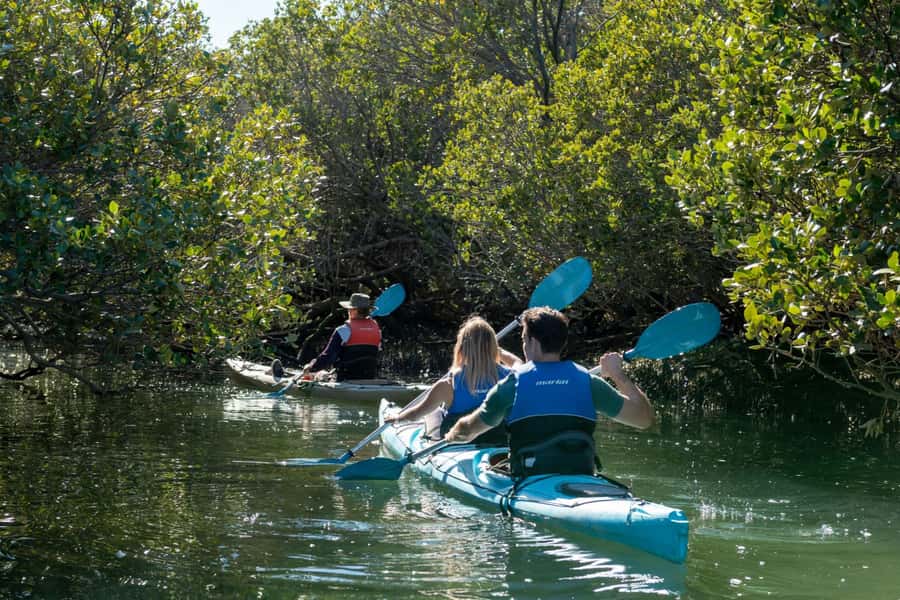
- 10,000-year-old mangroves: Paddle narrow creeks that serve as feeding and nursery areas for local marine life.
- Dolphins remain wild: Guides do not use bait or sounds to attract them, and sightings can range from close encounters to none.
- Beginners are welcome: You receive a safety briefing, kayaking demonstration, kayak, life jacket, and help on the water.
- Shipwrecks depend on conditions: Wind and tides may prevent the group from reaching the wreck area.
- A gentle family outing: Children aged 10 to 15 must share a double kayak with an adult and must be able to paddle.
- Allow extra time to reach Port Adelaide: Hotel pickup is not included, and one direct comment advises using a car or taxi.
Why the Adelaide Dolphin Sanctuary feels different
Adelaide’s Dolphin Sanctuary is not a theme-park encounter or a quick boat ride past open water. You move under your own power through a tidal system lined with mangroves, saltmarsh, seagrass, and shallow creeks.
That matters because the sanctuary makes sense when you see how the parts fit together. Dolphins use the area as a feeding ground, while the mangroves offer shelter for fish and other small creatures. Birds use the edges of the water, and the changing tide reshapes the route throughout the day.
I like the pace here. The guides do not need to rush from one sight to the next. You paddle, pause, listen, and watch. Some of the strongest moments may come from the mangrove channels rather than from a dolphin sighting. The trees hang low in places, and paddling beneath them gives the outing a more personal feel than a standard sightseeing cruise.
The setting is also close enough to Adelaide for a half-day plan, yet it feels far removed from the city. You start at Angas Inlet Boat Club on Garden Island Road in Port Adelaide and return to the same point.
More Dolphin Kayak Tours in Australia
- Dolphin Sanctuary Kayak Tour Adelaide
★ 4.5 · 355 reviews - Adelaide Dolphin Sanctuary and Ships Graveyard Kayak Tour
★ 5.0 · 275 reviews - Dolphin Sanctuary and Ships Graveyard Kayak Tour
★ 4.7 · 143 reviews
Starting at Angas Inlet Boat Club
Plan to arrive ready for the water. The meeting point is Angas Inlet Boat Club, Lot 204 Garden Island Road, Port Adelaide SA 5015. There is no hotel pickup, so you need to arrange your own way there.
That transport detail is easy to overlook. If you are staying in central Adelaide, check the trip to Port Adelaide before booking your time slot. A car or taxi is the most straightforward option based on the practical feedback available. One guide also helped a late-arriving participant reach Port Adelaide station, but you should not count on that as a standard transfer.
At the boat club, the staff provide your kayak, life jacket, waterproof bag, and safety instructions. Bring a bottle that you can refill, since water is provided for that purpose. You should also arrive with a sun hat, food, drinks, biodegradable sunscreen, and a waterproof camera or phone case.
Mosquito spray is especially useful. Several people made a point of mentioning insects around the mangroves, and the operator has reportedly made sunscreen and repellent available. Still, I would bring your own biodegradable repellent so you are not relying on shared supplies.
The 15-minute briefing for first-time kayakers
The safety briefing lasts about 15 minutes and includes a demonstration of the basic paddling technique. This is a major reason the tour works for beginners.
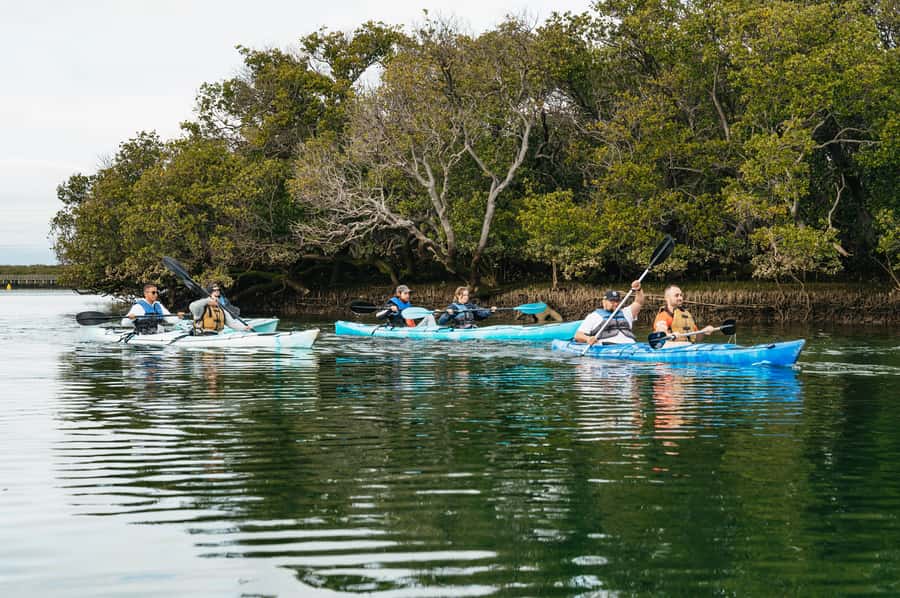
You do not need previous kayaking experience, but you do need to paddle. The guides set a comfortable pace and help people who are struggling with steering or rhythm. Several named guides, including Alex, Marc, Liam, Paddy, and Kendall, received praise for patient instruction and for keeping nervous paddlers calm.
The kayaks are stable enough that most people describe the activity as low risk, though capsizing is possible. One couple tipped over near the beginning on a windy day and was looked after by guide Sam. The lesson is not that falling in is impossible. It is that you should listen closely, dress for the conditions, and take wind seriously.
If you have experience, you may find the opening practice slow. That is a fair trade for a mixed group, since the guides need to get everyone moving safely before entering the narrower creeks. An experienced paddler also suggested separating stronger and weaker kayakers, as slower pairs can affect the pace of the whole group.
Three hours through mangroves, tidal flats, and creeks
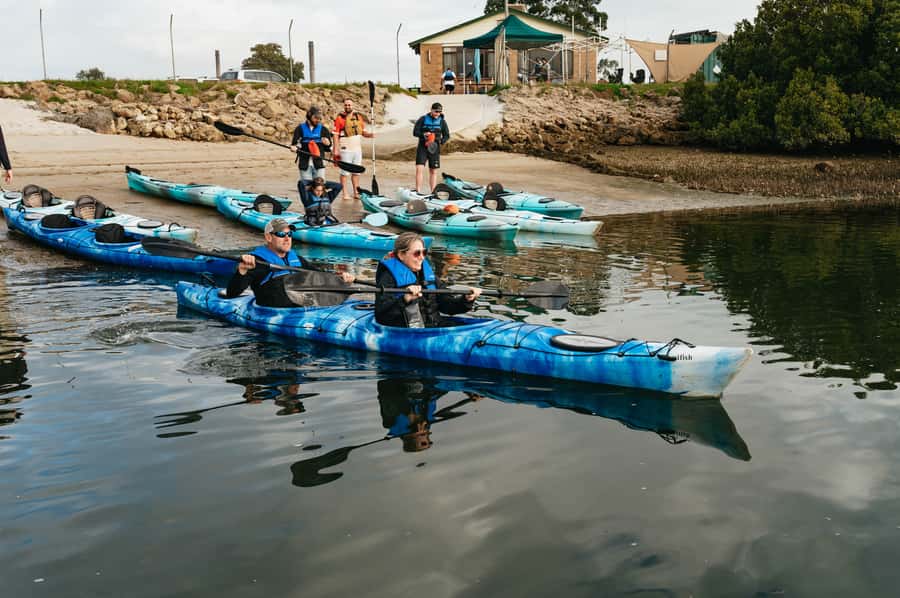
The main outing lasts about three hours, including the route through the Adelaide Dolphin Sanctuary. You are not simply paddling in a straight line. The guide leads the group through different parts of the creek system, pointing out plants, birds, fish habitat, dolphins, and the history of the old boats in the area.
The route can feel different from one day to the next. Wind may make open sections harder, while the tide affects water depth and access to side channels. On a low tide, some kayaks have grounded in shallow areas, requiring people to get out and walk the boats briefly to deeper water. That sounds awkward, but it also shows how shallow and tidal this sanctuary can be.
The low water is one reason the trip does not feel like a demanding sea-kayaking session. You are not far out in deep ocean. Even so, conditions can still make paddling tiring, especially into wind or under strong sun.
The guides also keep the group moving at a pace that suits mixed abilities. One older participant with two prosthetic hips found the trip manageable because the guide chose sensible stopping points and controlled the pace. That is encouraging, but it is not a guarantee for anyone with mobility concerns. The activity is not suitable for wheelchair users or people with mobility impairments.
More Dolphin Kayak Tours in Adelaide:
- Adelaide Dolphin Sanctuary Mangroves Kayaking Tour
★ 4.5 · 59 reviews - Adelaide: Dolphin Sanctuary Mangroves Kayak Tour
★ 4.2 · 54 reviews - Adelaide: Dolphin Sanctuary Single or Double Kayak Rental
★ 4.1 · 51 reviews - Dolphin and Manatee Stand Up Paddleboard Tour in Daytona Beach
★ 5.0 · 2,328 reviews
Watching dolphins without turning them into a show
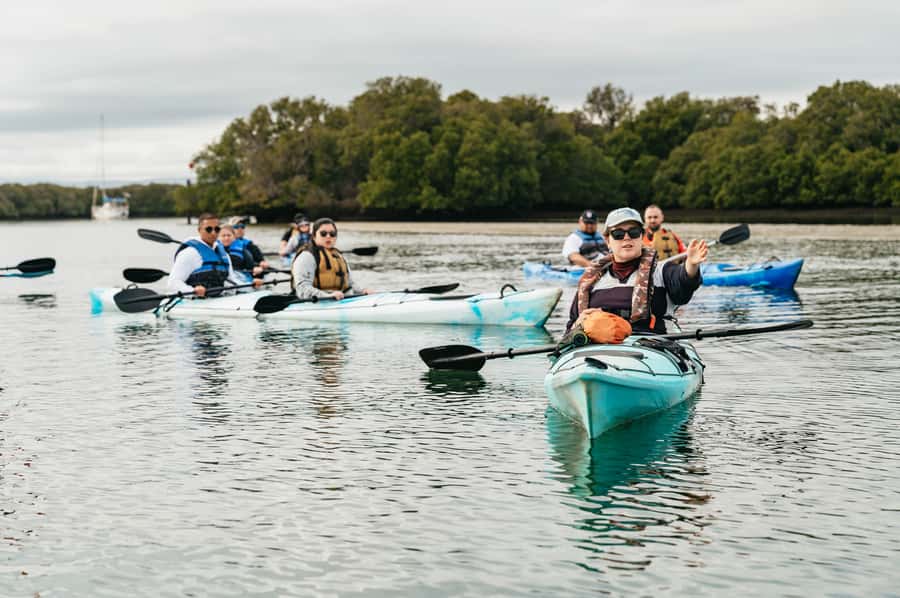
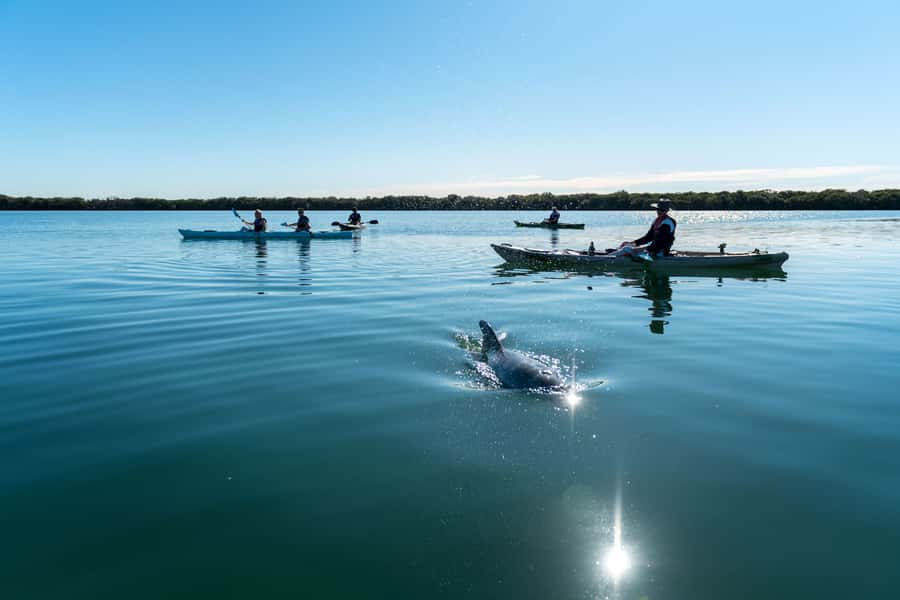
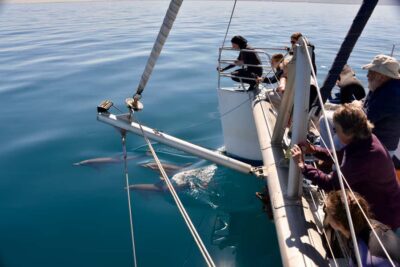
Dolphin sightings are the headline attraction, but the ethical approach is just as important. The guides do not use bait or artificial sounds to pull the animals toward the kayaks. If dolphins appear, the group watches them in their own habitat.
You might see a group feeding around the kayaks, a pair moving through the channel, or a mother and calf passing nearby. Some outings have had dolphins appear within minutes, while other groups saw them only at a distance or not at all.
A close sighting can be unforgettable. Several people described mothers and calves, including dolphins swimming beneath or beside a kayak. The correct response is not to chase them. Your guide may ask everyone to stop paddling and keep quiet so the animals can pass without pressure.
That restraint is a real strength of the tour. I would rather have a brief, respectful sighting than a guaranteed encounter created by feeding or noise. You should book this as a sanctuary paddle with a chance of dolphins, not as a dolphin guarantee.
If seeing dolphins is the only reason you want to go, an aquarium offers more certainty. If you want to understand how dolphins live within a tidal ecosystem, this trip gives you a more honest encounter.
The shipwreck section and its limits
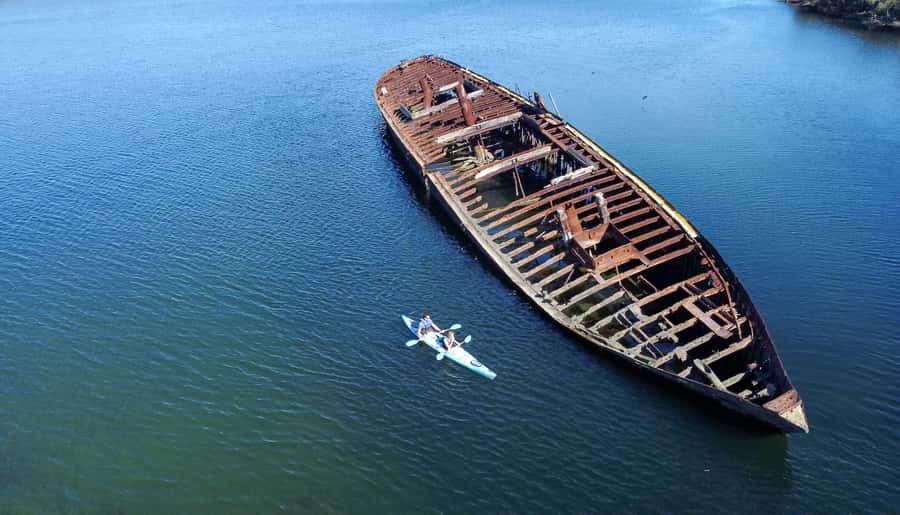
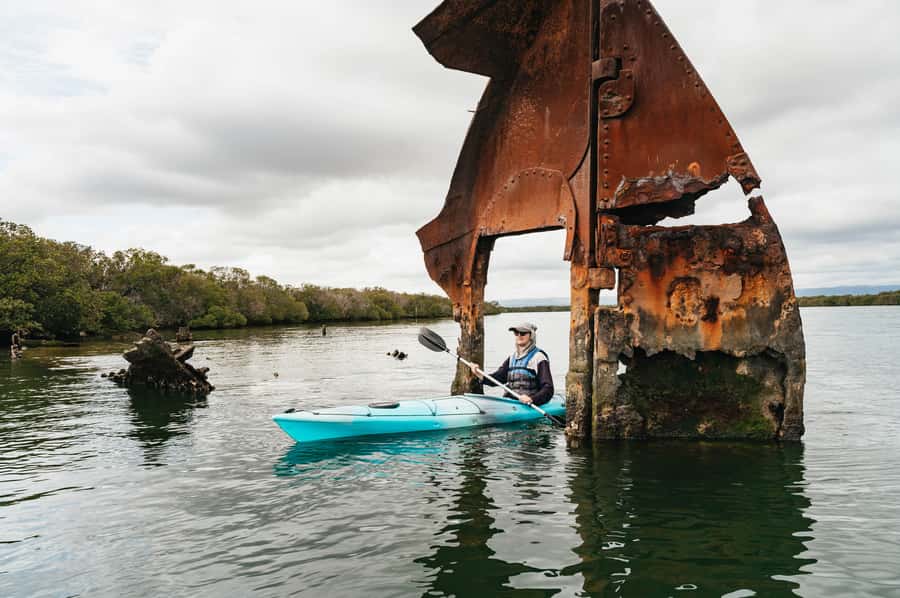
Old shipwrecks from a bygone era add a layer of character to the route. Paddling near abandoned boats gives the outing a link to Port Adelaide’s working-waterfront past, and guides such as Mark, Paddy, and Phoenix have explained the wrecks alongside the mangroves and animals.
Still, the wreck section is not assured. Wind and tide can prevent the group from reaching all or any of the wreck area. One outing reached only a few wrecks but had excellent dolphin sightings. Another had no dolphins but managed the shipwreck route on a calmer day.
This is where expectations matter. You are not buying a fixed checklist of mangroves, dolphins, and wrecks. You are booking a guided route through a tidal sanctuary, with the final mix shaped by weather, water level, and wildlife.
What the guides add to the outing
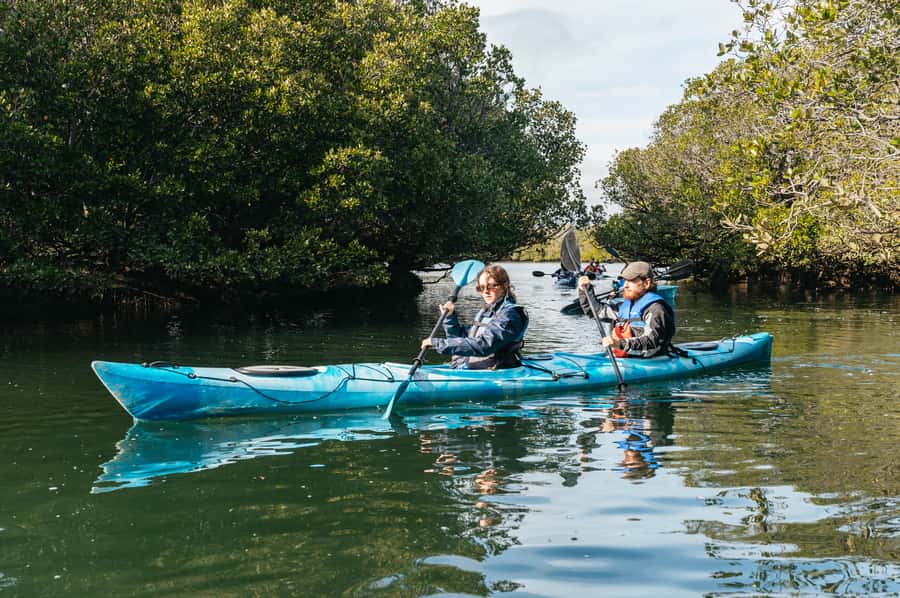
The human side of this trip is a big part of its value. You may be led by Alex, Paddy, Mark, Kendall, Liam, Fiona, Brayden, Hannah, Sarah, Sam, or another member of the English-speaking team.
The strongest guides do more than point toward dolphins. They explain how mangroves support fish, how tidal currents shape the creeks, and why the animals need space. Some also cover the area’s boats and local stories. Alex was especially praised for combining information about dolphins, plants, and local history with a relaxed manner.
There is one practical weakness to keep in mind. Sound carries poorly over water, especially when several kayaks spread out. One person suggested using a speaker so everyone could hear every explanation. Stay close to the guide, and do not be shy about asking for a point to be repeated.
Is $55 good value for three hours?
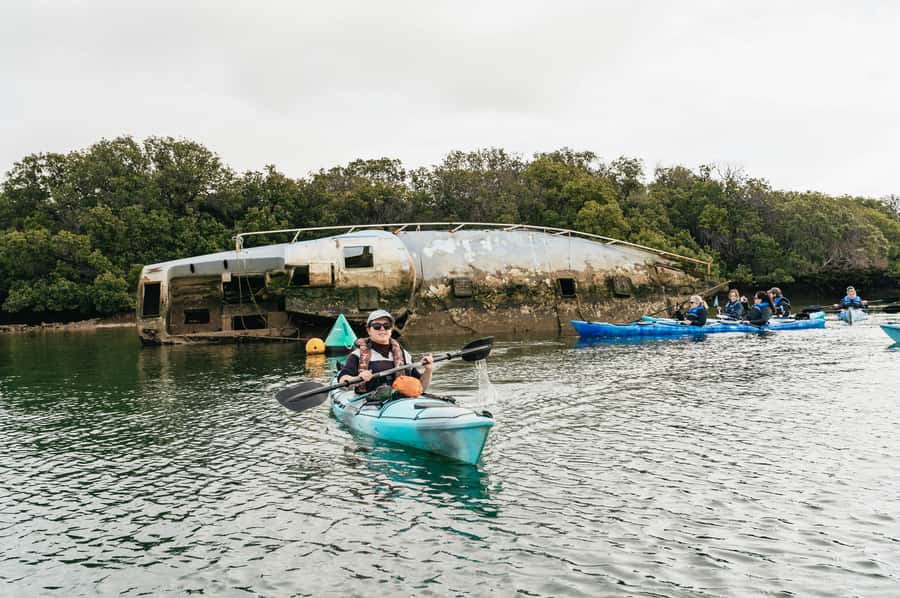
At $55 per person, this is a strong-value half-day activity. The price includes the guide, kayak, life jacket, safety instruction, waterproof bag, and refill water. You also receive the benefit of a marine biologist guide, rather than simply renting a kayak and finding your own way through unfamiliar tidal creeks.
The value improves if you are new to kayaking. A rental would not provide the same help with steering, wildlife etiquette, route choice, or changing conditions. You also avoid having to work out how to enter the mangroves safely.
The price is less compelling if you mainly want a guaranteed dolphin photograph. You could finish the tour with no dolphins and limited access to shipwrecks. The fair way to judge the cost is to see the wildlife as a bonus and the guided sanctuary paddle as the main product.
Three hours is about right for most people. It gives you time to learn the kayak, reach the mangroves, look for animals, and return without feeling like a full-day expedition. Strong wind, a slow group, or repeated stops can make the outing feel longer.
Who will enjoy this kayak tour most?
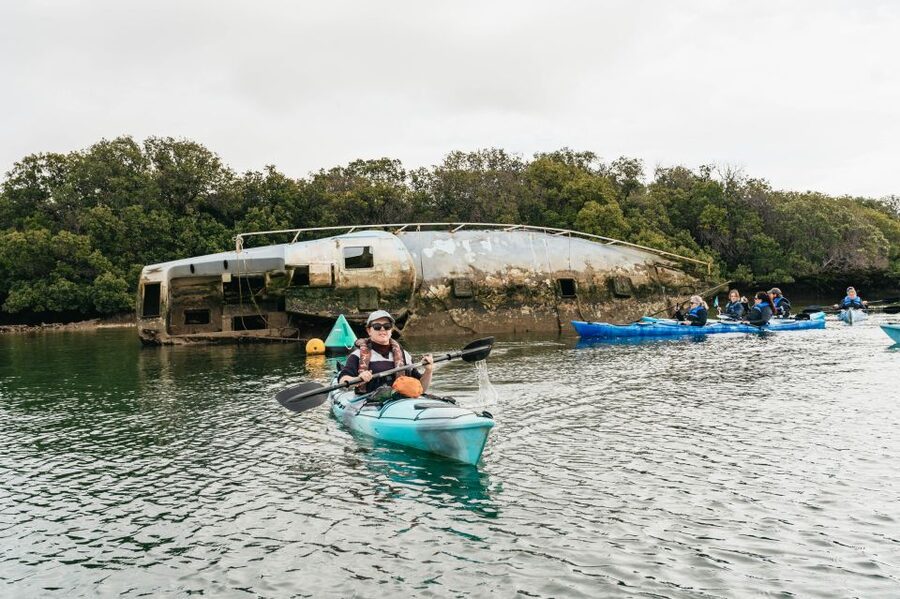
I would recommend it to you if you like quiet nature outings, gentle physical activity, and learning how an ecosystem works. It suits first-time kayakers, couples, families with older children, and anyone who prefers a small-scale encounter to a fast boat trip.
Children must be at least 10 years old. Those aged 10 to 15 must share a double kayak with a parent or adult and must be able to paddle. The tour is not suitable for children under 10, wheelchair users, or people with mobility impairments.
You should also be comfortable spending three hours on the water without a planned toilet stop. One participant specifically found that difficult. Eat and drink before setting out, but do not forget that food and drinks are not included.
Weather is another deciding factor. The operator may cancel if conditions are unsuitable, and wind can change the route even when the tour goes ahead. If you have flexibility, a calmer day should give you a better chance of reaching the wrecks and enjoying the narrow mangrove channels.
Practical tips for a better paddle
- Wear sun protection and bring a hat. Shade under the mangroves is not constant.
- Use biodegradable sunscreen, since you are spending time in a sensitive marine area.
- Apply mosquito repellent before entering the mangroves.
- Pack food and drinks for after or before the tour, since they are not supplied.
- Bring a waterproof camera, but keep your attention on the water and animals.
- Stay near the guide so you can hear the explanations.
- Treat dolphin sightings as luck, not a promise.
- If the day is windy, ask about conditions and the likely route before setting off.
- Leave enough time to reach Garden Island Road in Port Adelaide.
Cancellation is free up to 24 hours before the activity, and you can reserve now and pay later. The tour runs in English.
Should you book the Adelaide Dolphin Sanctuary kayak tour?
Book it if you want a calm, well-supported paddle through a rare tidal environment, with a real chance of seeing dolphins and old shipwrecks. The guides are the key strength, especially for beginners, and the $55 price covers the equipment and instruction you need.
Do not book it if a dolphin sighting is essential, if you need guaranteed access to the wrecks, or if three hours without a toilet stop will be uncomfortable. For everyone else, this is a worthwhile Adelaide outing because the mangroves remain interesting even when the animals stay out of sight.
FAQ
Where does the Adelaide Dolphin Sanctuary kayak tour start?
The tour starts at Angas Inlet Boat Club, Lot 204 Garden Island Road, Port Adelaide SA 5015.
How long does the kayaking tour last?
The activity lasts three hours, including the guided paddle through the Adelaide Dolphin Sanctuary.
How much does the tour cost?
The listed price is $55 per person.
Do I need kayaking experience?
No. The tour includes a safety briefing and kayaking demonstration, and no previous experience is required. You must still be able to paddle.
Are dolphins guaranteed?
No. Dolphins are wild animals, and sightings depend on animal movements, weather, and tides.
Are the shipwrecks guaranteed?
No. Weather and tide conditions can prevent the group from reaching the shipwreck area.
What equipment is included?
A kayak, life jacket, waterproof bag, and water for refilling your drink bottle are included.
What should I bring?
Bring a sun hat, food, drinks, a waterproof camera, and biodegradable sunscreen. Mosquito repellent is also a useful choice for the mangrove sections.
Can children join the tour?
Children must be at least 10 years old. Children aged 10 to 15 must share a double kayak with an adult and must be able to paddle.
Can I cancel for a refund?
You can cancel up to 24 hours in advance for a full refund. You can also reserve the activity and pay later.
Just added around Adelaide
- Wild Dolphin Watch in Glenelg★ 5.0 · 12 reviews
- Adelaide Dolphin Sanctuary Mangroves Kayaking Tour★ 4.5 · 59 reviews
- Wild Dolphin Swim Cruise★ 5.0 · 55 reviews
- 2-Hour Dolphin and Maritime Cruise in Port Adelaide★ 4.0 · 6 reviews
- Port Adelaide: Dolphin and Maritime Cruise★ 4.0 · 5 reviews
- Dolphin Sanctuary and Ships Graveyard Kayak Tour★ 4.7 · 143 reviews
- Adelaide: Dolphin Sanctuary Single or Double Kayak Rental★ 4.1 · 51 reviews
- Adelaide: Dolphin Sanctuary Mangroves Kayak Tour★ 4.2 · 54 reviews
Adelaide Dolphin Tours, compared.
Adelaide: 4-Hour Swimming with Dolphins Experience
Read our review →
Port Adelaide: Dolphin and Ships Graveyard Cruise
Read our review →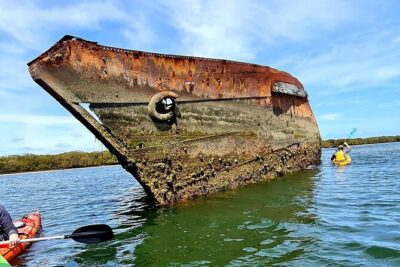
Adelaide: 4-Hour Guaranteed Wild Dolphin Watching Cruise
Read our review →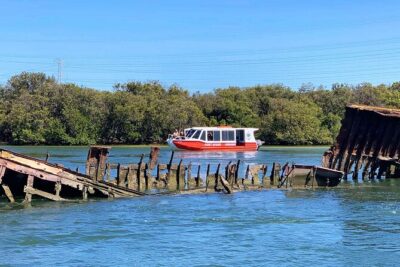
90 Minute Port River Dolphin & Ships Graveyard Cruise
Read our review →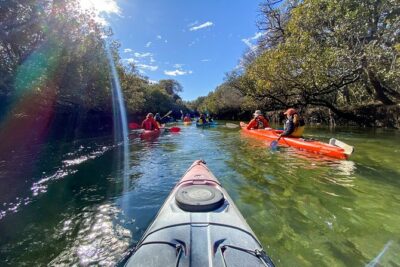
Adelaide Dolphin Sanctuary and Ships Graveyard Kayak Tour
Read our review →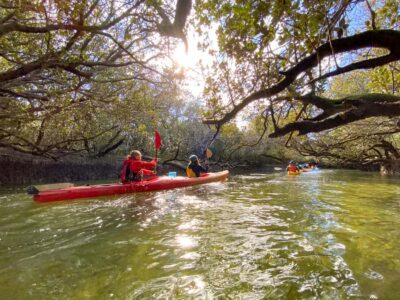
Dolphin Sanctuary and Ships Graveyard Kayak Tour
Read our review →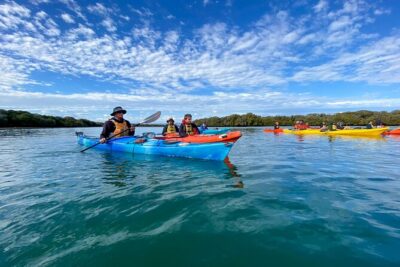
Adelaide Dolphin Sanctuary Mangroves Kayaking Tour
Read our review →Browse the lists this tour appears in