REVIEW · PORTUGAL
Horta: University Startup Whale and Dolphin RIB Boat Trip
Horta’s best whale-watching trips combine a fast, open-air RIB ride with real marine research. The crew uses land-based whale spotters around Faial and Pico, then takes you offshore with a university marine researcher who can explain animal behavior as it happens.
I like two things here: the chance to see several species in one outing, and the careful, respectful approach around whales. The research link adds substance, too. The tradeoff is a real one: a RIB can bounce hard in rough seas, and wildlife is never guaranteed. One outing produced no whales, though dolphins and other sea life can still make the trip worthwhile.
Key points to know before you book
- Sperm whales live here year-round, while blue, fin, humpback, sei, and Bryde’s whales appear at different times of year.
- A marine researcher rides with you, offering current information and helping explain what you see.
- The 16-passenger RIB is fast and exposed, so expect spray, wind, and a lively ride in rough water.
- Most trips see two or three cetacean species, but sightings depend on weather, season, and animal movements.
- Waterproof jacket and trousers are included, but bring shoes that can handle spray or dry quickly.
- The trip supports university research, and photographs may be provided afterward when the crew takes them.
A three-hour search in Faial’s whale-rich waters
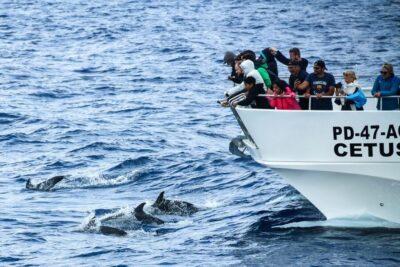
This is not a short harbor cruise. You meet at Naturalist, Science & Tourism Whale Watching in Horta Marina, then set out in a semi-rigid inflatable boat carrying up to 16 people.
The first ten minutes are given to safety. That matters on a RIB, where the ride is more active than on a large covered boat. You will receive instructions before departure, then put on the supplied waterproof clothing.
The search itself takes most of the three-hour outing. The crew works with whale spotters on land around Faial and Pico. These spotters scan the sea for blows, fins, and other signs of cetaceans, giving the skipper a better idea of where to go.
You are not simply taken to a fixed viewing point. The boat may change course as new information comes in. On one successful outing, the captain moved to another area after waiting, then repositioned the boat to meet whales farther along their route. That kind of adjustment is useful because whales do not follow a timetable set for tourists.
The itinerary also includes time for scenic views, marine-life watching, and photography. A typical trip lasts about three hours, with departures at 9:00 in the morning and 2:00 in the afternoon. Arrive by 8:45 or 1:45. The early departure gives you more of the day afterward, while the afternoon trip can fit better around other activities in Horta.
More Dolphin Watching by Speedboat in Portugal
- Albufeira: Benagil Caves & Dolphin Watching Speed Boat Tour
★ 4.6 · 6,316 reviews - Funchal: Whale and Dolphin Watching Speed Boat Tour
★ 4.6 · 526 reviews - Pico Island: Azores Whale & Dolphin Watching on Zodiac Boat
★ 4.8 · 408 reviews
Why the university connection matters
The main difference here is the person on board. A marine researcher or biologist from the University of Lisbon and the Azores joins the expedition to collect data and explain the animals.
That changes the feel of the trip. Instead of hearing only a list of species, you can learn about behavior, identification, and the wider marine system around the islands. When a whale surfaces, the researcher can help you understand what you are seeing rather than leaving you to guess from a distant back or blow.
Anna received particular praise for clear explanations, while Cristiana was noted for explaining the whales and dolphins seen during an outing. A second biologist sometimes joins the boat, including one who takes photographs. When photos are taken, the best images may be supplied afterward at no added cost.
The research purpose also gives the trip a useful sense of place. You are not just looking for animals in a pretty setting. Your outing can contribute to ongoing study of the species passing through Azorean waters. That will appeal to you if you want your wildlife activity to have an educational or scientific purpose.
The available languages are English and Portuguese. Spanish tours may be possible, and French needs to be requested ahead of time according to availability. Confirm your preferred language before booking if that matters to you.
The whales and dolphins you might find
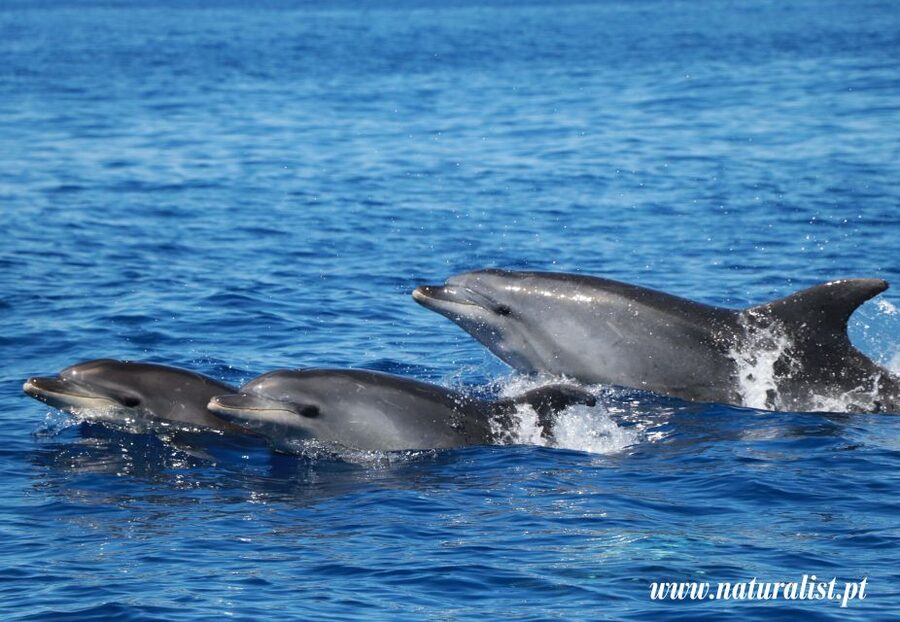
The Azores sit in a productive part of the Atlantic, and more than 25 cetacean species have been recorded in the region. A normal trip sees two or three kinds, but that number is not a promise.
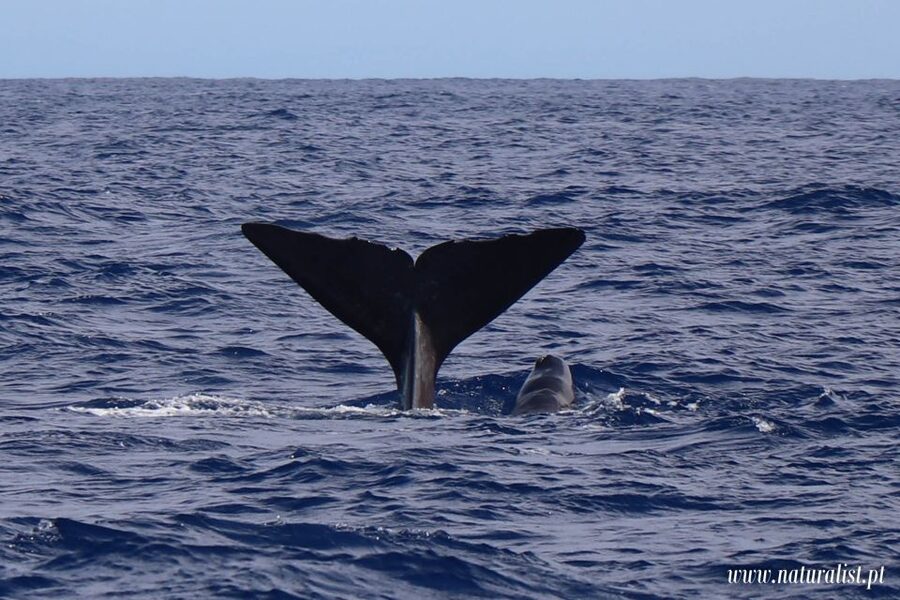
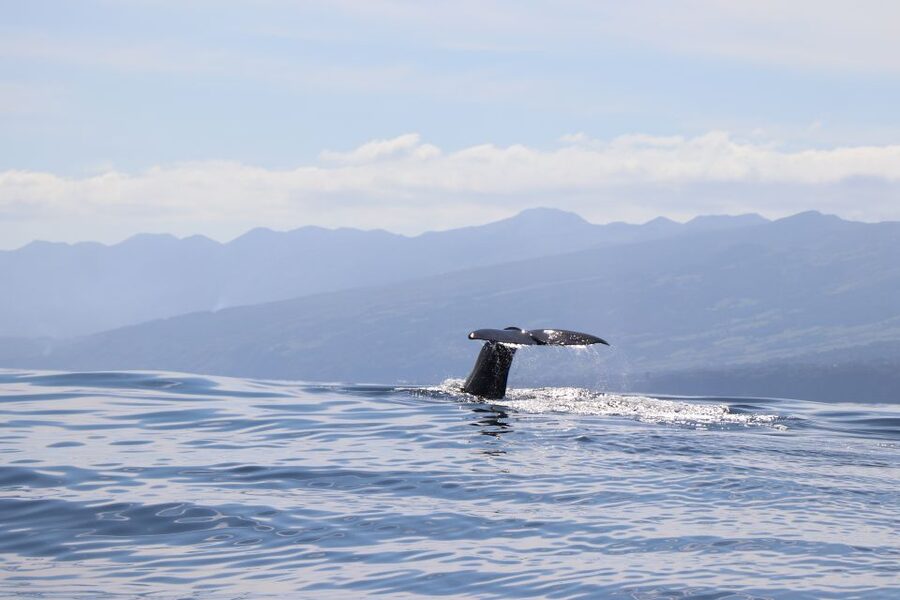
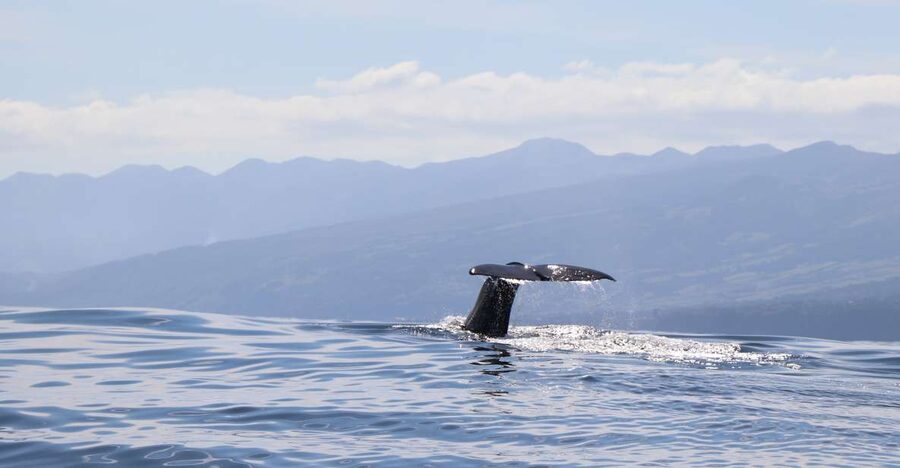
Sperm whales are the main resident whale and can be found throughout the year. They are among the most reliable large-whale possibilities, though the crew still has to locate them on the day.
Spring brings a better chance of blue and fin whales, two of the largest animals on Earth. Sei whales can also occur, and Bryde’s whales may be present in summer. Humpback whales are migratory and may pass through during the right season.
Recent outings have included sperm, sei, humpback, Bryde’s, and several dolphin species. One especially productive trip saw five sperm whales and a large group of dolphins. Another recorded three sei whales, one Bryde’s whale, and several kinds of dolphins.
Dolphins are often an important part of the experience. Bottlenose, Risso’s, and common dolphins are resident species, while other kinds pass through. A large pod moving beside the RIB can be more active and immediate than a distant whale sighting. The boat’s low position puts you close to the water, though you should expect the crew to keep a respectful distance from larger animals.
There is no guarantee of a whale sighting. One outing produced no whales, which is always possible on a wild-animal trip. Weather, visibility, animal movement, and the amount of time spent searching all matter. The crew can make sensible choices, but it cannot order a whale to surface.
Turtles, fish, sharks, and seabirds
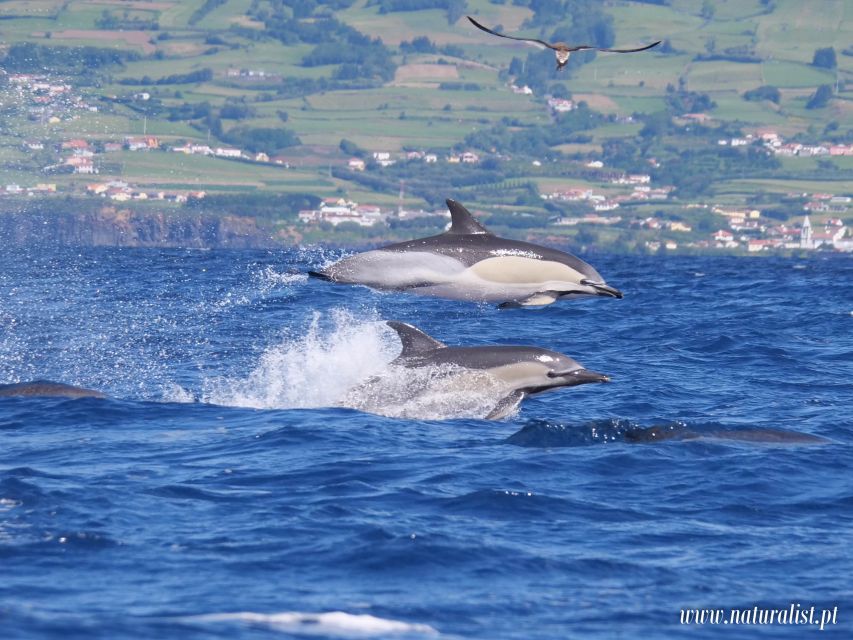
Whales are the headline, but keep watching after the first sighting. The Azores can also produce loggerhead and green turtles, with leatherback and Kemp’s ridley turtles recorded in the region.
Loggerhead turtles received a memorable mention after two were seen during one trip. You may also encounter flying fish, squid, octopus, sunfish, hammerhead sharks, and blue sharks. These sightings are less predictable than dolphins or resident sperm whales, but they show why this is a marine-life expedition rather than a whale-only outing.
Birdwatching adds another layer. Look for Cory’s shearwaters, great shearwaters, Manx shearwaters, common terns, and roseate terns. On a productive day, feeding activity can bring several kinds of birds and dolphins together. One outing included thousands of birds around feeding whales and dolphins, a reminder that the sea’s best moments often involve several species at once.
Bring patience. Wildlife watching rewards you for keeping your eyes moving. A whale may surface behind the boat, while a seabird or turtle appears off the side. The marine researcher can help direct your attention, but you will still want to scan the water rather than stare at one spot.
More Whale and Dolphin Watching Tours in Portugal
- From Funchal: Ecological Catamaran Dolphin Whale Watching
★ 4.5 · 8,204 reviews - Funchal: Dolphin and Whale Watching Catamaran Cruise
★ 4.5 · 5,697 reviews - From Ponta Delgada: Whale and Dolphin Watching Trip
★ 4.7 · 4,109 reviews - Funchal Bay: Dolphin & Whale Watch Luxury Catamaran Cruise
★ 4.2 · 2,684 reviews
The RIB ride, clothing, and comfort
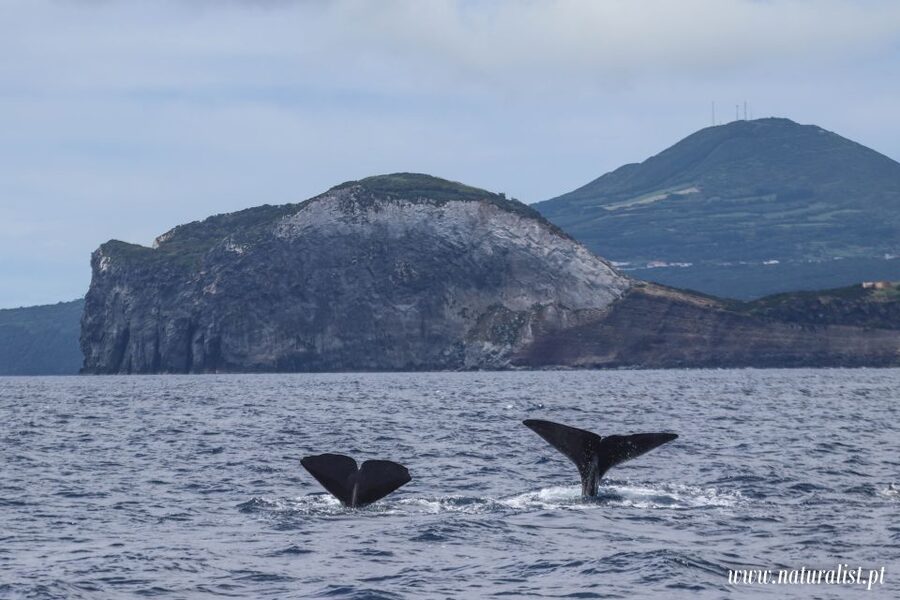
The 16-passenger boat keeps the group relatively small and gives you a close view of the water. It also means you are exposed to wind, spray, and the boat’s movement.
Several outings had rough or turbulent conditions. One passenger compared the high-speed Zodiac ride to an amusement-park attraction, while another noted that the front seats can get especially wet. The supplied waterproof jacket and trousers are important, not decorative.
Wear shoes that are waterproof or dry quickly. You may also want a warm layer beneath the waterproof suit, especially on a cool morning or after several hours at sea. Food and drinks are not included, so plan ahead before departure. One group received hot tea and lemon cookies after a cold ride, but that should be treated as a pleasant possibility rather than a standard inclusion.
The semi-rigid boat is not suitable for people with severe back problems, recent surgery, or pregnancy. Children under five cannot take part. Even if you have no medical restriction, think honestly about how you handle a fast boat in choppy water. The ride is part of the fun for some people and the main drawback for others.
Weather can change the plan
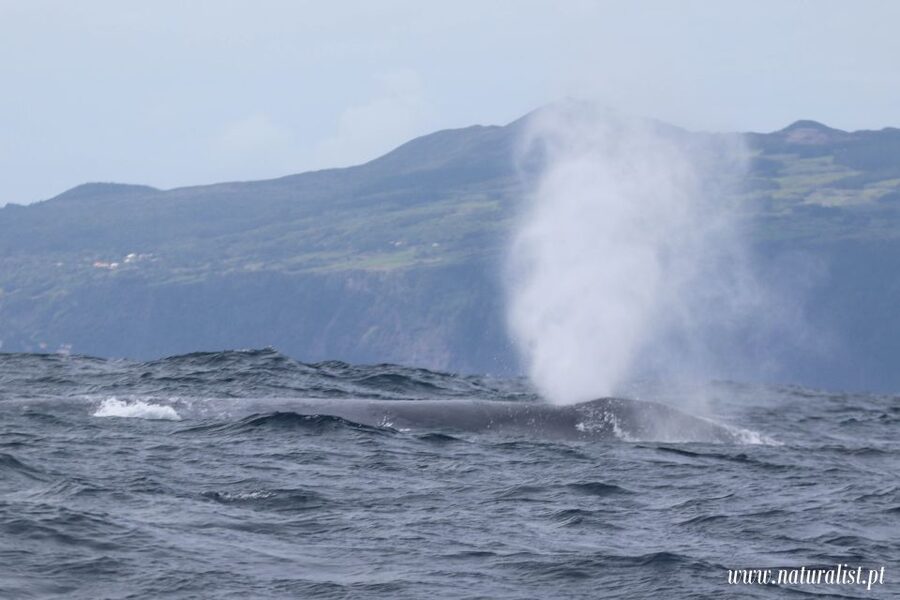
Boat trips in the Azores depend on sea and wind conditions. If the weather is poor, the operator may reschedule the outing. A full refund is available if the trip is canceled, and changes have sometimes been handled with quick communication and flexibility.
One storm forced a change of date, but the crew also arranged a departure from Pico. That option will depend on the circumstances and should not be assumed for every booking. Still, it shows why leaving a little space in your schedule is wise.
If whale watching is one of your main reasons for visiting Horta, book early enough in your stay to allow for a weather change. A morning or afternoon trip can then be moved if needed without taking away your only chance.
The activity allows free cancellation up to 24 hours before departure. You can also reserve and pay later, which helps if your island plans depend on ferries, weather, or other outdoor activities.
Is $101 a fair price?
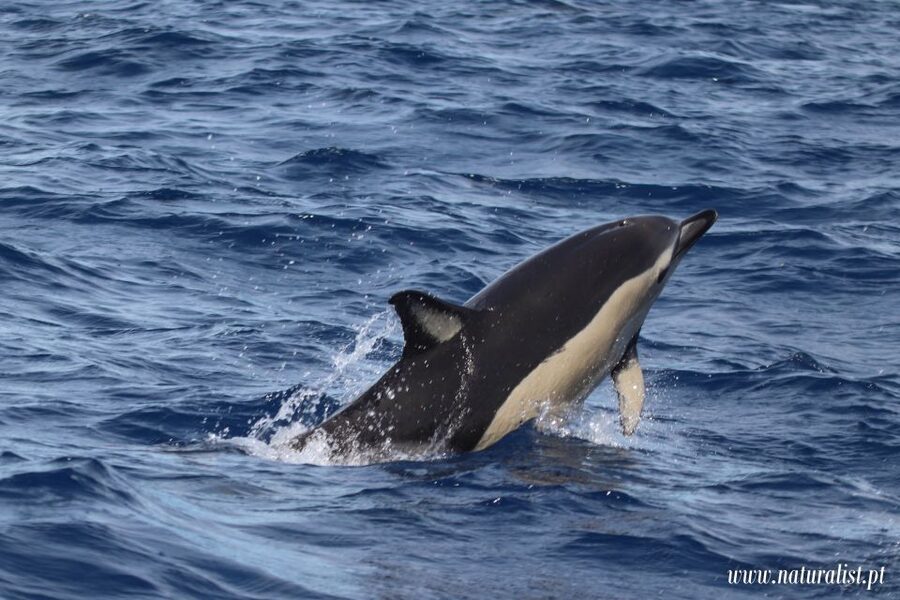
At $101 per person, this is not the cheapest way to spend three hours on the water. The price makes more sense when you count what is included: the boat, safety insurance, waterproof clothing, the briefing, and a marine researcher on board.
You are also paying for a crew that works with land-based spotters rather than simply heading offshore and hoping for luck. That does not ensure sightings, but it improves the search process. The university connection adds value for anyone who wants useful information rather than a quick photo stop.
The group size matters, too. A maximum of 16 people is small enough to keep the boat from feeling crowded, though the actual group may be smaller. One outing had 11 tourists and two marine biologists, leaving room for clear explanations and a comfortable viewing position.
Food, drinks, and hotel pickup are not included. You need to reach the marina yourself and arrive 15 minutes early. If you are comparing this with a larger boat trip, ask what kind of guide is included and whether clothing is supplied. Those details help explain the price difference.
Who will enjoy this most
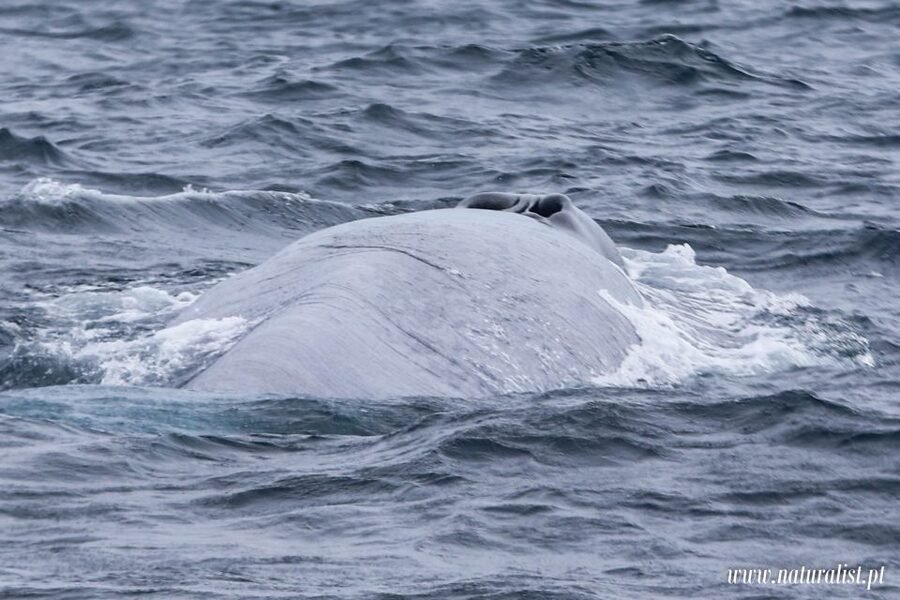
I would choose this trip if you want wildlife first and scenery second. It suits people who enjoy learning as they watch, especially anyone interested in marine biology, conservation, or animal behavior.
It is also a good fit for photographers, birdwatchers, and anyone hoping to see more than one kind of animal. The chance of dolphins, turtles, seabirds, fish, and whales gives you several reasons to keep looking.
You should think twice if you dislike bumpy boat rides, get uncomfortable in open weather, or need a guaranteed sighting. The RIB is lively, and the ocean does not cooperate on demand. People with pregnancy, serious back problems, or recent surgery should not book this activity.
Families with children under five cannot join. Older children who meet the age requirement should still be comfortable with a fast, exposed boat, though the supplied clothing helps with spray and wind.
How to make the most of the outing
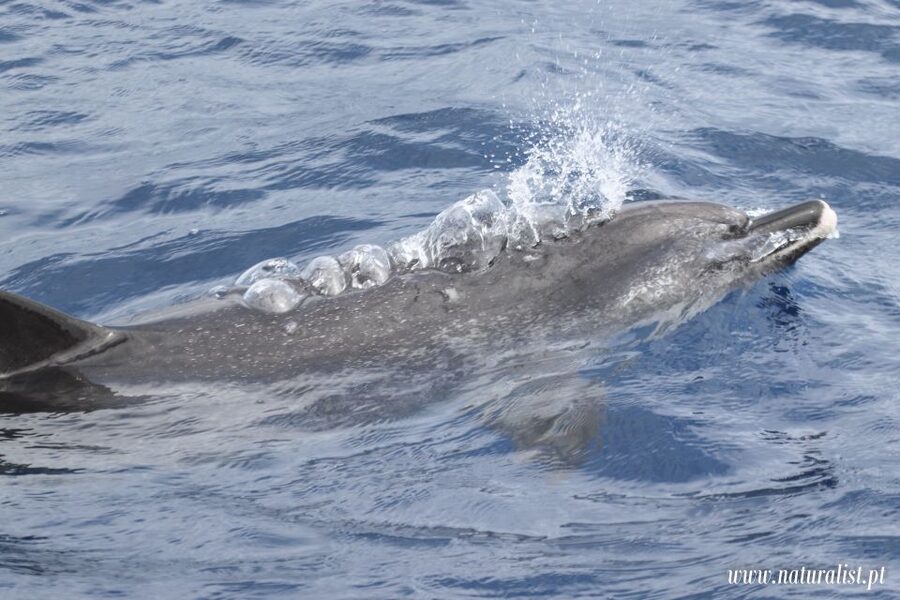
I would book for the day with the best weather forecast, but I would not rely on a forecast alone. Keep a backup day in your schedule when possible.
Arrive at Horta Marina by 8:45 for the morning departure or 1:45 for the afternoon departure. The meeting point is Naturalist, Science & Tourism Whale Watching. You will first receive the safety briefing, then dress for the water and head out.
Wear quick-drying footwear and layers. Do not count on buying food during the trip. Bring only what you can keep secure on a moving boat, and protect cameras and phones from spray.
Listen closely to the briefing about the animals. The trip becomes more rewarding when you know the difference between a sperm whale’s blow, a dolphin’s movement, and a seabird feeding pattern. If the sea is rough, sit where the crew recommends rather than choosing a seat only for the view.
Take the morning trip if you want more flexibility later. Take the afternoon trip if you prefer a slower start or need the morning for another plan. Both last about three hours.
Should you book the Horta whale-watching RIB trip?
Book it if you want a small-group, research-led outing with a fast boat, serious wildlife focus, and a realistic chance of seeing several species. The strongest reasons are the university marine researcher, the use of land-based whale spotters, the included waterproof clothing, and the care shown in repositioning the boat while respecting the animals.
Do not book it expecting a guaranteed whale encounter or a smooth cruise. You may get rough water, spray, and a long search before the first sighting. But if you can accept those limits, $101 is a fair price for three hours of guided marine watching in one of the Azores’ best whale areas.
FAQ
How long does the Horta whale-watching trip last?
The expedition lasts about three hours.
What time does the boat leave?
Morning trips leave at 9:00, and afternoon trips leave at 2:00. Arrive 15 minutes early, by 8:45 or 1:45.
Where do I meet the boat?
Meet at Naturalist, Science & Tourism Whale Watching in Horta Marina.
How many people fit on the boat?
The semi-rigid RIB carries up to 16 passengers.
What languages are available?
Tours are available in English and Portuguese. Spanish may be possible, and French must be requested in advance according to availability.
Are waterproof clothes included?
Yes. Waterproof clothing is included, along with safety insurance and a briefing about the trip and marine animals.
Are whale sightings guaranteed?
No. The operator normally sees two or three cetacean species per trip, but sightings depend on weather and animal movements.
Can I cancel for a refund?
Yes. You can cancel up to 24 hours before departure for a full refund. Trips may also be rescheduled because of weather, with a full refund if the operator cancels.
Just added around Portugal
- X Plorer – Caves (Benagil) & Dolphins Cruise★ 4.5 · 116 reviews
- Vilamoura: Boat Tour Dolphin Quest & Marine Life Search★ 4.9 · 71 reviews
- Azores: Swim with Dolphins Atlantic Experience★ 4.4 · 29 reviews
- Dolphin Watching and Cave Tour from Vilamoura★ 4.0 · 63 reviews
- Vilamoura Tour to Benagil and the Dolphins★ 4.0 · 14 reviews
- Dolphin Quest & Marine Life Search★ 5.0 · 90 reviews
- Terceira Island: Swimming with Wild Dolphins | Natural Habitat★ 5.0 · 17 reviews
- Terceira Island: Whale & Dolphin Watching | Best Wildlife Tour★ 4.0 · 24 reviews
Portugal Dolphin Tours, compared.
Albufeira: 2.5-Hour Benagil Caves & Dolphin Watching
Read our review →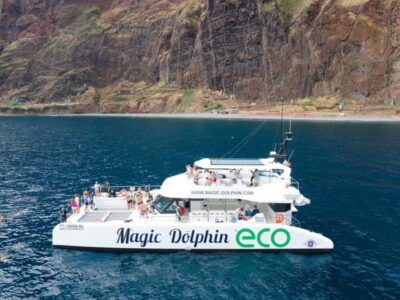
From Funchal: Ecological Catamaran Dolphin Whale Watching
Read our review →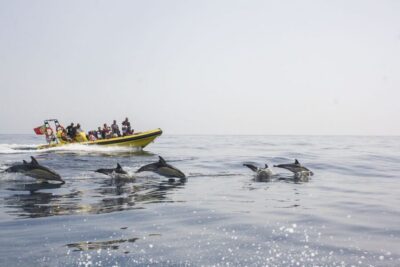
Albufeira: Benagil Caves & Dolphin Watching Speed Boat Tour
Read our review →
Funchal: Dolphin and Whale Watching Catamaran Cruise
Read our review →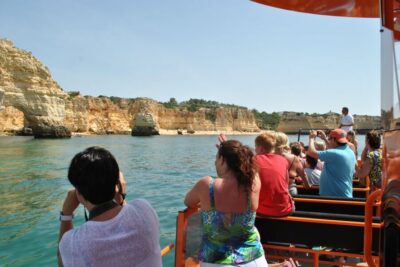
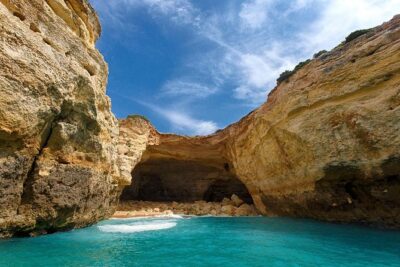
Dolphins Search and Benagil Caves from Albufeira
Read our review →
Albufeira: Dolphin Watching and Benagil Cave Boat Cruise
Read our review →