REVIEW · LANZAROTE
Lanzarote: Whale and Dolphin Watching Eco-Friendly Catamaran
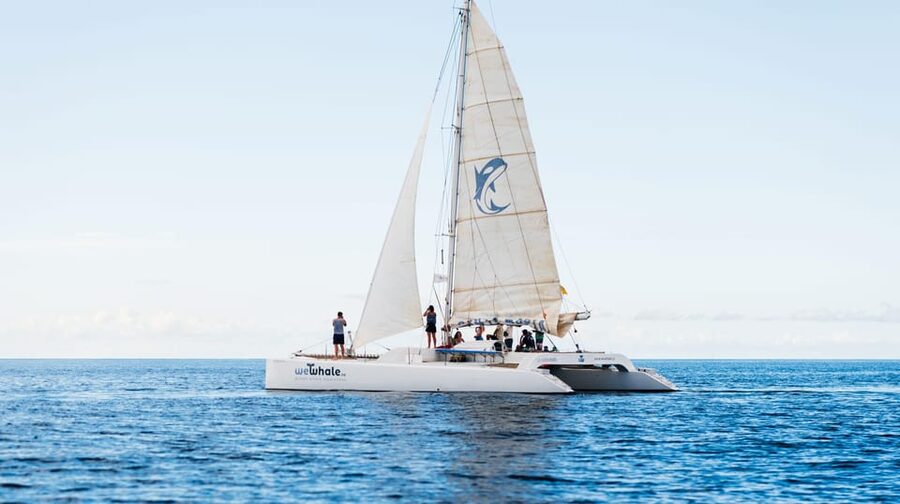
The most unusual part of this trip is the boat itself: a fully electric catamaran that moves without engine fumes and with very little noise. That quiet matters when you are trying to watch dolphins and whales behaving normally, rather than chasing them with a loud motor.
I like the close-to-the-water seating and the crew’s care around wildlife. I also like the hydrophone, which lets you hear underwater sounds, plus the small-group feel reported on the trip. The main drawback is simple: wild animals keep their own schedule, so you may see several dolphin groups, whales, and a turtle, or you may see none.
Key points to know before you book
- The electric catamaran is the main attraction: This is a powered boat, not a sailing trip, but the quiet electric drive means no diesel smell during wildlife watching.
- Animal sightings are never promised: Recent outings have included dolphins, whales, and a turtle, while another trip found no dolphins or whales.
- The hydrophone adds real value: You can listen for underwater communication instead of only watching the surface.
- Puerto Calero makes access straightforward: The meeting point is Pontoon F22, with parking nearby and easy arrival by taxi or bus.
- The four-hour length gives the crew time to search: The boat is not making a quick coastal loop. You have a proper half-day on the Atlantic.
- Weather affects comfort: February can be cloudy and cool, so sunny periods will make the open-air ride more pleasant.
Setting off from Puerto Calero and Pontoon F22
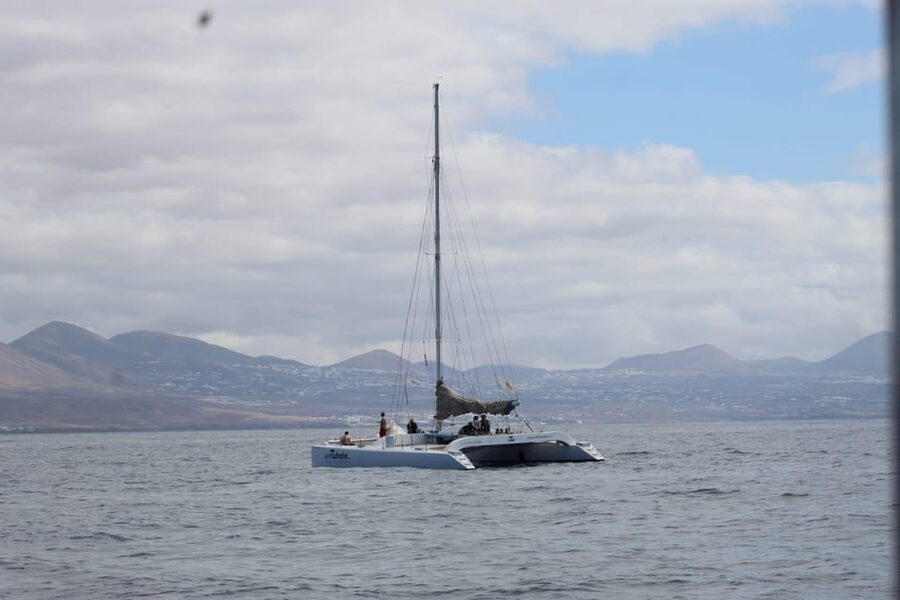
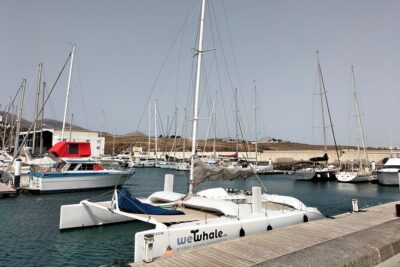
You meet the boat at Marina Puerto Calero, at Pontoon F22. Parking is available, and you can also reach the marina by bus or taxi without much fuss.
Give yourself enough time to find the pontoon. Marinas can look simple on a map but confusing once you are among several rows of boats. The supplied meeting point is specific, so use Marina Puerto Calero and Pontoon F22 rather than relying on a general search for whale watching in Lanzarote.
The marina is a practical starting point for a four-hour outing. You are not spending a large part of the day on a transfer, and you begin near open Atlantic water. Bring a hat and sunscreen even if the morning starts cloudy. The boat is exposed to sun and wind, and the weather can change during the ride.
The activity is not suitable for wheelchair users. That is important to check before paying, since the information provided does not describe wheelchair access or adapted boarding.
More Dolphin Watching Catamaran Cruises in Spain
- Small Group Dolphin Sunset Tour on Electric Catamaran Lanzarote
★ 4.5 · 106 reviews - Whale & Dolphin Observation on Silent Catamaran with Hydrophone
★ 4.5 · 66 reviews - Gran Canaria: Catamaran Dolphin Watch Cruise with Snorkeling
★ 4.4 · 4,761 reviews
What the electric catamaran changes
The boat is presented as the Canary Islands’ first fully electric catamaran. Its most useful feature is not just the environmental message. The quiet motor helps you listen and watch.
A diesel engine brings noise and fumes into the very setting you came to enjoy. An electric drive avoids the nasty fuel smell noted by one customer and makes the ride feel calmer. That can be especially welcome when the boat slows near animals and everyone is trying to hear the crew or spot movement on the water.
The catamaran also keeps you close to the sea. The low, open feel gives you a better connection with the water than a high-sided excursion boat might. You can take in wide views of Lanzarote’s coast while the crew scans for signs of marine life.
This is not a sailing cruise. The catamaran is powered by its electric system, and sailing is not part of this tour. If you want sails, wind power, or a quiet afternoon of simply drifting, choose a different boat trip. If you want a modern wildlife boat with no diesel fumes, this design is the stronger reason to book.
Four hours of searching the Atlantic
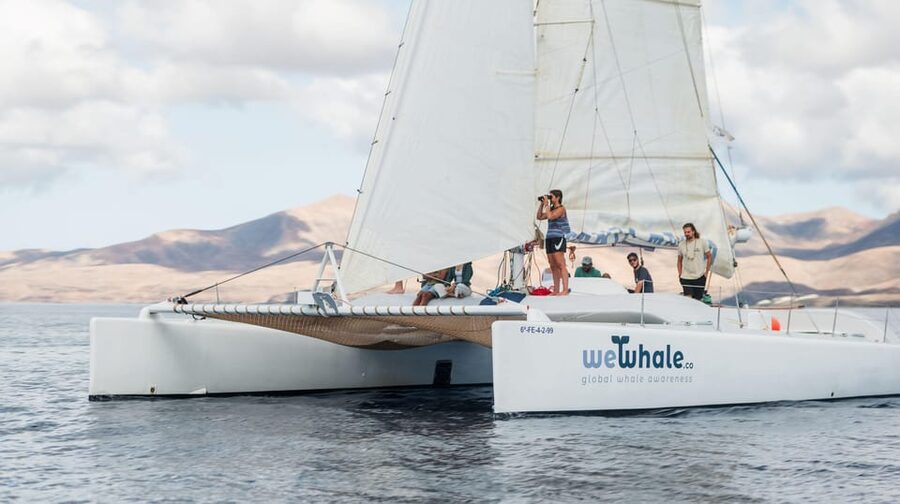
The four-hour duration is well suited to wildlife watching. Dolphins and whales do not gather at a fixed viewing platform, so the crew needs time to travel, scan, and wait.
You should think of the outing as a search in the animals’ home, not a scheduled show. The route depends on conditions and on where marine life is found that day. One recent trip saw several groups of dolphins, while another found no dolphins or whales at all. That contrast is not a flaw in the boat. It is the central reality of watching wild animals.
The length also gives the crew time to explain what you are seeing. If a fin appears briefly, you are not rushed straight back to the marina. You have a better chance to pause, listen, and understand the behavior.
Still, four hours on the Atlantic can feel long if you are cold, tired, or mainly interested in a guaranteed sighting. Choose a warmer, sunnier date if you can. A February trip was described as cloudy and fairly fresh, so you should pack a light extra layer even though only a hat and sunscreen are listed as essentials.
Looking for dolphins, whales, and turtles
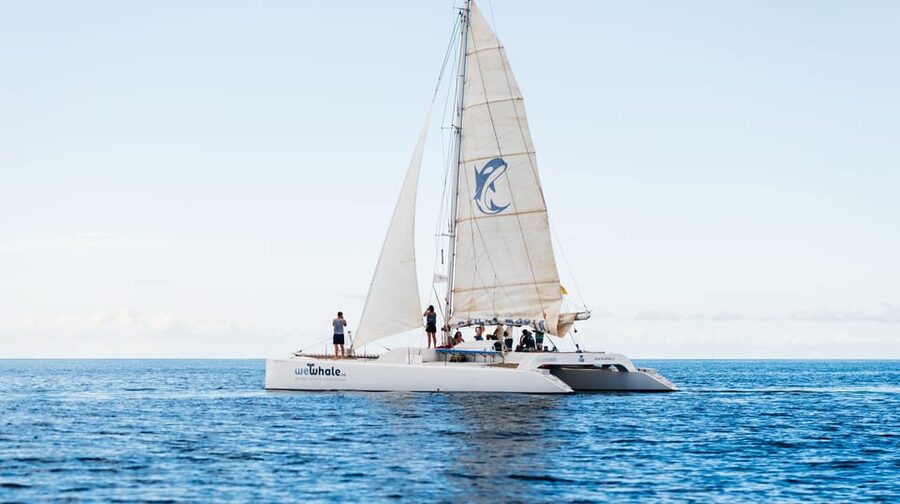
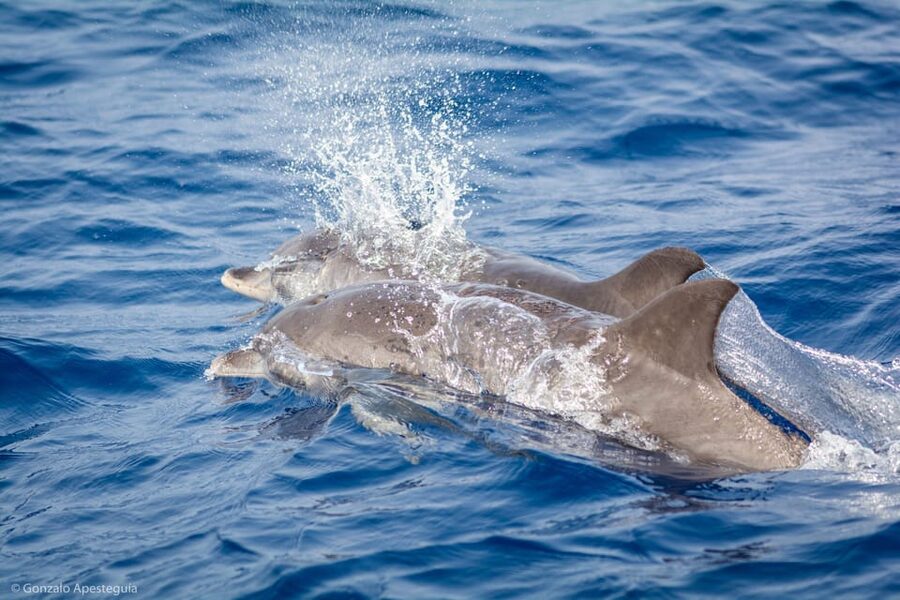
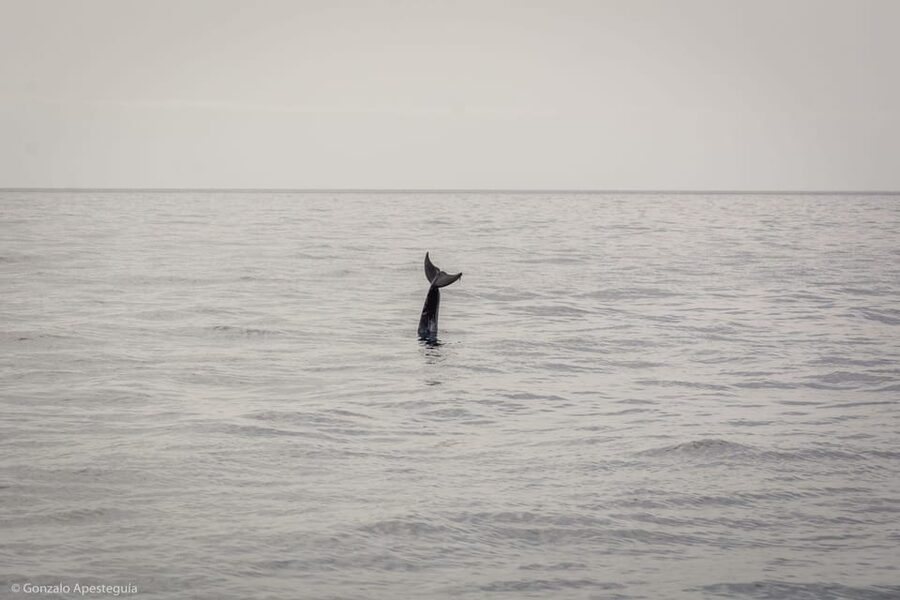
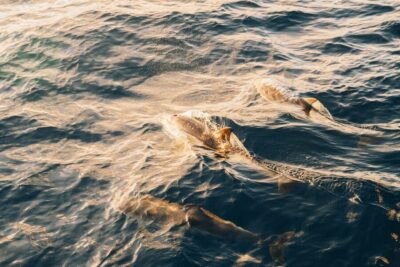
The main goal is to find dolphins and whales in their natural setting. Recent sightings have included two types of dolphins, several dolphin groups, whales, and a turtle. That is a fine range of marine life for one outing, but it should not be treated as a promise.
The crew’s approach is refreshingly restrained. They take care not to crowd dolphins, which means the boat may keep its distance instead of rushing in for a close photograph. That choice can mean fewer dramatic pictures, but it gives you a more respectful encounter and supports the point of an eco-focused trip.
I would set your expectations this way: you are paying for the boat, the crew, the time at sea, and a responsible attempt to find wildlife. You are not paying for a guaranteed whale or dolphin performance.
That distinction matters for families and first-time whale watchers. If a child needs a guaranteed attraction every few minutes, this could feel uncertain. If you enjoy patient observation and can accept a quiet spell, the trip has more appeal.
Keep your eyes moving across the water. The crew will direct your attention, but marine animals can surface quickly and disappear just as fast. A spotter who stays alert may catch the first sign before the rest of the group.
More Whale and Dolphin Watching Tours in Spain
- Tenerife: Eco-Yacht Whale and Dolphin Watching and Swimming
★ 4.7 · 15,619 reviews - Los Cristianos Respectful No-Chase Whale and Dolphin Safari
★ 4.6 · 12,782 reviews - Costa Adeje: Whale & Dolphin Eco-Cruise with Snacks & Drinks
★ 4.6 · 5,096 reviews - Los Gigantes: Dolphin & Whale Watching Cruise with Swim Stop
★ 4.7 · 4,539 reviews
The hydrophone makes the sea feel less silent
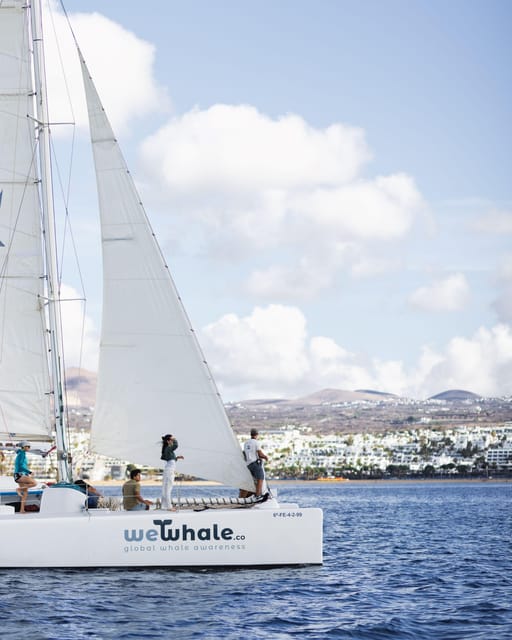
The onboard hydrophone is one of the most distinctive parts of the outing. It allows you to listen to whales and dolphins communicating beneath the surface.
That changes the experience from a simple sighting tour into a lesson in the life below the boat. You may look across an apparently empty stretch of ocean while hearing evidence that the water is active underneath. The system gives the crew another way to explain animal behavior and the marine ecosystem around Lanzarote.
The hydrophone will not guarantee that you hear animals on every trip. Sound depends on where the boat is, what wildlife is nearby, and sea conditions. But even the possibility adds something that many basic boat excursions lack.
I also appreciate how the sound element fits the electric boat. With little engine noise, the atmosphere is better suited to listening. You are not only looking for a fin or a blow. You are paying attention to the sea itself.
Crew commentary in three languages
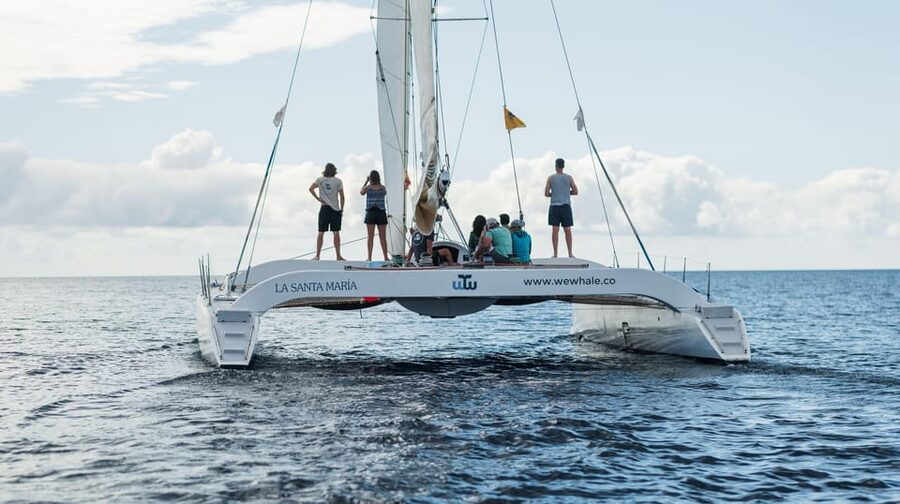
The live tour is offered in English, French, and Spanish. The crew provides information about the animals and Lanzarote’s marine ecosystem throughout the trip.
That commentary is useful because wildlife watching can otherwise become a guessing game. You learn what to look for and why the crew chooses not to approach too closely. The explanation also gives the ride substance during periods when no animals are visible.
The available information does not provide the crew members’ names, so I would not book this expecting a named naturalist or celebrity guide. What you can count on is live guidance in one of three languages and an educational focus.
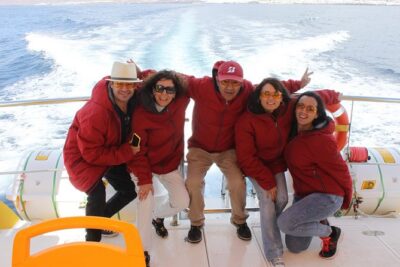
The strongest praise for the crew centers on friendliness, attention, and passion for the work. That matters in a small-group setting, where the experience feels more personal than a large boat excursion. Group size is not stated as a fixed limit, so do not assume every departure will have the same intimate feel. Still, the boat’s size and recent small-group outing suggest this can be a more personal option.
Coast views, snacks, and a comfortable rhythm
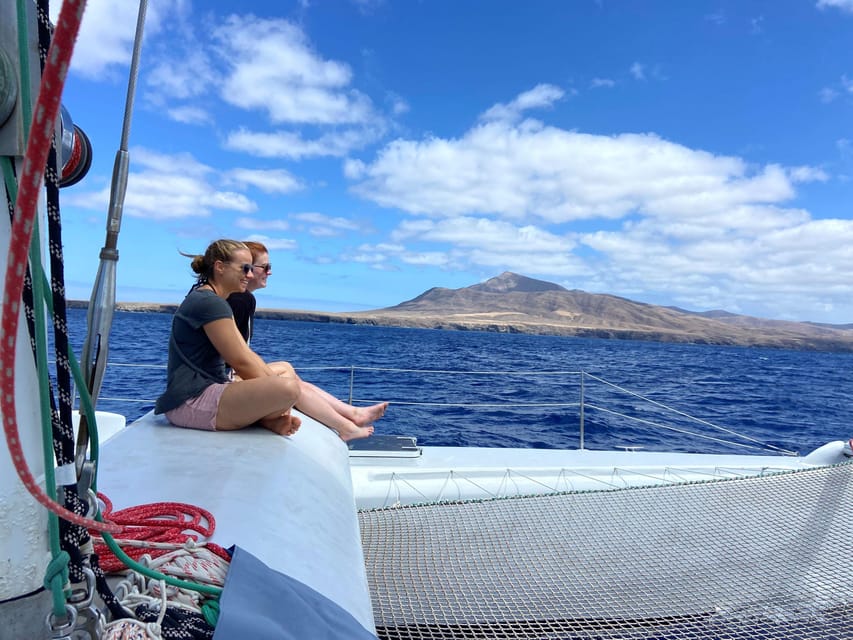
When the crew is not watching for animals, you can take in panoramic views of Lanzarote’s coastline. The coastal scenery gives the trip a second focus, so a quiet period is not simply dead time.
The catamaran’s design keeps you close to the water, according to the trip details and recent feedback. That low, open position can make the ocean feel more immediate, though it also means you are exposed to wind and sun.
Complimentary food includes snacks and fresh fruit, along with soft drinks. Local flavors are part of the offering, though no exact menu is given. You should not expect a full meal. Eat beforehand if you need something substantial, especially since the outing takes four hours.
Alcohol is not allowed, and neither are drugs, smoking, littering, or feeding animals. These rules are sensible on a wildlife boat. They protect the sea, keep the air clean, and stop people from changing animal behavior for a closer look.
What the $112 price really buys
At $112 per person, this is not the cheapest way to get on the water. The value rests on the complete package rather than on a guaranteed sighting.
You are paying for four hours, an electric catamaran, live interpretation, the hydrophone, snacks, fruit, soft drinks, and a wildlife-first approach. The absence of diesel fumes and the quieter ride are practical benefits, not just marketing points.
The price makes more sense if you care about sustainability and want a smaller, more thoughtful boat outing. It is also reasonable for someone who values expert explanation and time at sea. If your only goal is a quick photo with dolphins, a less expensive trip may suit you better, although it may use a louder boat or offer less time.
The key value question is your attitude toward uncertainty. A day with dolphins, whales, and a turtle can make $112 feel fair. A day with no sightings will feel expensive if you judge the trip only by animals seen. I would book it for the boat and the method first, with wildlife as the hoped-for reward.
Choosing the best conditions
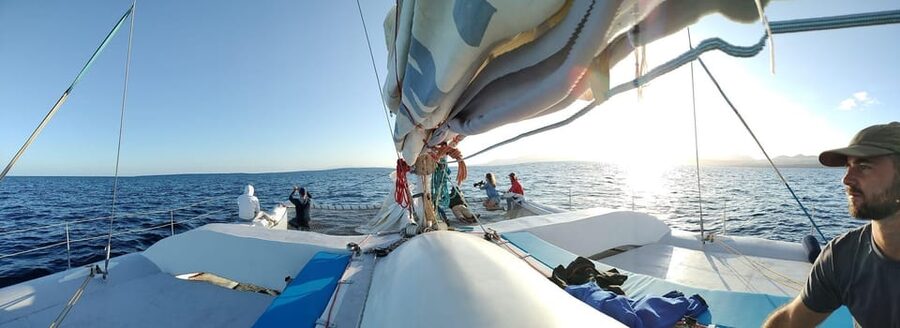
The date can affect your comfort more than the boat itself. A February outing was cloudy and relatively cool, and the advice from that experience was to choose the better-weather season if possible.
You cannot control the sea or the animals, but you can improve your own ride. Bring:
- A hat
- Sunscreen
- A warm extra layer for a cool or cloudy day
- Comfortable clothing suited to wind and sun
Only the hat and sunscreen are specifically required in the information provided. The extra layer is practical advice based on the cool February conditions described, not a stated rule.
The trip can run as a morning or sunset experience, depending on availability. One booking was moved to a sunset departure because it was the only reservation for the morning session. If a particular time matters to you, check the available start times before booking and be ready for the operator to discuss an alternative.
Who will enjoy this boat most
I would recommend this outing to adults, couples, families, and nature-minded visitors who are happy to observe rather than demand a show. It suits you especially well if:
- You care about lower-impact ways to see wildlife
- You enjoy learning about marine animals
- You want a four-hour boat trip rather than a short ride
- You prefer a quieter catamaran without diesel fumes
- You can accept that sightings are not guaranteed
- You like the idea of hearing underwater sounds through a hydrophone
I would hesitate if you need wheelchair access, dislike open-water uncertainty, or want a warm, sheltered cruise with a fixed schedule. I would also think twice if you are booking only for a guaranteed whale sighting.
The language choice makes the trip easier for English, French, and Spanish speakers. Since no individual guide names are supplied, you should focus on the live commentary and the language offered on your departure rather than expecting a particular crew member.
Booking flexibility and practical details
You can cancel up to 24 hours before departure for a full refund. The reserve-now, pay-later option lets you hold a place without paying immediately, which is useful if your Lanzarote plans are still shifting.
Check the start time when you book, since the four-hour trip has different availability by date. Arrive at Marina Puerto Calero and locate Pontoon F22. Parking is available, and bus or taxi arrival is possible.
Do not bring alcohol or drugs, and do not smoke, litter, or feed the animals. Feeding wildlife would undermine the careful approach that makes this tour worthwhile.
Should you book WeWhale Lanzarote?
Book it if you want a quieter, lower-impact wildlife trip and can treat the marine animals as wild creatures, not scheduled performers. The electric catamaran, hydrophone, careful approach, and four-hour duration give this outing more substance than a quick sightseeing cruise.
Skip it if you need guaranteed sightings, wheelchair access, or a fully sheltered ride. For everyone else, $112 is a fair price when the boat, crew, education, snacks, and environmental care all matter to you. Pick a pleasant-weather date, bring sun protection and a layer, and let the wildlife decide how dramatic the afternoon becomes.
FAQ
Where does the whale and dolphin trip leave from?
The boat departs from Marina Puerto Calero in Lanzarote, at Pontoon F22.
How long does the excursion last?
The excursion lasts four hours.
What marine animals might I see?
The trip looks for whales and dolphins, and recent outings have also included a turtle. Sightings are not guaranteed.
Is the catamaran fully electric?
Yes. It is described as the Canary Islands’ first fully electric, emission-free catamaran.
Can I hear whales and dolphins underwater?
Yes. The boat has an onboard hydrophone that can let you hear underwater sounds and animal communication.
What food and drinks are included?
Complimentary snacks, fresh fruit, and soft drinks are included. Alcohol is not allowed.
Is the tour accessible for wheelchair users?
No. The activity is not suitable for wheelchair users.
More Dolphin Watching Catamaran Cruises in Lanzarote
- Shell Island Snorkel and Dolphin Catamaran Cruise with Island Time
★ 5.0 · 4,362 reviews - Whale and Dolphin Watching Catamaran with Transfer and Buffet
★ 5.0 · 2,712 reviews - Funchal Bay: Dolphin & Whale Watch Luxury Catamaran Cruise
★ 4.2 · 2,684 reviews - Dolphin Catamaran Snorkel and Sail with Open Bar
★ 4.5 · 2,291 reviews
More Whale and Dolphin Watching Tours in Lanzarote
- From Funchal: Ecological Catamaran Dolphin Whale Watching
★ 4.5 · 8,204 reviews - Funchal: Dolphin and Whale Watching Catamaran Cruise
★ 4.5 · 5,697 reviews - Morro Jable: Dolphin & Whale Watching Cruise, Drinks & Swim
★ 4.1 · 4,158 reviews - From Ponta Delgada: Whale and Dolphin Watching Trip
★ 4.7 · 4,109 reviews
Just added around Lanzarote
- Marine Safari Dolphins in their natural habitat★ 4.5 · 2 reviews
- Lobos Island – The dolphin route★ 4.0 · 76 reviews
- Whale & Dolphin Observation on Silent Catamaran with Hydrophone★ 4.5 · 66 reviews
- Dolphin Watching Mini Cruise and Snorkeling from Lanzarote★ 4.0 · 72 reviews
- Dolphin Mini Cruise at Playa del Carmen★ 3.5 · 111 reviews
- Dolphin Watching Cruise to Lobos Island★ 3.5 · 14 reviews
- Lanzarote: Dolphin Watching by speedboat★ 4.4 · 73 reviews
- Lanzarote Sunset Experience with dolphin spotting★ 4.6 · 45 reviews
Lanzarote Dolphin Tours, compared.
Lanzarote: Dolphin-Watching Sunset Cruise with Transfers
Read our review →
Puerto del Carmen: Dolphin-Watching Speedboat Tour with Swim
Read our review →
Lanzarote: 2.5-Hour Sunset and Dolphins Cruise
Read our review →
Lanzarote: Lobos Island Half-Day Dolphin Watching Trip
Read our review →
Small Group Dolphin Sunset Tour on Electric Catamaran Lanzarote
Read our review →