REVIEW · PORTUGAL
Sagres Wildlife Adventure: Dolphin and Whale Watching Tour
Sagres sits where Portugal’s west and south coasts meet, giving Cape Cruiser access to coastal dolphin grounds and deeper water where whales may appear. The best part is the wildlife search itself: you never know if the next sighting will be a feeding group of common dolphins, a Bryde’s whale, seabirds, or nothing at all.
I like the small, personal feel promised by the skipper and marine biologist on every boat, and I like the clear concern for animal welfare. The main drawback is simple: wildlife is wild. One November trip found no dolphins or whales, so you need to treat sightings as a possibility, not a guarantee.
Key points to know before you book
- Sagres gives you two marine zones in one outing: the boat can look for coastal dolphins and then head toward deeper water where whales may be found.
- A marine biologist rides along: expect explanations about cetaceans, seabirds, the local Natural Park, and respectful viewing.
- The 3-hour trip is an active search: the route changes according to conditions and animal movements, so every outing is different.
- Recent sightings included a Bryde’s whale and a dolphin mother with her calf: orcas are possible, but rare and never promised.
- Baleeira Port is easy to reach: Cape Cruiser’s office is beside Baleeira Beach, about five minutes from central Sagres.
- The tour is weather-conscious: you receive a life jacket, windbreaker jacket, safety briefing, and insurance, with rescheduling or a refund if bad weather cancels the trip.
Why Sagres is a smart place for whale watching
Sagres is not just a pretty seaside town chosen for convenience. Its position at the meeting point of Portugal’s western and southern coasts gives Cape Cruiser a useful range of water to explore.
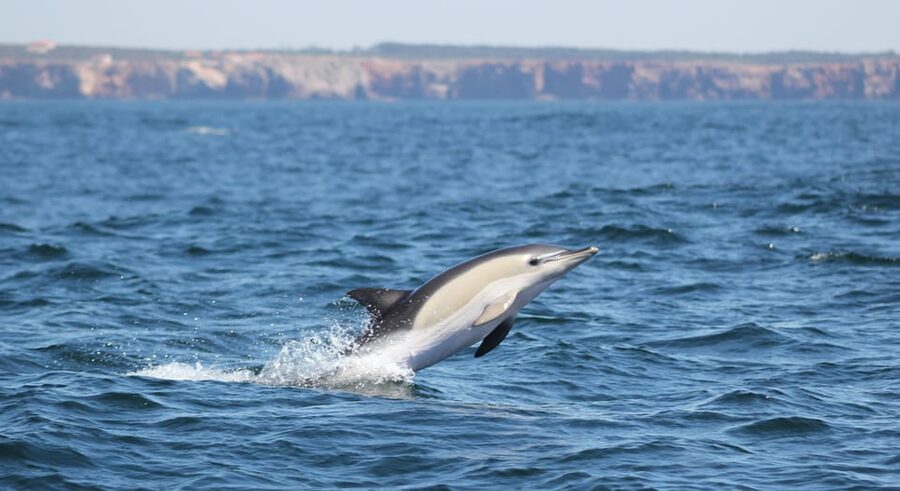
Near the coast, you might find dolphins moving in groups, feeding, or swimming close to the boat. Farther out, the search may turn toward larger cetaceans, including fin whales or Bryde’s whales. That variety makes the trip more interesting than a short coastal cruise built around one expected species.
It also explains why the route cannot be promised in advance. The crew needs to respond to sea conditions, visibility, and signs of animal activity. You may spend part of the trip in one area and then move to another when the marine biologist and skipper decide that the chances look better elsewhere.
That uncertainty is part of the deal. If you need a guaranteed animal encounter, this is not the right kind of outing. If you like the idea of reading the sea and waiting for a sudden fin, blow, or leap, Sagres offers a strong setting.
More Dolphin and Wildlife Eco Tours in Portugal
- Faro: Dolphin and Wildlife Watching in the Atlantic Ocean
★ 4.8 · 637 reviews - Small Group Dolphin and Wildlife Watching Tour in Faro
★ 5.0 · 578 reviews - Sagres: Wildlife Tour Dolphins and Caves
★ 4.7 · 106 reviews
Starting at Baleeira Port
You check in at the Cape Cruiser office beside Baleeira Beach, roughly five minutes from the center of Sagres. Look for a guide in a light blue shirt with the company name. After the briefing, the crew leads you to the vessel.
This is a useful setup because you do not need to arrange a separate transfer from town. You should arrive in comfortable clothing and shoes, with your passport or ID card. A copy is accepted. Large bags, luggage, baby strollers, and baby carriages are not allowed, so keep your belongings compact.
The briefing covers the itinerary, safety, and wildlife. I consider this more than a formality. A few minutes of preparation can make the boat feel less intimidating, especially if you have never taken a wildlife trip before. The crew also provides a life jacket and windbreaker jacket, and each trip has a skipper and marine biologist aboard.
Bring sunscreen in sunny weather. Wind on the water can make the temperature feel cooler than it does onshore, even on a bright Algarve day.
Three hours of searching, watching, and waiting
The central activity lasts three hours, with Cape Cruiser returning to the same office at Baleeira Port. That length gives the crew enough time to search rather than simply make a quick circuit near the harbor.
You may first look for dolphins along the coast. Common dolphins can gather in feeding events, and bottlenose dolphins may appear in groups. Some animals may approach the boat out of curiosity and swim alongside it, but you should not expect every sighting to produce a close pass or acrobatic display.
The crew’s stated aim is to let you observe marine life at close range while respecting its habitat. That means no touching, feeding, chasing, or trying to force an encounter. The rules may feel strict if you are hoping for a perfect photograph, but they protect the animals and help keep the experience honest.
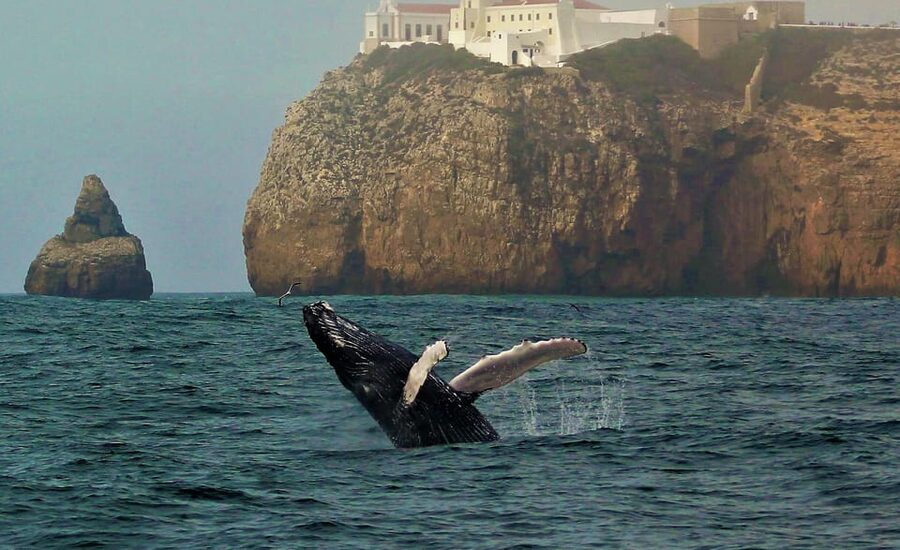
If conditions and animal activity allow, the boat may search farther offshore for whales. Possible sightings include fin whales and Bryde’s whales. A lone whale can be especially hard to spot, while a group of dolphins may make itself obvious with repeated movement at the surface.
The trip can also produce more than cetaceans. Keep watch for seabirds, fish, turtles, and sharks. Orcas are listed as a rare possibility. That is an exciting prospect, but you should read it correctly: they are not a regular feature or a promised part of the route.
The marine biologist makes the difference
A marine biologist accompanies every trip, along with the skipper. This pairing matters because boat handling and wildlife interpretation are different jobs.
The skipper concentrates on navigation and safety. The marine biologist can explain what you are seeing, help identify species, and put the animals into the context of the Natural Park. The information is intended to be fun and interactive rather than a formal lecture, which suits a family outing or a group with mixed interests.
I especially like this arrangement for people who want more than a photo opportunity. A quick glimpse of a fin is exciting, but understanding the difference between a dolphin species or learning why the boat keeps a respectful distance gives the sighting more meaning.
The crew also emphasizes marine conservation. You are asked not to feed or touch animals, and the prohibited items include fishing equipment, smoking and vaping materials, alcohol, drugs, fireworks, explosives, glass objects, and anything that could create a safety or pollution problem.
More Whale and Dolphin Watching Tours in Portugal
- From Funchal: Ecological Catamaran Dolphin Whale Watching
★ 4.5 · 8,204 reviews - Funchal: Dolphin and Whale Watching Catamaran Cruise
★ 4.5 · 5,697 reviews - From Ponta Delgada: Whale and Dolphin Watching Trip
★ 4.7 · 4,109 reviews - Funchal Bay: Dolphin & Whale Watch Luxury Catamaran Cruise
★ 4.2 · 2,684 reviews
What recent sightings can tell you
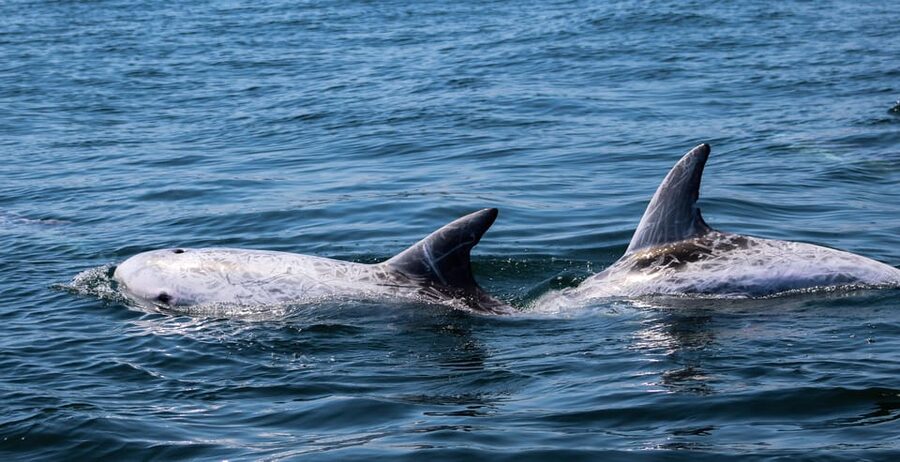
Recorded outings have included dolphins, whales, seabirds, and a Bryde’s whale. One particularly appealing sighting involved a mother dolphin with her baby. These details show the range of the area, but they should not be treated as a forecast for your own departure.
One November trip did not find dolphins or whales. The guide was described as kind and attentive, but the wildlife simply did not appear. That is an important reality check. Cape Cruiser can organize the search, explain the environment, and operate responsibly, but it cannot control the animals.
The practical lesson is to judge the tour by the quality of the process as well as the final sighting. If you see whales and dolphins, the trip may become a highlight of your Algarve visit. If you do not, the marine biologist, scenery, and time on the water still matter, though the experience will naturally feel less rewarding.
If you have flexibility, ask Cape Cruiser about current conditions and recent activity before booking. The company’s promise is not a guarantee of wildlife, but the crew can help you understand what sort of day you are choosing.
Comfort, safety, and the open sea
The supplied information describes the experience as wheelchair accessible, but it also asks people with mobility concerns to contact Cape Cruiser before booking. The same advice applies if you are pregnant, have back problems, recently had surgery, or have any health condition that could make a boat trip risky.
The tour is not suitable for children under three, pregnant women, people with back problems, or people over 75. These limits are worth taking seriously. Three hours on a moving boat can be demanding, and the open sea is not the place to discover that a condition affects your comfort.
The windbreaker jacket is a useful inclusion, but you should still dress for changing conditions. Wear comfortable shoes and clothes, and protect yourself from the sun. Do not bring a stroller, large bag, pet, or alcohol. Assistance dogs are allowed.
The crew’s emphasis on care begins before departure and continues after the boat returns. That matters for first-time boat users, families with older children, and anyone who feels slightly nervous about going offshore.
Is the $111 price fair?
At $111 per person, this is not the cheapest way to spend three hours in Sagres. It is also not simply a boat ride. The price includes the briefing, guide service, skipper, marine biologist, life and windbreaker jacket, insurance, and the wildlife search itself.
I see the strongest value in the specialist crew. You are paying for people who can operate the boat, manage safety, and help identify animals. The insurance and equipment also remove several costs and decisions you might otherwise need to handle yourself.
The value drops if you require a guaranteed sighting. No responsible wildlife operator can offer that, and one outing found no dolphins or whales. You should book this for the chance to see marine life in a respectful setting, not as a guaranteed whale photograph.
The flexible booking terms help. You can reserve now and pay later, and cancellation is listed as free up to 24 hours before departure. Other tour information refers to 48 hours, so I would confirm the exact cancellation deadline at the time of booking. If Cape Cruiser cancels because of bad weather, you can reschedule without extra cost or receive a full refund.
In the offseason, from November through April, at least six people are required for the trip to operate. If there are too few bookings, Cape Cruiser says it will try to find another time or day, with a full refund if no suitable option works.
Who will enjoy this trip most?
I would choose this tour if you want a wildlife-focused outing rather than a sightseeing cruise. It suits families with children aged three and older, couples, friends, and anyone who likes learning while watching the sea.
It is also a good fit if you value conservation rules. You will not be allowed to touch or feed animals, fish, litter, or pressure the crew into getting too close. Those limits protect the wildlife and make the experience more responsible.
You may want to reconsider if you get motion sickness, need guaranteed comfort, or have a health concern that makes boat travel difficult. Contact Cape Cruiser before booking if you have any doubt.
The multilingual guide service is another plus. Tours are offered in English, Portuguese, or Spanish. The guide name is not provided, so I would not expect to request a particular person unless Cape Cruiser confirms that option directly.
Useful preparation for your morning or afternoon
Wear comfortable shoes with secure footing. Choose clothes that handle wind, and bring sunscreen when the forecast is bright. Keep your ID or passport with you, or carry an accepted copy.
Leave large bags and unnecessary valuables behind. Smoking, vaping, alcohol, drugs, glass items, weapons, sharp objects, fishing gear, and fireworks are not allowed. Pets cannot join, except for assistance dogs.
Most important, set your expectations properly. You are going out to search for animals, not visiting an aquarium. Some moments may be thrilling, with dolphins racing beside the boat or whales appearing in the distance. Other stretches may involve patience and open water.
That unpredictability is not a flaw in the tour. It is the honest nature of wildlife watching.
Should you book the Cape Cruiser Wildlife Adventure?
Book it if you have three hours in Sagres, like marine life, and can accept that nature sets the schedule. The location is strong, the crew includes both a skipper and marine biologist, and the package covers the practical basics.
I would be especially inclined to book if recent reports of dolphins or whales are encouraging and you can keep your schedule flexible. I would not book it solely because you want to see an orca or guarantee a whale photograph.
At $111, the tour earns its price through the specialist crew, safety equipment, insurance, and access to both coastal and deeper waters. Just remember the central bargain: you receive a well-supported search, not a promise. For the right person, that makes the trip feel like a real encounter with the sea rather than a staged show.
FAQ
Where does the Sagres Wildlife Adventure start?
The meeting point is the Cape Cruiser office beside Baleeira Beach at Baleeira Port, about five minutes from central Sagres.
How long does the tour last?
The tour lasts three hours, including the wildlife search and the return to Cape Cruiser at Baleeira Port.
What animals might I see?
Possible sightings include common dolphins, bottlenose dolphins, fin whales, Bryde’s whales, orcas, seabirds, sharks, fish, and turtles. No species is guaranteed.
Are dolphins and whales guaranteed?
No. Wildlife sightings depend on natural conditions and animal movements. One recorded trip found no dolphins or whales.
Is a marine biologist on every trip?
Yes. Every trip includes a skipper and a marine biologist, with wildlife and Natural Park information shared during the outing.
What languages are available?
Guiding is available in English, Portuguese, and Spanish.
What is included in the price?
The experience includes a briefing, wildlife information, a guide, life and windbreaker jackets, insurance, check-in and drop-off at Baleeira Port, a skipper, and a marine biologist.
What should I bring?
Bring comfortable shoes, comfortable clothes, sunscreen in sunny weather, and your passport or ID card. A copy of the passport or ID card is accepted.
Is the tour suitable for young children?
The tour is not suitable for children under three years old.
What happens if bad weather cancels the trip?
You can reschedule without extra cost or receive a full refund if Cape Cruiser cancels because of bad weather.
Just added around Portugal
- X Plorer – Caves (Benagil) & Dolphins Cruise★ 4.5 · 116 reviews
- Vilamoura: Boat Tour Dolphin Quest & Marine Life Search★ 4.9 · 71 reviews
- Azores: Swim with Dolphins Atlantic Experience★ 4.4 · 29 reviews
- Dolphin Watching and Cave Tour from Vilamoura★ 4.0 · 63 reviews
- Vilamoura Tour to Benagil and the Dolphins★ 4.0 · 14 reviews
- Dolphin Quest & Marine Life Search★ 5.0 · 90 reviews
- Terceira Island: Swimming with Wild Dolphins | Natural Habitat★ 5.0 · 17 reviews
- Terceira Island: Whale & Dolphin Watching | Best Wildlife Tour★ 4.0 · 24 reviews
Portugal Dolphin Tours, compared.
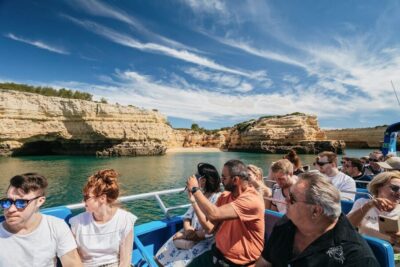
Albufeira: 2.5-Hour Benagil Caves & Dolphin Watching
Read our review →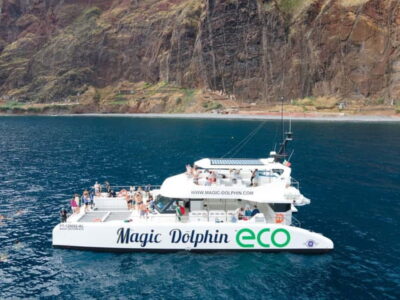
From Funchal: Ecological Catamaran Dolphin Whale Watching
Read our review →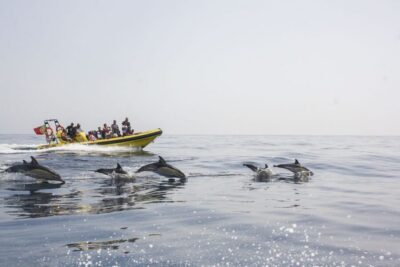
Albufeira: Benagil Caves & Dolphin Watching Speed Boat Tour
Read our review →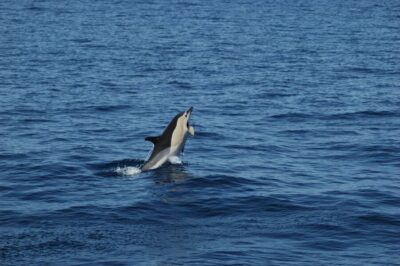
Funchal: Dolphin and Whale Watching Catamaran Cruise
Read our review →
Dolphins Search and Benagil Caves from Albufeira
Read our review →
Albufeira: Dolphin Watching and Benagil Cave Boat Cruise
Read our review →