
REVIEW · SAN DIEGO
San Diego: Whale and Dolphin Watching Cruise
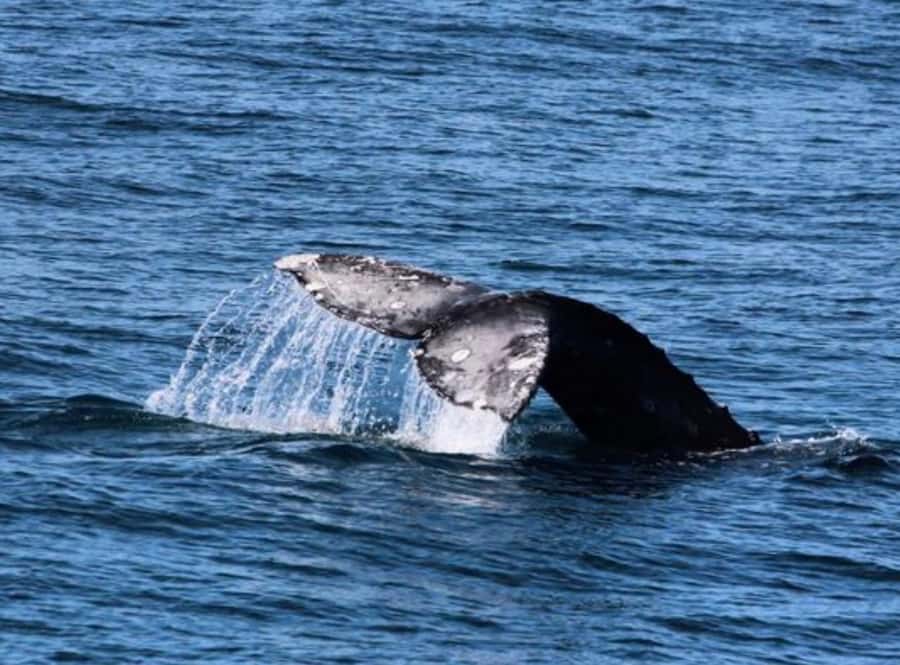
San Diego’s whale watching works in every season. Gray whales pass the coast on their winter and spring trip between Alaska and Baja California, while giant blue whales often feed offshore in summer. The wildlife is wild, so the day can bring anything from hundreds of dolphins to one distant spout.
I like the Natural History Museum naturalists, who add context about the animals, port, ships, and local environmental work. I also like the whale-or-dolphin guarantee: if neither appears, you receive a pass for another whale watching or harbor cruise. The main drawback is simple: four hours on the Pacific can mean cold, wind, and motion sickness, and even a hard-working crew cannot order a whale to surface.
Key points to know before you go
- Gray whales in winter and spring: Watch for migrating adults and, at times, calves traveling with their mothers toward Baja California.
- Blue whales in summer: The largest animals on Earth commonly feed offshore, with fin, humpback, and minke whales also possible.
- Dolphins are often the main event: Common dolphins, Risso’s, Pacific white-sided, and bottlenose dolphins may travel beside the boat.
- Museum-led narration: Captains and volunteer naturalists from the San Diego Natural History Museum explain marine life, the harbor, and conservation work.
- A useful sighting guarantee: No whale or dolphin means a pass for another San Diego whale watching or harbor cruise.
- Plan for an exposed boat ride: Bring sunglasses, a sun hat, and a jacket, and remember that outer decks are reached by stairs.
A four-hour search on San Diego’s Pacific waters
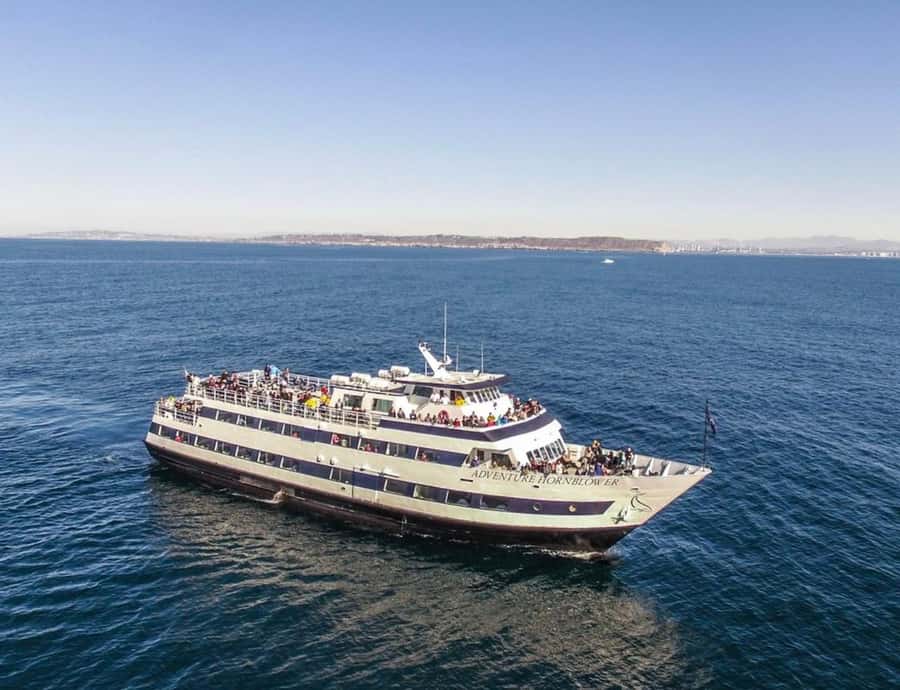
This is not a short harbor loop with a quick look at the ocean. Plan on a 3.5- to 4-hour cruise leaving from Pier 2 at 970 North Harbor Drive. The boat first gives you views around San Diego Harbor, then heads offshore in search of marine life.
That longer time matters. Whales do not gather at a fixed viewing platform. The crew may need to cover a broad patch of water, watch for blows, and follow reports from nearby boats. Four hours gives you a fair chance to find animals, though it also means you should think carefully about seasickness and comfort.
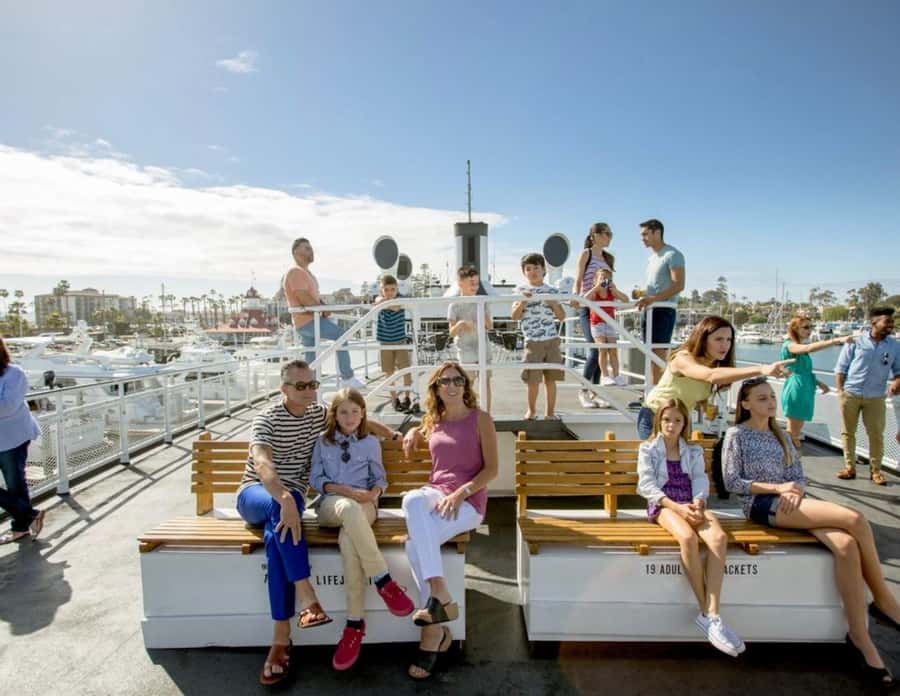
You can use indoor seating or head outside. The outer decks offer your best chance to scan the horizon and watch animals at water level, but access is by stairs. Indoor seats are helpful when the wind picks up, though sight lines and the ability to hear narration may be better from certain areas of the boat.
As the boat moves out, your captain points out San Diego landmarks and activity around the port. The harbor setting adds more than scenery. You may hear about ships, military equipment, the working waterfront, and the environmental concerns tied to a busy coastal city. One especially praised part of the experience is this broader explanation of the area, not just the hunt for whales.
More Whale and Dolphin Watching Tours in the USA
- Maui Eco-Raft Tour: Eye-Level Whale or Dolphin Watching – Lahaina
★ 5.0 · 2,482 reviews - Monterey: Monterey Bay Dolphin and Whale Watching Boat Tour
★ 4.7 · 1,645 reviews - Luxury Snorkel Cruise, Local Buffet with Whale & Dolphin Watch
★ 4.5 · 1,334 reviews
What you may see in each season
San Diego’s location gives this cruise a useful year-round calendar, but the animals change with the season.
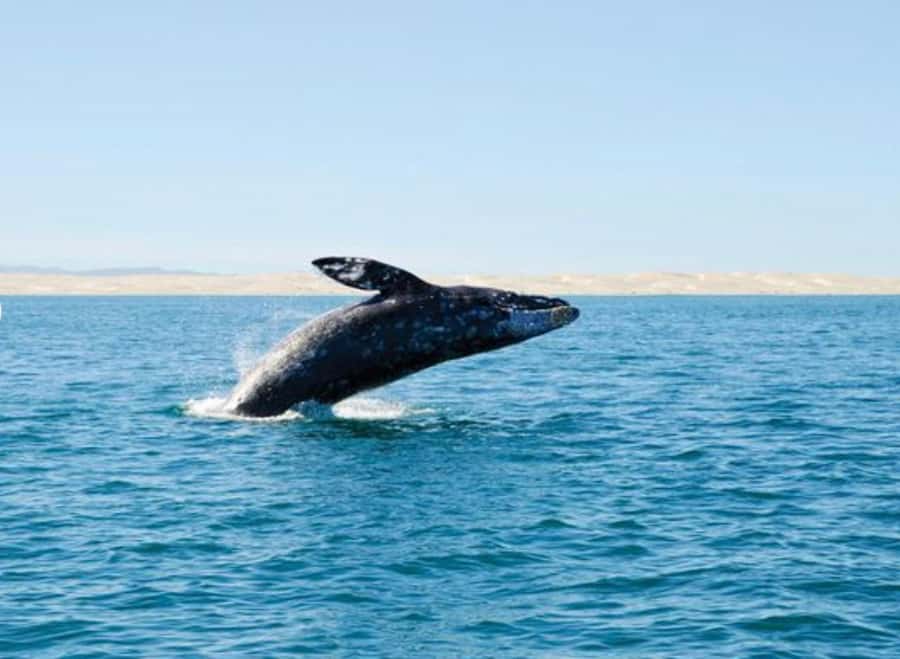
From winter into spring, gray whales travel between feeding grounds in Alaskan waters and calving lagoons in Baja California. On the return trip, a mother and calf may pass together. Gray whales can be especially meaningful to watch because their journey follows a long coastal route, and you are seeing part of a major annual migration rather than a random visit.
Summer brings the chance to see blue whales feeding offshore. These are the largest animals on Earth, yet their enormous size does not make them easy to spot. A blue whale may surface briefly, show a blow, and disappear into the open water. You may also encounter fin, humpback, and minke whales during the summer season.
The timing of your cruise helps, but it does not guarantee a particular species. A summer outing can produce a fin whale and a blue whale, or only dolphins. A winter trip may bring gray whales, but ocean conditions and animal movements always control the result.
This is why I would book the cruise for the full marine experience rather than for one exact animal. If your only goal is to photograph a blue whale at close range, you may leave disappointed. If you enjoy watching the sea, learning how animals behave, and accepting a little uncertainty, the outing makes more sense.
Dolphins, sea lions, sunfish, and seabirds
Dolphins often give you the most active sightings. Possible species include common dolphins, Risso’s dolphins, Pacific white-sided dolphins, and bottlenose dolphins. Common dolphins may gather in large pods and move quickly beside the boat. On a good outing, you might see dozens or even hundreds feeding and racing through the water.
This is one of the strongest reasons to keep expectations flexible. An outing without a whale can still be memorable if dolphins ride the bow or gather in a feeding group. Several accounts describe dolphins swimming beside the boat for an extended period, which can offer better viewing than a distant whale blow.
The crew also watches for sea lions and harbor seals. These animals may appear around the harbor or offshore, adding variety to the search. You may spot a mola mola, also called an ocean sunfish, along with fish that the captain identifies from the boat.
Look up as well as out. Herons, terns, pelicans, and gulls are part of the coastal wildlife picture. The birds help you read the water, since feeding activity can attract several species at once. You are not simply waiting for a whale. You are learning to notice the full community around the boat.
Captains and Natural History Museum narration
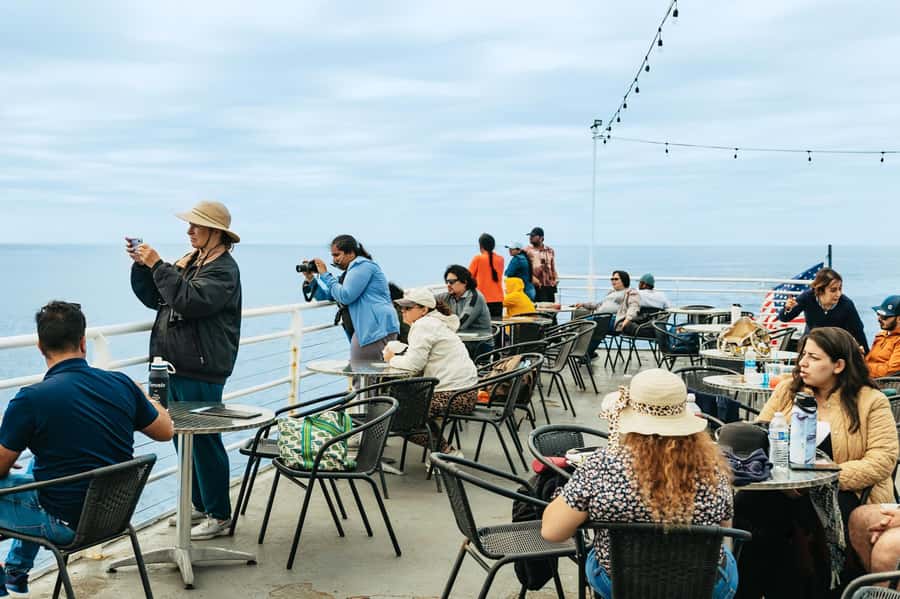
The educational side of this cruise is one of its best features. Captains provide live narration, while volunteer naturalists from the San Diego Natural History Museum explain the animals and the local marine environment.
The information extends beyond species names. You may learn about migration, feeding behavior, the harbor, nearby ships, military equipment, and local environmental efforts. That makes the four-hour ride feel more purposeful, especially on a day when whales stay out of sight.
The quality of what you hear can depend on where you sit and how busy the boat is. One practical issue is that narration may be easier to follow from one level than another. If the information matters to you, try to choose a seat where you can hear the speakers clearly, and move outside when announcements direct your attention to an animal.
A captain such as Rick has been praised for keeping the ride lively while pointing out wildlife and features around the harbor. Staff also work to approach animals responsibly rather than crowding them. That balance matters. A close look is exciting, but giving marine mammals room is part of a good wildlife outing.
Same water, a different way to meet them:
- Little Toot Dolphin Adventure at Clearwater Beach
★ 5.0 · 5,594 reviews - Shell Island Snorkel and Dolphin Catamaran Cruise with Island Time
★ 5.0 · 4,362 reviews - Dolphin and Manatee Stand Up Paddleboard Tour in Daytona Beach
★ 5.0 · 2,328 reviews - Jekyll Island Dolphin Tours
★ 5.0 · 2,242 reviews
The real itinerary: harbor views, open water, and the return
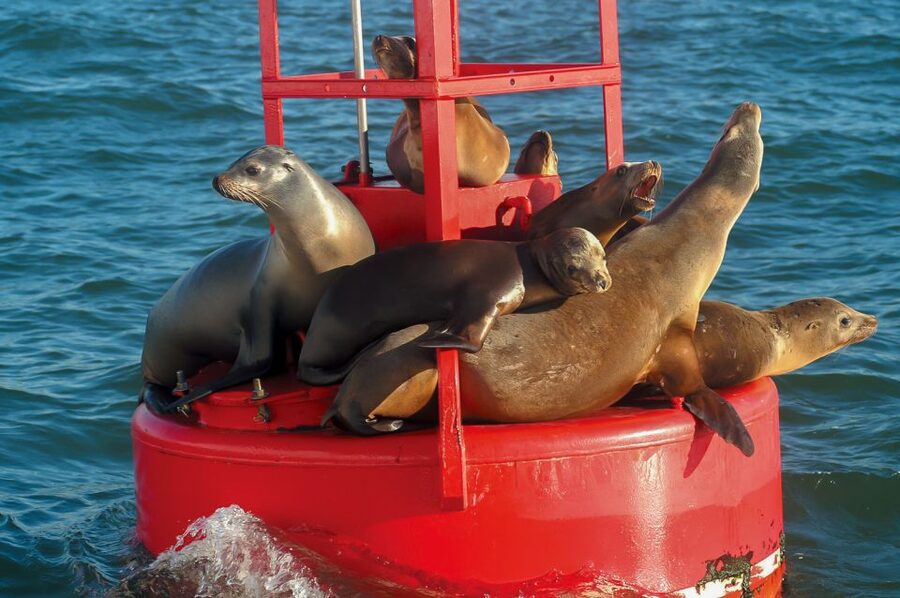
The cruise begins at San Diego Harbor, where you check in at Pier 2. The early part of the trip gives you a look at famous waterfront sights and the port’s working activity. This is a pleasant start because you are not sent directly into empty ocean while waiting for wildlife.
Once offshore, the focus shifts to scanning. The captain and crew search for blows, fins, dorsal shapes, splashes, and clusters of birds or dolphins. Nearby boats may help locate animals, but the crew still has to navigate toward a responsible viewing position.
When whales appear, keep your camera ready but do not spend the whole time looking through it. A whale may surface only briefly, and the people beside you may spot the next blow before you do. The most satisfying moments often come from watching the pattern of the animal’s movement: a spout, a back, perhaps a fluke, then a long pause.
Dolphins can change the mood quickly. A quiet stretch of ocean may become active when a pod arrives. You might see them beside the hull, ahead of the bow, or spread across the water in a feeding group.
The boat then returns to the same harbor meeting point. There is no hotel pickup or drop-off, so you need to arrange your own way to Pier 2 and allow time for parking. Parking near the harbor can be an issue, so do not treat the listed departure time as the moment to arrive.
Price, value, and the no-sighting pass
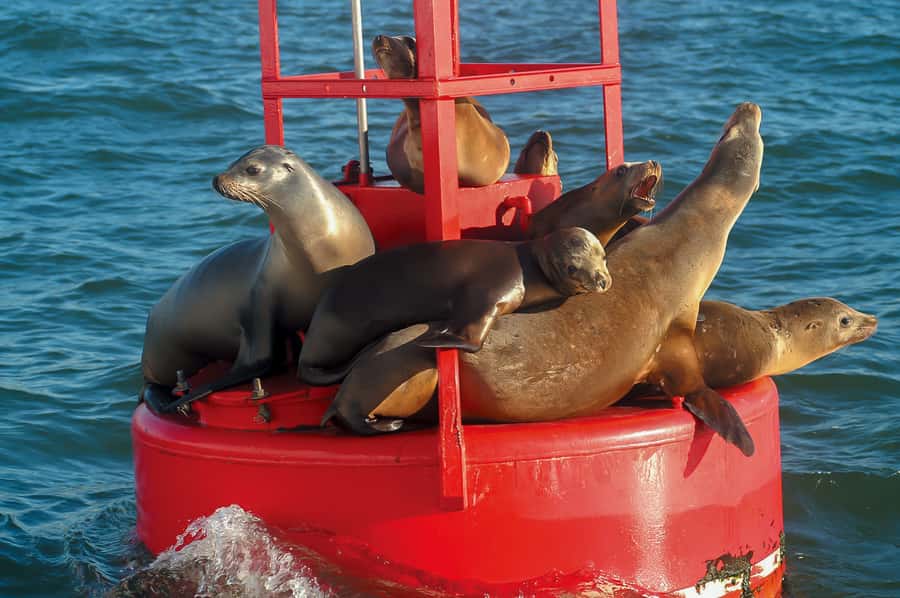
At $77 per person, this is not a throwaway harbor ride. You are paying for a long cruise, a larger stable boat, live narration, indoor and outdoor seating, and the chance to see animals that cannot be scheduled like a museum exhibit.
The price makes better sense if you value the four-hour length and the educational program. A short cruise might cost less, but it also gives the crew less time to find wildlife. Here, you get a fuller look at the harbor and offshore waters, plus the possibility of dolphins, sea lions, seabirds, sunfish, and several whale species.
The sighting guarantee reduces some of the risk. If you see no whale or dolphin, you receive a pass valid for another San Diego whale watching or harbor cruise. That does not fix a disappointing day if your holiday ends immediately, but it gives local visitors or people with spare time another chance.
Read the guarantee correctly. It does not promise a whale. Dolphins count as a successful sighting, and a distant whale still depends on natural conditions. The pass is most useful if you can return to San Diego and have enough schedule flexibility.
Cold, wind, and seasickness
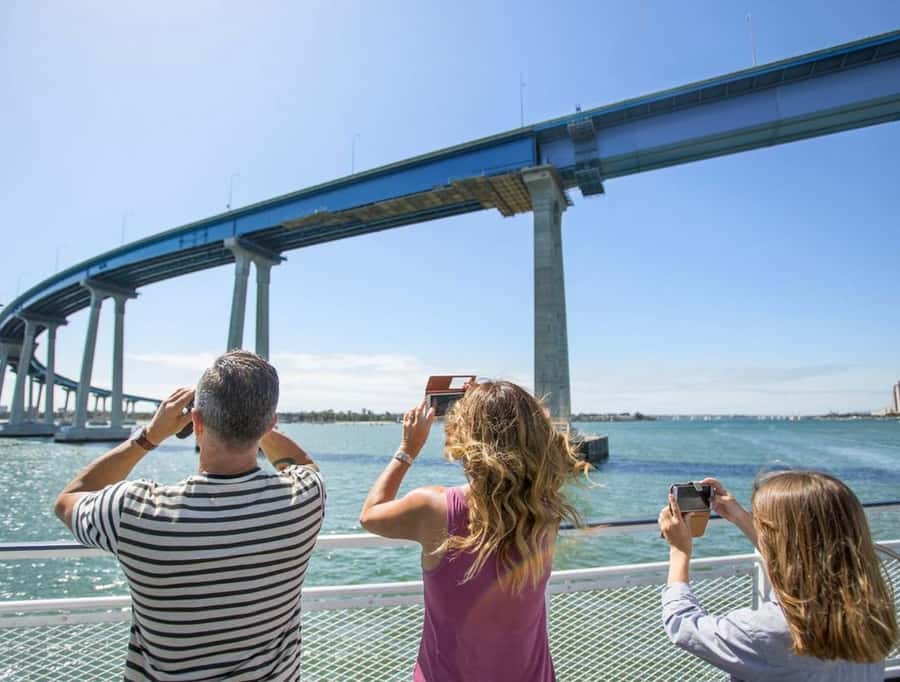
San Diego’s warm reputation can fool you at sea. Bring a jacket even on a sunny day. Wind increases offshore, and standing outside for several hours can feel much colder than walking along the waterfront.
Sunglasses and a sun hat are useful in bright conditions. The glare off the water can be strong, and the open deck offers little protection from the sun. Food and drinks are available for purchase, but they are not included, so bring money or plan to buy refreshments onboard.
Motion sickness deserves serious attention. The ocean may be calm, but the ride can still affect you. If you know you are sensitive, take your usual precautions before departure and keep your first position near a place where you feel comfortable. The supplied information specifically highlights that many people can feel sick on this type of outing.
The boat is described as large, fast, and stable, which helps, but stability does not remove all motion. Dress for changing conditions, eat lightly if needed, and do not wait until you feel ill before taking action.
Families, couples, and first-time whale watchers
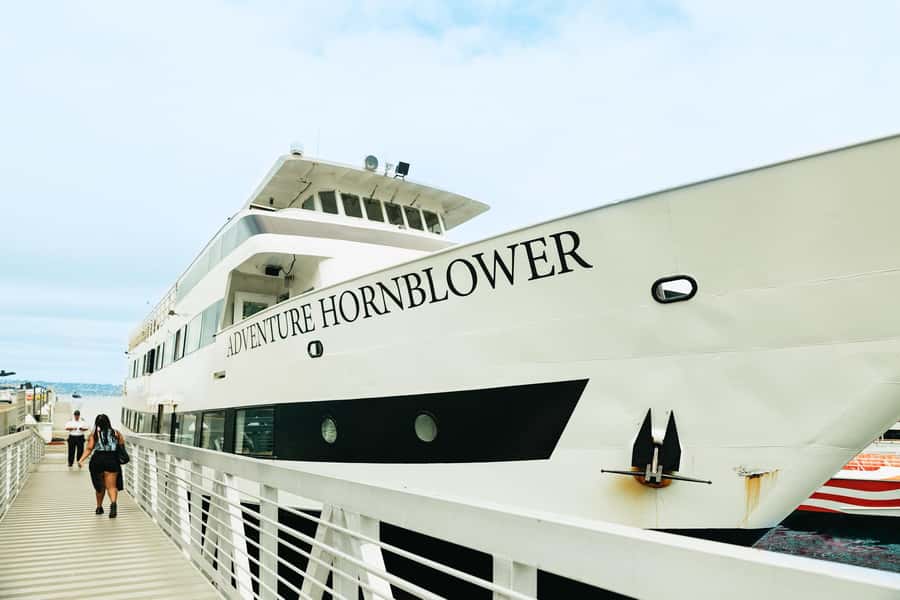
This cruise suits families because the wildlife list is broad and the narration gives children something to follow during quiet stretches. Dolphins are often easier for young children to appreciate than a distant whale, since they move quickly and may come close to the boat.
It also works well as a date or a relaxed half-day activity. The harbor views, open ocean, and shared anticipation create a different rhythm from sightseeing on land. You can talk during the search, then focus together when wildlife appears.
First-time whale watchers should understand the difference between a wildlife cruise and an attraction with guaranteed animal access. You may see remarkable activity, including dolphins, whales, a mola mola, sea lions, and seabirds. You may also spend long periods scanning water with no major sighting.
The cruise is less suitable if you have only a short window in San Diego and need a predictable result. It is also a poor fit for anyone who cannot manage stairs at present, since the current information says outer decks are reached by stairs and the cruise is temporarily not wheelchair accessible because of outdoor seating restrictions.
How to plan your day at Pier 2
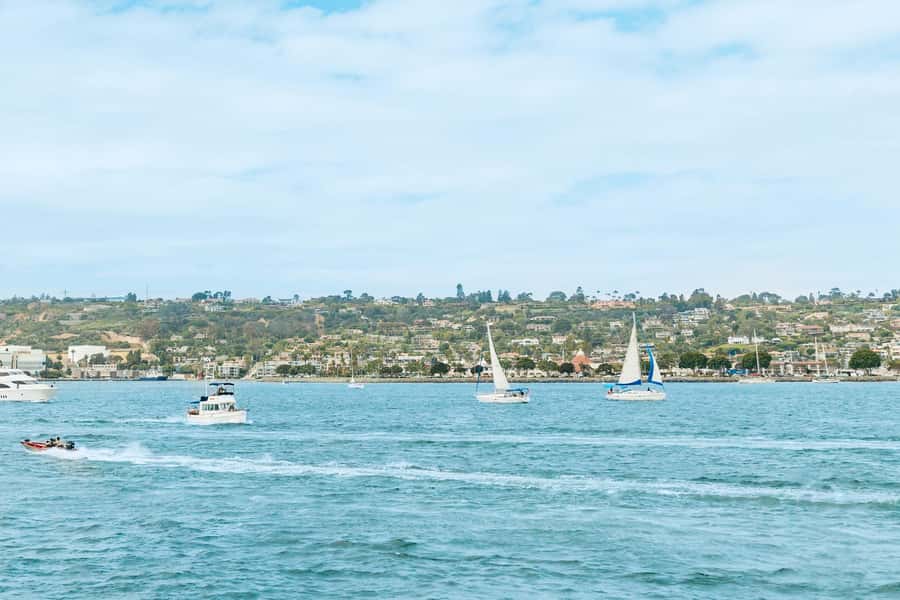
Check the available starting time when booking, since departure times can vary. Make one reservation for your entire group if you want to sit together. Separate bookings do not guarantee shared seating.
The meeting point is Pier 2, 970 North Harbor Drive, and the cruise ends there. Hotel transport is not provided. Give yourself time to find parking and walk to check-in, since the waterfront can be busy.
Bring:
- A jacket, even in warm weather
- Sunglasses and a sun hat
- A camera, while keeping your attention on the water
- Motion sickness medication if that is part of your normal travel planning
- Photo identification, required by Coast Guard regulations for boarding
The tour is conducted in English. Cancellation is free up to 24 hours before departure, and you can reserve now and pay later, which helps if your schedule is still taking shape.
Should you book this San Diego cruise?
I would book it if you want a serious half-day search with solid naturalist narration, broad wildlife possibilities, and a second-chance pass if no whale or dolphin appears. The strongest days can be spectacular: a large dolphin pod, a fin whale, a blue whale, or a mother and calf can turn the open ocean into the highlight of your San Diego visit.
I would skip it if you need a guaranteed whale, dislike boat motion, or cannot spare four hours. Also think twice if outdoor access is important and stairs are difficult for you.
For the best value, choose the season that matches your interest, arrive early enough to handle parking, bring warm layers, and treat dolphins and seabirds as part of the goal rather than consolation prizes. That approach gives you a fair shot at enjoying the cruise even when the whales keep their distance.
FAQ
Where does the whale watching cruise leave from?
The cruise departs from Pier 2 at 970 North Harbor Drive in San Diego Harbor.
How long does the cruise last?
The cruise lasts about 3.5 to 4 hours. Check the available starting times when booking.
What whales might I see?
Gray whales are common during their winter and spring migration between Alaska and Baja California. Blue whales often feed offshore in summer. Fin, humpback, and minke whales may also appear during the summer whale watching season.
Can I see dolphins on this cruise?
Yes. Possible species include Risso’s, common, Pacific white-sided, and bottlenose dolphins.
What happens if I see no whales or dolphins?
You receive a pass valid for another San Diego whale watching or harbor cruise.
Is food included?
No. Food and drinks are available for purchase onboard but are not included in the tour price.
Is the cruise wheelchair accessible?
The current information says the cruise is temporarily not wheelchair accessible because of outdoor seating restrictions. Access to the outer decks is by stairs only.
What should I bring?
Bring sunglasses, a sun hat, and a jacket. You must also show a photo ID when boarding because of Coast Guard regulations.
Just added around the USA
- West O’ahu: Dolphin Watching and Snorkeling Catamaran Cruise★ 4.5 · 31 reviews
- West Oahu: Dolphin Watch & Snorkel Sail★ 5.0 · 5 reviews
- West O’ahu: Swim with Dolphins Catamaran Cruise★ 4.9 · 70 reviews
- Waianae, Oahu: Swim with Dolphins (Semi-Private Boat Tour)★ 4.6 · 8 reviews
- Virginia Beach: Dolphin Kayak Tour: This is a Workout!★ 5.0 · 6 reviews
- Wrightsville Beach Sunset Cruise★ 4.5 · 36 reviews
- Wildlife Boat Tour with Wild Ponies and Dolphins in Chincoteague★ 5.0 · 32 reviews
- Dolphin Kayak Tour in Virginia Beach Must know how to swim★ 5.0 · 2 reviews
San Diego Dolphin Tours, compared.
City Cruises San Diego: Whale and Dolphin Watching Adventure
Read our review →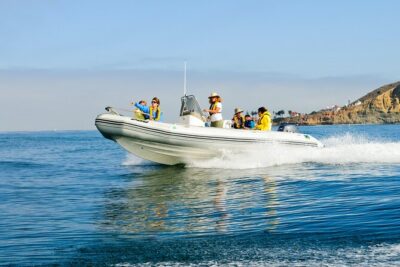
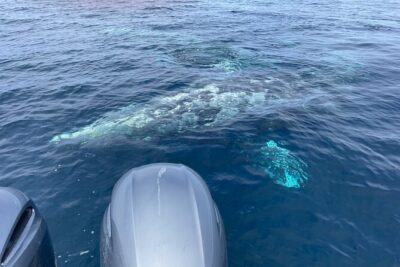
Private Family Whale & Dolphin Adventure in San Diego
Read our review →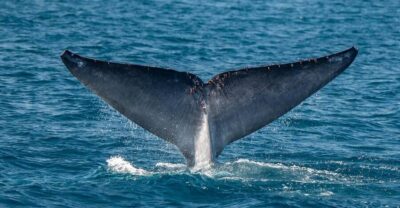
San Diego: Dolphin and Whale-Watching Sunset Cruise
Read our review →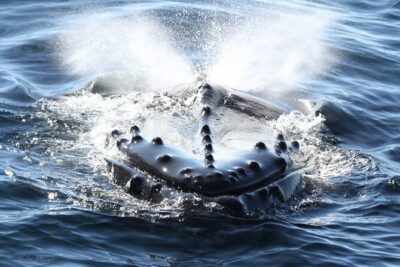
San Diego Whale/Dolphin Watching Cruise Aboard Luxury Vessel
Read our review →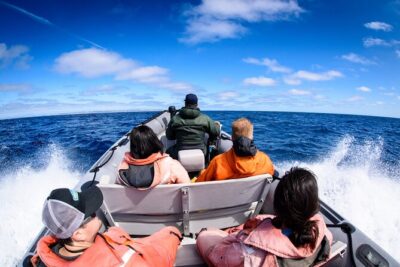
3-Hour Guided Whale and Dolphin Watching Experience in San Diego
Read our review →
San Diego: Luxury Year-round Whale Watching & Dolphin Tour
Read our review →Browse the lists this tour appears in