REVIEW · PUERTO VALLARTA
Whale and Dolphin Watching with a Biologist in Puerto Vallarta
The best part of this Puerto Vallarta whale-watching trip is the guide in the boat with you. Instead of simply chasing fins and flukes, you learn why a mother and calf travel together, how males compete, and what different whale calls mean. Guides such as Jemma, Gema, and Camilla bring marine research into the real world, often within minutes of leaving the marina.
I like the small-group boat, which gives you a fair view from both sides, and I like the hydrophone, which lets you hear whales singing below the surface. The chance to support research while watching humpbacks, dolphins, turtles, and mantas gives the outing more purpose than a standard sightseeing cruise. The main drawback is simple: wildlife follows its own timetable. Some departures may start slowly, and the boat has no bathroom.
Key points before you book
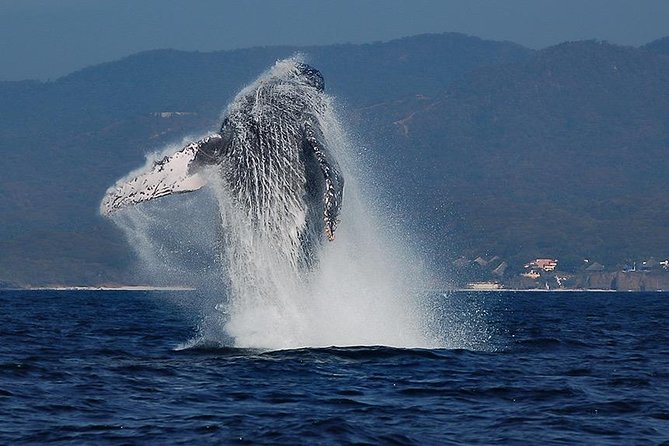
- Humpback whales arrive for winter: Puerto Vallarta’s bay becomes a seasonal nursery and courtship area, with mothers, calves, and competing males often seen.
- A marine biologist leads the trip: Guides explain behavior, communication, parenting, and local cetacean research as you watch.
- The hydrophone adds a special layer: You may hear whale songs underwater, even when the singers are out of sight.
- Small boats improve the view: Groups are capped at 20, and many departures carry about 12 to 16 people.
- Wildlife sightings can be excellent: Whales, dolphins, turtles, giant mantas, sea lions, and seabirds are all possible, with orcas and false orcas less common.
- Bring practical essentials: There is no bathroom on the boat, and cash for tips may be useful.
Why the biologist changes the whale-watching experience
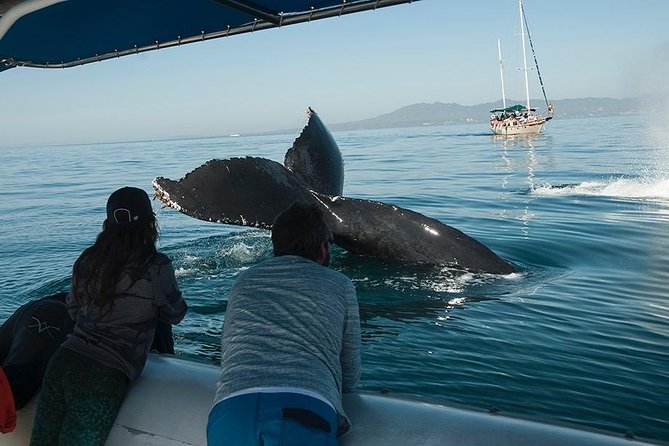
The boat is only half the attraction. The real value comes from having a trained cetacean specialist explain what is happening in front of you. Guides on this experience include marine biologists with advanced study in marine ecology, as well as science journalists and wildlife photographers.
That background matters when a whale surfaces for only a few seconds. A guide can help you distinguish a mother and calf from two adults, explain why a whale repeatedly slaps its tail, or point out the difference between a breach and a casual roll. You are not just waiting for a dramatic splash. You are learning how to watch.
The guides named in recent departures include Jemma, Gema, Gemma, Camilla, and Jama. Spelling and pronunciation vary in the supplied information, so your guide may be one of several members of the team. The recurring strength is the same: friendly instruction, clear explanations, and real enthusiasm for the animals.
Before departure, the group may receive an educational presentation on land. One especially useful touch is the chance to see the size of whale vertebrae and handle a piece of baleen. Those objects make the scale of a humpback easier to grasp before you see a 40-ton animal rise beside the boat.
More Whale and Dolphin Watching Tours in Mexico
- Dolphin & Whale Watching in Puerto Escondido
★ 5.0 · 278 reviews - Whale & Dolphin Watching Cruise in Puerto Vallarta All Inclusive
★ 4.0 · 212 reviews - Ocean Safari: Sea Lions, Mobula Rays, Dolphins, Orcas & Whales
★ 5.0 · 85 reviews
Leaving Opequimar Centro Marino in Marina Vallarta
You meet at Opequimar Centro Marino, at Av. Paseo de la Marina Sur 214 in Marina Vallarta. The tour ends at the same location, so you do not need to arrange a second pickup point after the boat returns.
The outing lasts about four hours. That is long enough to search different parts of the bay and spend meaningful time with animals, but it is not an all-day commitment. You still have room in the schedule for lunch, a relaxed evening, or another Puerto Vallarta activity.
The boat is described in the trip information and detailed experiences as a covered, modern small vessel or Zodiac-style boat. A smaller craft can move closer to the action than a large sightseeing vessel, while the covered area gives you some protection from sun and wind. The tradeoff is less space and no onboard restroom.
Group size is limited to 20 people. In practice, several departures have had roughly 12 to 16 passengers, with some much smaller groups. That matters. On a crowded boat, the person standing in front of you can become the main attraction. Here, you have a better chance of moving your gaze from port to starboard when the guide calls out a sighting.
Arrive ready for a boat ride, not a gentle harbor cruise. The water can be windy, and conditions can change. Life jackets are provided and fitted before departure. The crew’s job is to keep the boat in a good viewing position while maintaining respectful space around the wildlife.
The first whale sighting may come quickly
On strong days, the first humpbacks appear within 15 to 20 minutes of launch. Other departures may spend an hour searching before the action begins. Both situations are normal for a wildlife trip, and the contrast is worth remembering when you set expectations.
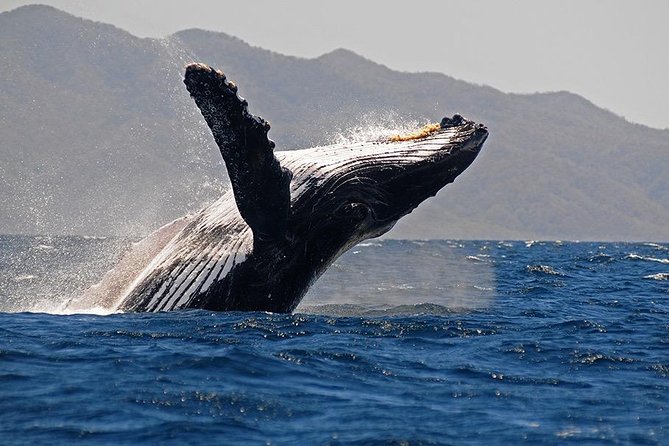
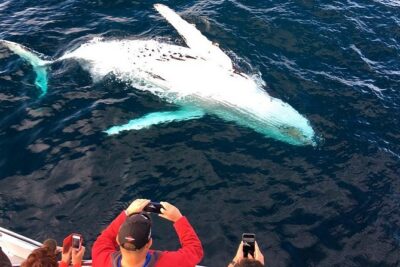
Humpback whales come to the Puerto Vallarta area during the winter months to mate and give birth. That seasonal pattern creates a good chance of seeing several age groups and behaviors in one outing. You may see a mother with a young calf, a male escort nearby, single adults, or groups of males competing around a female.
The most memorable moments are often not the biggest breaches. A mother may stay close while a calf practices surfacing. A young whale may roll, slap its tail, or break the surface beside its parent. One especially striking kind of encounter is seeing a mother repeatedly communicate with her calf through tail slaps and other movements.
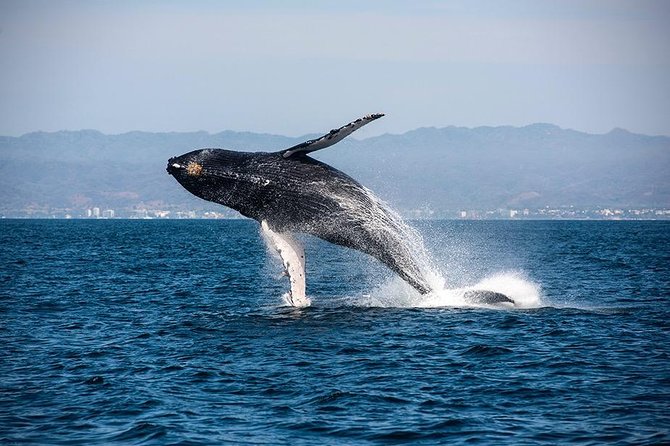
Of course, a full breach is hard to beat. The reports from this experience include several dramatic breaches, some close to the bow, and even days with more than 20 whales in view. Treat those numbers as a lucky result rather than a promise. The provider says it can find the animals and offers a money-back guarantee if it cannot, but nature still decides what the animals will do once you reach them.
The captain is an important part of the experience. Captains such as Jorge and Cesar have been praised for placing the boat behind a whale for a clear fluke photograph and for keeping a smooth, safe position. Good positioning lets you watch without crowding the animal, which is exactly what you want on a responsible wildlife outing.
Listening to whale songs with a hydrophone
The hydrophone may be the most distinctive feature of this trip. It is an underwater microphone that allows the guide to share whale sounds with the group. You might hear the song of a male nearby, or sounds echoing from whales farther away.
This changes the mood on the boat. Sightings are brief and visual, but sound helps you understand that the bay is active even when the surface looks quiet. The guide can connect the sounds to communication and behavior, making the wait between surfacings useful rather than empty.
You may also learn about the whales’ parenting and migration. The educational side is not a lecture detached from the outing. It is tied to what you are seeing in real time, such as a calf staying close to its mother or adults changing direction together.
If photography is your priority, the small boat helps, but you still need patience. A whale does not surface on command, and the best moments can happen at either side of the boat. Keep your camera ready, but do not spend the entire trip looking through a screen. The sound of a breath, the curve of a back, and the timing of a tail can be more memorable than a slightly blurred photograph.
Same water, a different way to meet them:
- Watch and Swim with Dolphins in the Wild
★ 4.5 · 668 reviews - Puerto Escondido: Boat Tour to see Dolphins and Marine Life
★ 4.6 · 467 reviews - Wild Dolphin Encounter & Snorkeling Adventure
★ 5.0 · 147 reviews - Dolphin Watching Tour
★ 5.0 · 103 reviews
Dolphins, turtles, mantas, and the animals between whale sightings
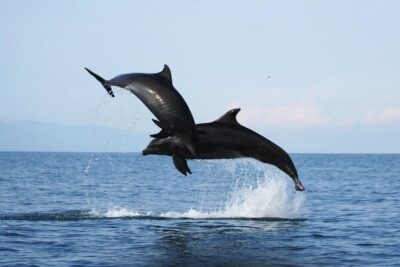
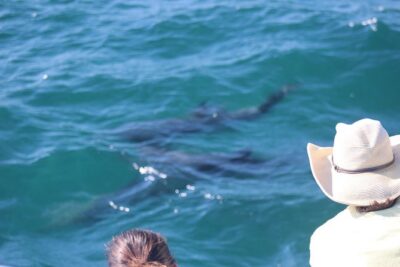
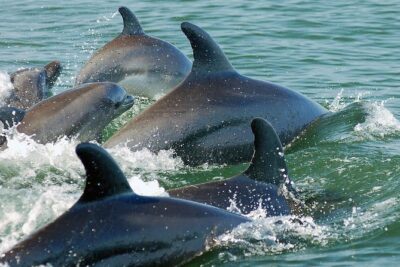
The tour combines whale watching with dolphin watching during winter. Possible dolphin species include bottlenose, spotted, spinner, and rough-toothed dolphins. You might see a pod traveling together, animals playing near the boat, or dolphins moving through an area used regularly by a local group.
Dolphins can be harder to photograph than whales because they move quickly and surface in several places at once. The guide’s explanation helps you watch the pod as a living group instead of trying to follow one fast-moving animal.
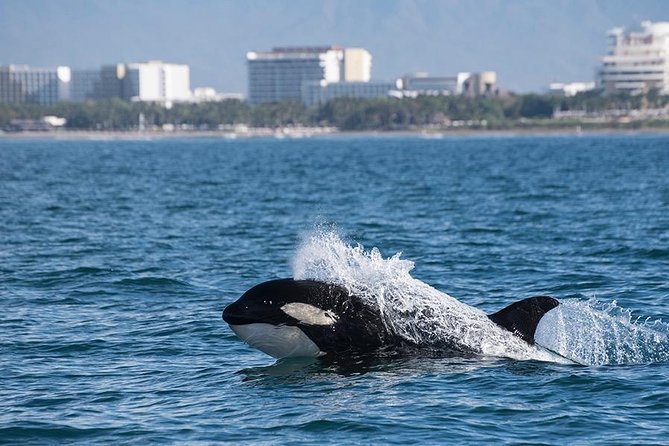
The wider marine list includes sea turtles, giant manta rays, and sea lions. Some outings have also spotted blue-footed boobies. Orcas and false orcas are mentioned as possible sightings, but they should be treated as an exciting bonus, not a normal part of the trip.
A large manta gliding past the boat or a sea lion floating on its back can become the surprise highlight of the day. This variety is another reason the four-hour duration works well. Even when humpbacks are quiet, you have other marine life to look for.
Citizen science with a real purpose
Your participation supports research programs focused on whales and dolphins. The guide explains how observations contribute to that work, and you get to see the connection between tourism and conservation directly.
I like this model because it gives the outing a practical purpose without taking away the fun. You are still there for the excitement of a breach or a close surfacing, but you also learn how researchers identify animals, record behavior, and build a better understanding of local populations.
The provider’s staff includes people involved in whale and dolphin research, marine ecology, science communication, and wildlife photography. That combination helps bridge two different interests. You get accessible explanations without losing the scientific side of the experience.
The conservation message also encourages respectful viewing. A good captain does not simply rush toward an animal for a better photograph. The boat approaches with care and adjusts its position so you can observe while giving the whales room to move.
Is the $105 price fair?
At $105 per person, this is not the cheapest boat ride in Puerto Vallarta. It is also not just a short harbor trip. You are paying for about four hours on the water, a small-group format, a specialist guide, an experienced captain, and access to research-based interpretation.
The price makes the most sense if you value the educational side and want more than a quick glimpse of a whale. The hydrophone, pre-trip presentation, animal identification, and discussion of behavior add substance. Sandwiches and soft drinks have also been provided on some departures, though you should not book solely on that detail.
A larger boat may offer more room, while a cheaper outing may be adequate if you only want to see a whale and take a few photographs. This trip earns its higher price through the guide’s expertise and the small vessel, especially when the captain can position you well without a crowd blocking the view.
The operator is recommended by 97 percent of customers and carries a 4.9 rating from 667 reviews. Those figures suggest a strong level of satisfaction, but they do not remove the normal uncertainty of wildlife watching. You can have a brilliant day, yet no responsible operator can script a breach.
Who should book this Puerto Vallarta tour?
I would choose this for first-time whale watchers, couples, families with older children and teenagers, photographers, and anyone curious about marine science. The guide keeps the experience friendly, so you do not need a background in biology to follow along.
Families should note that most travelers can participate, and service animals are allowed. The activity is not recommended for people more than seven months pregnant. If you are prone to motion discomfort, wind and boat movement are worth considering, though the supplied information does not specify a particular seasickness policy.
This is less suitable if you need a restroom on board, dislike open-water rides, or want a guaranteed performance on a fixed schedule. The boat may take time to locate animals, and the trip requires good weather. If weather cancels the departure, you are offered another date or a full refund.
The tour is offered in English. Confirmation is sent within 48 hours of booking, subject to availability. Because it is booked an average of 26 days ahead, reserve early during the winter whale season if your dates are fixed.
Practical tips for a better four hours
Wear clothing that can handle wind and spray, even if the day begins warm. Keep a light layer close, and protect your phone or camera when the boat is moving.
Bring water and any personal snacks you need. Sandwiches and soft drinks may be included on some trips, but the supplied details do not promise a full meal. Cash is also useful for tips.
Use the bathroom before boarding. There is no bathroom on the boat, and four hours can feel long if you ignore that basic detail.
Do not spend every minute scanning for a breach. Listen when the guide explains the animals, watch for quieter behavior, and ask questions. The most rewarding part may be a mother and calf traveling together or a whale song coming through the hydrophone.
Cancellation is free up to 24 hours before the local start time. Inside 24 hours, the payment is not refunded, and changes are not accepted. That policy matters if your schedule is uncertain.
Should you book it?
Book this tour if you want a serious whale-watching outing with a warm, science-focused guide rather than a simple ride to the bay and back. The combination of small-group viewing, hydrophone sounds, research participation, and skilled boat handling gives the experience real depth.
I would be especially inclined to book it during the winter whale season, when humpback mothers, calves, and competing males may all be present. Choose it with realistic expectations, bring practical clothing, and leave room for nature to set the pace. If you need a restroom, dislike boat movement, or cannot tolerate an uncertain wildlife schedule, choose another activity. For everyone else, $105 is a fair price for four focused hours with people who understand these animals and know how to help you watch them responsibly.
FAQ
Where does the whale-watching tour begin?
The tour begins at Opequimar Centro Marino, Av. Paseo de la Marina Sur 214, Marina Vallarta, Puerto Vallarta, Jalisco, Mexico.
Where does the tour end?
The activity ends back at the same meeting point at Opequimar Centro Marino.
How long does the tour last?
The tour lasts approximately four hours.
How much does the tour cost?
The listed price is $105 per person.
What animals might I see?
You may see humpback whales, bottlenose dolphins, spotted dolphins, spinner dolphins, rough-toothed dolphins, turtles, giant manta rays, and sea lions. Orcas and false orcas are possible but less certain. Blue-footed boobies have also been seen.
Is the tour led by a marine biologist?
Yes. The tour is led by a biologist who specializes in cetaceans. The staff also includes people with advanced marine ecology training, science journalism experience, and professional wildlife photography experience.
How many people can join the boat?
The maximum group size is 20 travelers. Some departures have had about 12 to 16 people, while others have been smaller.
Is there a bathroom on the boat?
No. One detailed description specifically notes that the boat has no bathroom, so use the facilities before departure.
What is the cancellation policy?
You can cancel at least 24 hours before the local start time for a full refund. Cancellations or changes made less than 24 hours before the start time are not accepted and are not refunded. If bad weather or insufficient bookings cancel the tour, you are offered another date or a full refund.
More Dolphin Trips with a Marine Biologist in Mexico
- Portimão: Benagil Caves & Dolphins Watching with Biologist
★ 4.8 · 3,795 reviews - Lagos: Combo Dolphin and Benagil Tour with Marine Biologist
★ 4.7 · 2,352 reviews - Lisbon: Dolphin Watching with Marine Biologist
★ 4.9 · 1,853 reviews - Lagos: Dolphin Watch Tour with Professional Marine Biologist
★ 4.9 · 1,500 reviews
Just added around Mexico
- Must-DO The only and Unique Natural Space Dolphin Encounter Cabo★ 4.5 · 3 reviews
- Wild Dolphin Encounter in Puerto Vallarta★ 5.0 · 20 reviews
- Swim and Paddle Board with Wild Dolphin Pods in Puerto Vallarta★ 5.0 · 12 reviews
- Private Wild Dolphin Encounter in Puerto Vallarta★ 5.0 · 13 reviews
- Dolphin and Whale Watching Boat Trip in Puerto Escondido★ 5.0 · 11 reviews
- Whale & Dolphin Watching★ 4.5 · 8 reviews
- Dolphin & Whale Watching★ 5.0 · 45 reviews
- Beaches Dolphins And Viewpoints Discovering The Hidden Port By Sea And Land★ 4.0 · 5 reviews
Puerto Vallarta Dolphin Tours, compared.
Whale & Dolphin Watching Cruise in Puerto Vallarta All Inclusive
Read our review →