
REVIEW · WHALE & DOLPHIN WATCHING TOURS
Whale, Dolphin & Penguin Island Cruise
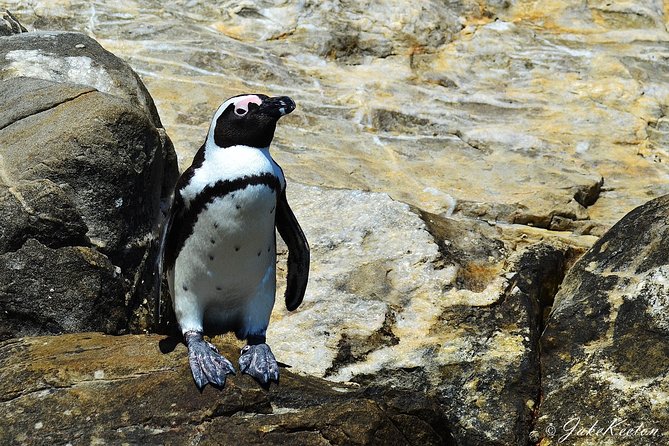
Algoa Bay gives you a rare wildlife show from the water: dolphins may race the bow, humpback whales pass seasonally, and African penguins gather around St. Croix Island. The small-group boat keeps the outing calm and personal, with room to ask questions and move around for photographs.
I like the slow pace and the crew’s conservation focus, including a tree-planting campaign to offset the cruise’s carbon footprint. I also like that the tour runs only once a day, which keeps it from feeling like a hurried wildlife shuttle. The main catch is simple: wild animals set the schedule, and the $185.19 price is a serious spend if sightings are limited.
Key points to know before you book
- St. Croix Island is viewed from the sea: You can see African penguins close to the boat, but this is a marine cruise rather than an island landing.
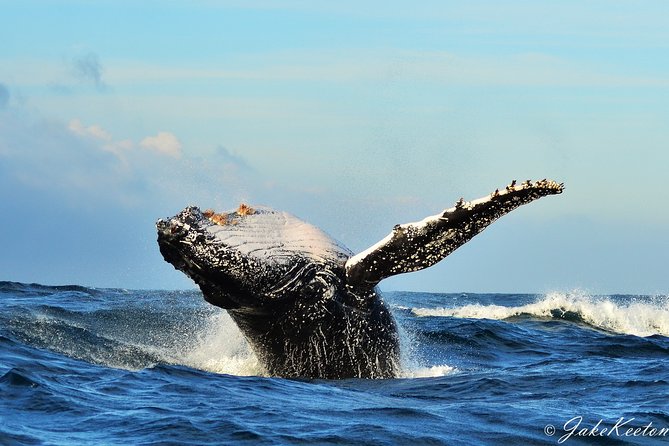
- Whale sightings change with the calendar: Humpbacks are seen from June into early December, while southern right whales are most likely from July through September.
- Dolphins are the most dependable target: Indo-Pacific bottlenose dolphins can appear all year, sometimes in groups from 10 to 400.
- The boat carries no more than 20 people: That gives you better access to the crew and less crowding at the rail.
- The cruise lasts about four hours: It begins at 8am at Nelson Mandela Bay Yacht Club and returns to the same jetty.
- Weather matters: Poor conditions can lead to a new date or a full refund, and wildlife sightings can never be promised.
Setting out from Port Elizabeth at 8am
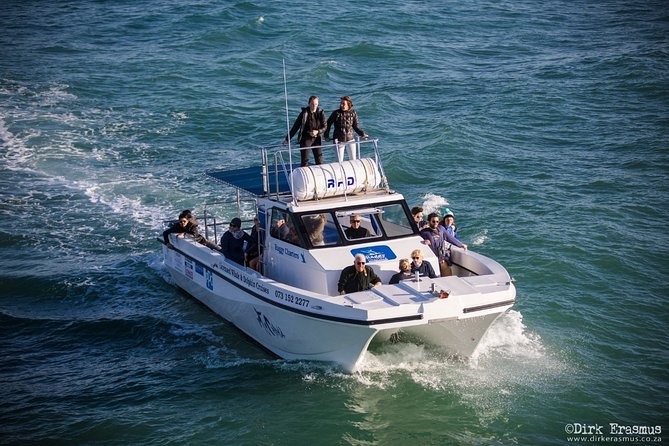
The meeting point is the Nelson Mandela Bay Yacht Club at Dom Pedro Jetty in Port Elizabeth Harbour, now also called Gqeberha. You meet the crew at 8am for a short briefing, then board a twin-engine catamaran for the run into Algoa Bay.
That early start works well for a wildlife outing. You have a full morning on the water, and the schedule leaves enough time to search different parts of the bay rather than making a quick loop near the harbor. The boat returns to the same place after roughly four hours, so you can plan lunch or an afternoon visit around the cruise.
The maximum group size is 20 people. That is not a private charter, but it is small enough to make a real difference. You are more likely to hear the guide clearly, ask a follow-up question, and find a useful spot for photographs. The crew also has a better chance of keeping an eye on everyone when the sea gets choppy.
The short briefing is important. Listen for the safety instructions, especially if you are bringing children or anyone who is uneasy on boats. Life jackets are available for all ages. People who need assistance boarding can join if family members and crew can help, but you should decide for yourself if the boat and sea conditions match your fitness level.
More Whale and Dolphin Watching Tours in the world:
- Tenerife: Eco-Yacht Whale and Dolphin Watching and Swimming
★ 4.7 · 15,619 reviews - Los Cristianos Respectful No-Chase Whale and Dolphin Safari
★ 4.6 · 12,782 reviews - From Funchal: Ecological Catamaran Dolphin Whale Watching
★ 4.5 · 8,204 reviews
Dolphins are the bay’s most reliable stars
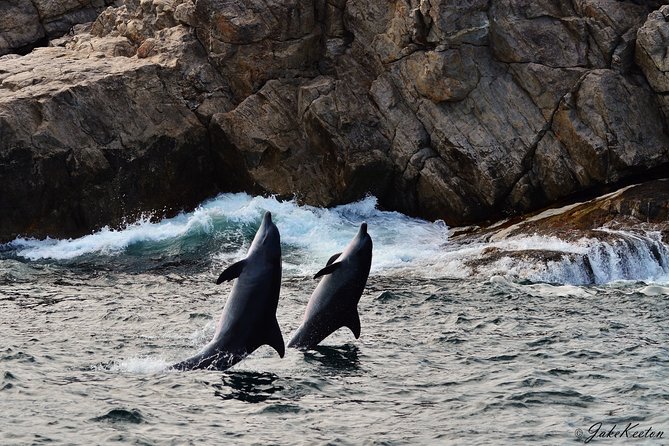
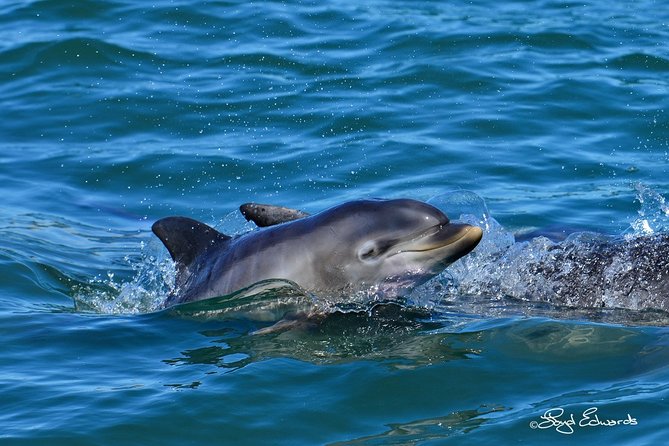
If you want the best chance of seeing something lively, dolphins are the reason to book this cruise. Indo-Pacific bottlenose dolphins live in the bay throughout the year and are often found in shallow water near beaches or around St. Croix Island.
Their group size can range from about 10 to 400. When they approach the catamaran, you may see them swimming beside the hull or riding the bow wave. That behavior gives you a good chance to watch them for more than a brief surface appearance, though the crew cannot control how long the animals stay.
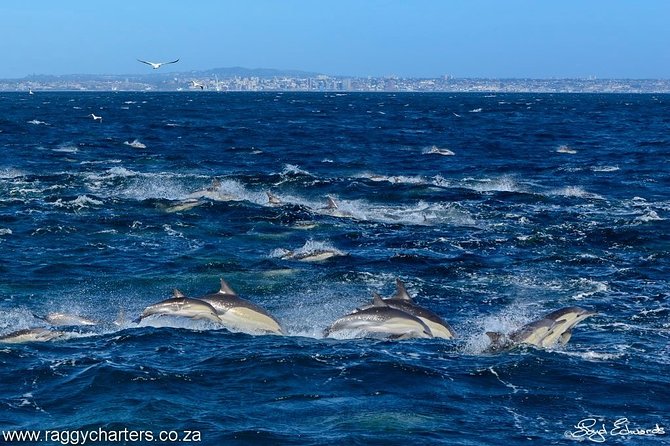
Common dolphins are another possibility. They gather in much larger groups, sometimes numbering 1,000 to 2,000, and travel quickly farther from shore. Their presence is tied to baitfish moving through the bay, so these sightings can involve more time at sea and faster action than the bottlenose encounters.
Algoa Bay also has humpback dolphins. They are less predictable, but their presence adds another layer to the outing. A crew that knows the local waters can help you distinguish the species and understand why one group stays close to shore while another moves at speed offshore.
The most useful advice is to keep your attention on the water even between headline sightings. The crew may be watching for a distant blow, a dark shape beneath the surface, or movement among seabirds. Wildlife cruises reward patience, and this one is designed around that idea rather than a rushed checklist.
St. Croix Island and the African penguins
St. Croix Island is the emotional center of the cruise. It is home to an important African penguin breeding colony, reported here at around 12,000 birds, although the population has fallen sharply in recent years. The figures make the visit more than a photo stop. You are seeing a threatened colony in a bay where food pressure and overfishing affect what the birds can find.
The boat approaches for a close view from the water. You do not land on St. Croix Island, so manage your expectations if you are hoping to walk among penguins. The reward is a low-impact encounter that avoids putting extra pressure on a sensitive breeding site.
March through May is the peak breeding period. During those months, you might see chicks from the boat. At other times, penguins may be resting on the rocks, swimming, or heading out to feed. One useful detail from the experience is that the number of visible birds can vary greatly. You might see only a small group on the island even though the colony is important.
St. Croix and nearby Brenton Island also support African black oystercatchers, white-breasted cormorants, and Cape cormorants. The islands form part of Addo Elephant National Park, allowing rangers to patrol the area. That protected status matters, but it does not remove the pressures facing the animals.
The crew’s conservation explanation adds value here. You are not simply pointed toward birds and given a few names. You hear about breeding, feeding, population loss, and the role of protected waters. That context helps you understand why the boat keeps its distance and why a quiet approach is part of the experience.
Whale season brings the biggest surprises
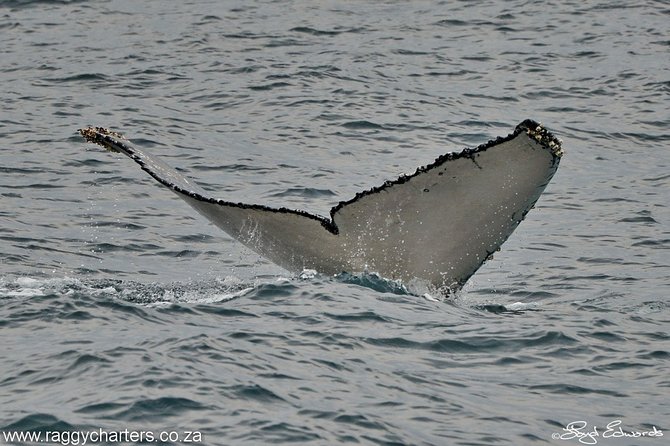
Whales are possible but seasonal. Humpback whales can be seen in Algoa Bay from June to early December as they move along the coast toward breeding grounds on the eastern side of Africa. From October, some begin the return journey, and females may have calves with them.
A mother and young calf is the kind of sighting that can define the whole morning, but it is not something you should count on. The animals are wild, and even a strong season does not mean every cruise will find one close to the boat.
Southern right whales are most likely close to shore from July through September. That timing gives winter visitors a good reason to consider the cruise, while June to early December offers the broadest window for humpbacks. Other possible sightings include Bryde’s whales and minke whales.
The boat’s slower pace suits whale watching. Instead of rushing from one spot to the next, the skipper can pause and give the group time to watch behavior. You may see a blow, a back, a tail, or a whale traveling alongside the boat. The distance and duration of a sighting will depend on the animal.
Bring realistic expectations and a little patience. A whale cruise is not an aquarium show. If you need a guaranteed close encounter, this is the wrong kind of activity. If you enjoy reading the sea, scanning the horizon, and learning how whales use the bay, the uncertainty is part of the appeal.
A few more dolphin trips around the world worth a look
- Albufeira: 2.5-Hour Benagil Caves & Dolphin Watching
★ 4.6 · 10,710 reviews - Albufeira: Benagil Caves & Dolphin Watching Speed Boat Tour
★ 4.6 · 6,316 reviews - Benalmadena: Dolphin Watching Boat Tour
★ 4.4 · 5,786 reviews - Funchal: Dolphin and Whale Watching Catamaran Cruise
★ 4.5 · 5,697 reviews
Seals, sharks, and seabirds fill out the picture
The cruise is named for whales, dolphins, and penguins, but those are not the only animals you might encounter. Cape fur seals can appear around the islands or in the water, sometimes hauled out and resting. Sightings of sharks are also possible, including a hammerhead in one especially lucky outing.
The bird life can be just as interesting as the mammals. Look for Cape gannets and a range of pelagic birds, including terns, petrels, skuas, shearwaters, and albatrosses. White-breasted and Cape cormorants are associated with the island groups.
This is where a good guide earns their place. The water can look empty until someone points out a bird traveling low over the waves or explains why a flock is gathered in one area. Jake is named as one of the guides, and the crew’s role is not limited to steering the boat. They explain animal behavior, identify species, and connect sightings to the wider food chain.
That educational side gives the trip more staying power. A pod of dolphins may be the memorable photograph, but knowing why they are present, what they are feeding on, and how their numbers change with baitfish makes the scene easier to understand.
What the small catamaran feels like on the water
The twin-engine catamaran offers a stable platform for wildlife viewing, though no boat can remove all movement from an open bay. One report describes the crew handling choppy conditions well, and the attention to safety is a recurring strength of the outing.
You should still prepare for wind, spray, and changing conditions. Wear clothing that can handle a cool morning and bring protection for your phone or camera. The supplied details do not promise snacks, drinks, or specialist camera equipment, so do not assume those are included.
A smaller boat has both benefits and limits. You get closer to the water and usually have a better sense of the sea than you would on a large sightseeing vessel. You also feel the motion more directly, and the viewing area can become busy when everyone spots the same dolphin or whale.
The crew makes a difference here. Friendly, attentive staff can help people move safely, explain where to look, and make sure one person does not block everyone else’s view. The experience is not built around loud entertainment. It is a quiet search, with bursts of excitement when an animal appears.
A conservation trip, not just a wildlife outing
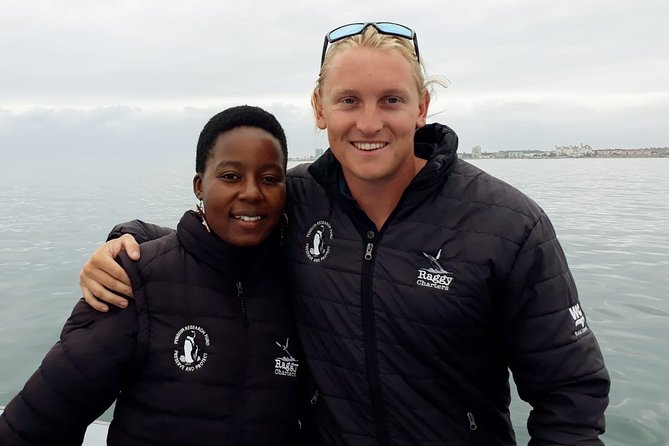
Raggy Charters builds conservation into the way this cruise is presented. The company supports a tree-planting campaign to balance the carbon footprint of the boat trip. That does not make a fuel-powered cruise impact-free, but it shows an effort to address the cost of taking a vessel onto the water.
The more important point is how the crew treats the animals. The outing is slow-paced, the group is limited to 20, and the boat watches wildlife without turning the experience into a chase. The presence of rangers around the protected island groups adds another layer of care.
I especially value the chance to learn about population decline. African penguins have lost a large share of their numbers, and one of the practical causes discussed around the bay is reduced food linked to overfishing. Seeing a penguin colony while hearing about those pressures makes the situation concrete.
This is also why you should not judge the cruise only by the number of animals photographed. If conservation matters to you, a careful approach and a clear explanation of threats are part of what you are paying for. The trip connects the scenery to real decisions about fishing, protected areas, and responsible wildlife viewing.
Is $185.19 good value?
At $185.19 per person, this is not a budget harbor ride. The price makes the most sense if you want a focused marine wildlife trip, value a small group, and appreciate having a crew that can explain the bay rather than simply transport you around it.
You are paying for about four hours on the water, a maximum of 20 people, a twin-engine catamaran, and the chance to see several species in one outing. A successful morning could include bottlenose dolphins, penguins, seals, seabirds, and a whale. It could also produce fewer sightings. The price cannot buy certainty.
There is one useful comparison to keep in mind. A cruise-ship excursion may use the same boats, while booking this activity directly can cost much less than going through a ship’s shore program. If you are arriving by cruise ship, check the timing carefully before booking independently. The 8am start, four-hour duration, and return to the harbor need to fit your departure schedule.
The strong rating and 99 percent recommendation suggest that the crew’s service is a major part of the value. I would still book for the quality of the setting and the small-group format, not because a rating promises a particular animal sighting.
Who should book this Algoa Bay cruise?
This outing suits you if you want wildlife, photography, and conservation in one morning. Families can join because there is no age restriction and life jackets are available for all ages. People who need boarding help may also participate if relatives and crew can assist.
It is a good choice for visitors who prefer a slower, quieter cruise over a packed sightseeing boat. It also works well for anyone who wants to ask questions. With only 20 places, you have a better chance of speaking directly with the crew.
You may want to reconsider if you dislike uncertain weather, boat movement, or waiting for wildlife to appear. The cruise requires good conditions, and poor weather can lead to a changed date or a full refund. A cancellation made at least 24 hours before departure qualifies for a full refund, but changes or cancellations inside that window are not accepted.
You should also think carefully about the penguin encounter. This is not a walk-on-island penguin tour. You see St. Croix Island and its birds from the boat, which is better for a low-impact visit but less satisfying if you want to stand near the colony.
Should you book it?
I would book this cruise if your priority is a thoughtful, small-group wildlife outing from Port Elizabeth, especially between June and early December when humpback whales may be present. July through September is particularly appealing if southern right whales are high on your list, while March through May offers the best chance of seeing penguin chicks.
Book it for the crew, the quiet pace, and the chance to understand Algoa Bay as a living system. Do not book it expecting guaranteed whales or a certain number of penguins. At $185.19, the cost is fair for a carefully run four-hour trip, but only if you are comfortable paying for access, guidance, and possibility rather than certainty.
FAQ
Where does the cruise start and finish?
It starts and ends at Nelson Mandela Bay Yacht Club, Dom Pedro Jetty, Port Elizabeth Harbour, Gqeberha Central, Gqeberha, 6001, South Africa.
What time does the cruise begin?
The meeting and start time is 8am.
How long does the experience last?
The cruise lasts approximately four hours.
How many people can join the boat?
The maximum group size is 20 people.
Can I see whales all year?
No. Humpback whales are seen from June to early December, while southern right whales are most likely close to shore from July through September. Sightings are not guaranteed.
Will I land on St. Croix Island?
No landing is described. The cruise takes you close to St. Croix Island for views of African penguins and other seabirds from the water.
What happens if the weather is poor?
If poor weather causes the cruise to be canceled, you can choose another date or receive a full refund. A minimum number of participants is also required, and a cancellation for that reason offers the same choices.
Just added around the world
- Zanzibar: Mnemba Island Snorkeling & Dolphin★ 5.0 · 4 reviews
- Zanzibar Swimming with Dolphins and snorkeling★ 4.5 · 5 reviews
- Zanzibar: Mnemba atoll, dolphin & snorkelling tour★ 5.0 · 2 reviews
- Zanzibar: Mnemba Island Snorkeling and Dolphin Tour★ 4.4 · 28 reviews
- Zanzibar: Mnemba Island Snorkeling and Dolphin Tour★ 4.1 · 9 reviews
- X Plorer – Caves (Benagil) & Dolphins Cruise★ 4.5 · 116 reviews
- Zanzibar dolphins+ snokling at mnemba with turles swimming★ 4.3 · 9 reviews
- Zanzibar: Mnemba Dolphins Tour with Snorkeling and Sandbank★ 4.0 · 3 reviews
Whale & Dolphin Watching Tours, compared.
Tenerife: Eco-Yacht Whale and Dolphin Watching and Swimming
Read our review →
Los Cristianos Respectful No-Chase Whale and Dolphin Safari
Read our review →
From Funchal: Ecological Catamaran Dolphin Whale Watching
Read our review →
Funchal: Dolphin and Whale Watching Catamaran Cruise
Read our review →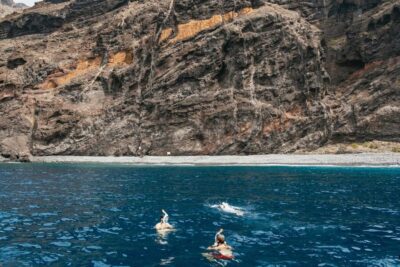
Costa Adeje: Whale & Dolphin Eco-Cruise with Snacks & Drinks
Read our review →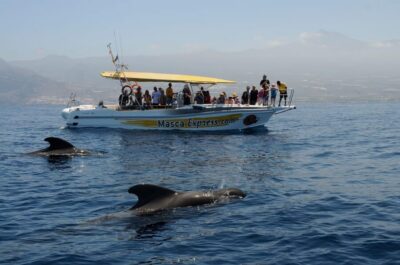
Los Gigantes: Dolphin & Whale Watching Cruise with Swim Stop
Read our review →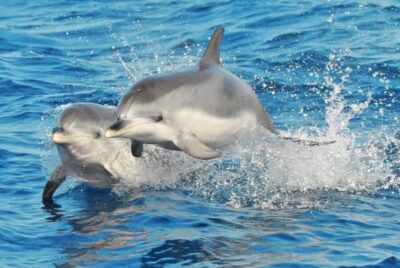
Morro Jable: Dolphin & Whale Watching Cruise, Drinks & Swim
Read our review →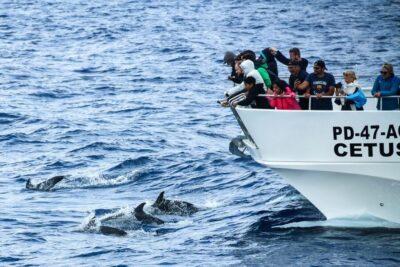
From Ponta Delgada: Whale and Dolphin Watching Trip
Read our review →Browse the lists this tour appears in