
REVIEW · AKAROA
Swimming with Wild Dolphins in Akaroa
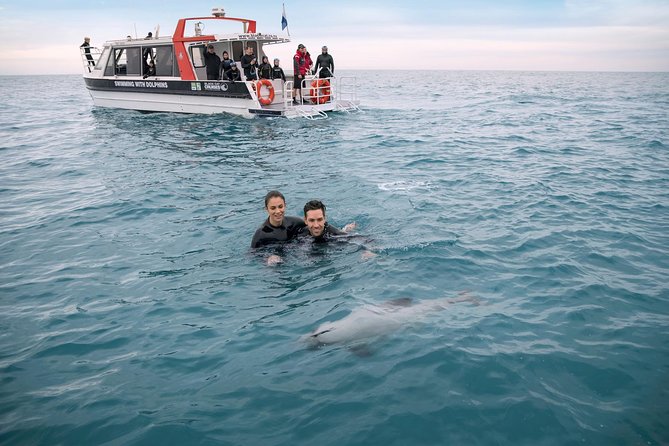
Akaroa Harbour is one of the few places where you can enter the sea with wild Hector’s dolphins, New Zealand’s smallest and rarest dolphin. The outing combines a scenic boat ride, careful wildlife watching, and time in the water when the dolphins are comfortable approaching people.
I like the maximum of 12 swimmers, which gives the skipper and nature guide room to pay attention to the group. I also like the practical finish: hot showers, a warm drink, cookies, and a short debrief back at the wharf. The main catch is simple: these are wild animals, so a dolphin sighting does not guarantee a swim.
Key points to know before booking
- Hector’s dolphins live only in New Zealand, making this a particularly local wildlife experience.
- The boat carries no more than 12 swimmers, allowing for personal guidance and less crowding in the water.
- Wetsuits and masks are included, along with a hot shower and warm drink after the trip.
- Swimming is never forced, especially when dolphins are feeding, moving away, or conditions are unsafe.
- You must swim 50 metres unaided and feel comfortable in open sea conditions with water depths of 15 to 30 metres.
- If dolphins are not seen, a complimentary Akaroa Nature Cruise ticket is offered, but unsuccessful swims do not automatically mean a refund.
Meeting Hector’s dolphins in Akaroa Harbour
Black Cat Cruises runs this experience from Akaroa’s main wharf, about 120 minutes by road from Christchurch International Airport and around 90 minutes from Christchurch by the route described for the tour. The listed departure is 12:30 pm, and you need to check in 15 minutes early.
The outing lasts about three and a half hours. That time includes changing, the safety briefing, the boat ride, wildlife watching, the swim attempt, and time to warm up afterward. You are not simply paying for a short plunge beside the wharf. Much of the value comes from being taken into the harbour with a crew that reads the animals and the sea.
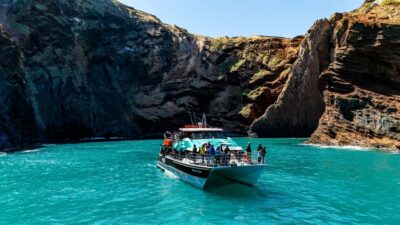
Akaroa Harbour sits within the Banks Peninsula, a dramatic setting of steep volcanic hills and sheltered water. The inner harbour can feel calm, but the mouth of the bay and the open marine park area can be much rougher. You should picture a genuine sea outing, not a clear-water pool with dolphins trained to perform.
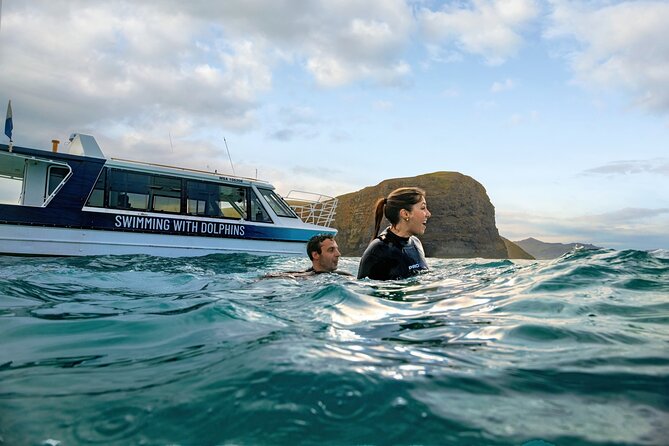
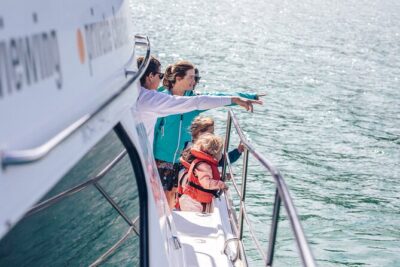
The boat is purpose-built for this activity. You can choose to stay aboard if you prefer to watch from the deck, though the experience is aimed at swimmers. A skipper and nature guide accompany the group, handling the boat, explaining dolphin behavior, and deciding when entering the water is appropriate.
More Wild Dolphin Watching Tours in New Zealand:
- Swim With Wild Dolphins in Tauranga
★ 4.5 · 189 reviews - Akaroa: Swimming with Wild Dolphins Experience
★ 4.3 · 123 reviews - Wild Dolphin Watching and Snorkel Safari Off West Coast of Oahu
★ 5.0 · 795 reviews
Why the small group matters
A maximum of 12 swimmers is one of the strongest features here. A smaller group makes it easier to hear instructions, get help with equipment, and enter the water in an orderly way. It also limits the number of people surrounding the dolphins.
The crew’s job is not just to find dolphins. They must judge the animals’ mood, movement, and activity. A pod may pass close to the boat but show no interest in people. It may be feeding, traveling quickly, or keeping its distance. In those cases, the guide may allow you to watch but not swim.
That restraint is important. The most responsible wildlife encounter is sometimes the one that does not produce the photograph or swim you hoped for. The crew has declined to put people in the water when dolphins were feeding, even when the animals could be seen nearby.
Guides named in the tour feedback include Ben, Thomas, Harriet, Elijah, Will, Chris, Charlotte, Shannon, Esther, and Simon. The specific crew changes, but the common thread is an active, hands-on approach. You can expect instructions about how to float, move, and attract the dolphins without chasing them.
Getting ready at the Akaroa wharf
You begin by meeting at the main wharf and changing into the provided wetsuit. Masks are supplied as well. The gear removes the need to pack specialist equipment, though you should bring swimwear to wear underneath and dry clothes for afterward.
Wetsuits are useful in this part of New Zealand, but they are not magic. Some people find them bulky, especially when trying to float in choppy water. If you are not comfortable in a thick wetsuit or open sea, staying aboard may be the better choice.
The safety briefing is not a formality. You must be able to swim at least 50 metres without help and feel confident in open water. The boat works in areas between 15 and 30 metres deep, and life jackets are not permitted for swimmers. If you need a life jacket, the company directs you toward the Akaroa Harbour Nature Cruise instead.
The minimum age to swim is eight. Swimmers aged eight to 12 must be accompanied by an adult swimmer. Children aged 13 to 17 must be accompanied by an adult spectator. The minimum age for a spectator is four.
You also need to declare medical conditions. Anyone with asthma or serious allergies must bring an inhaler or EpiPen. Recent surgery, injuries, or other conditions may make the activity unsuitable, so ask before booking if you are unsure.
Cruising toward the dolphins
Once everyone is ready, the boat leaves the wharf and moves through Akaroa Harbour. The ride gives you time to look for wildlife and learn about the area before the swimming attempt begins.
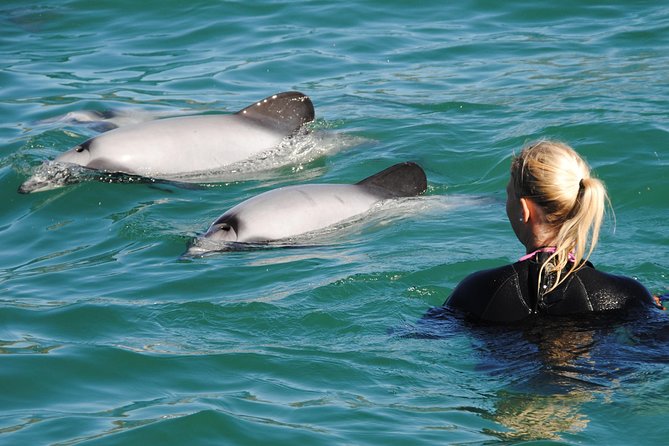
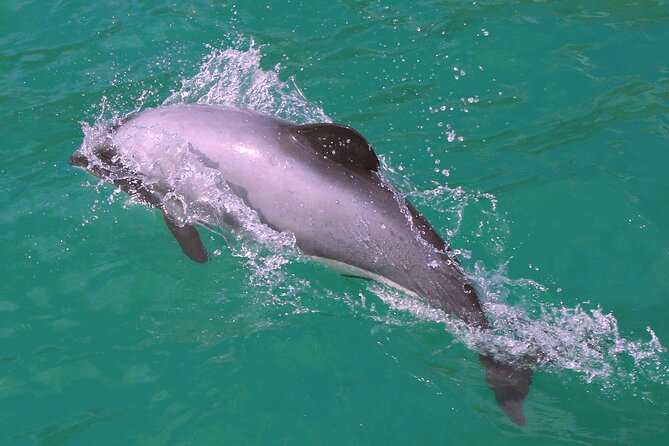
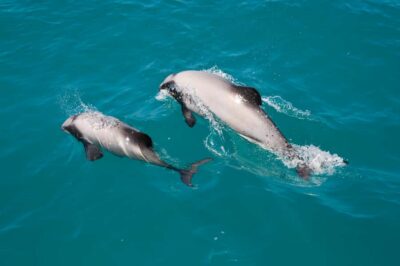
Hector’s dolphins are small, quick, and distinctive. They are found only in New Zealand, which gives this outing a strong sense of place. You are not seeing a generic marine animal in a staged setting. You are looking for a species whose survival depends on careful management of its natural habitat.
The trip can include other wildlife. People have seen New Zealand fur seals and, on some departures, penguins. These sightings are extras, not promises, but they add interest to the boat ride when the dolphins are distant or hard to approach.
The crew uses the boat to search for suitable dolphin activity. That may involve waiting, changing direction, or following a pod for a period of time. If you expect constant action, the pace might feel slow. If you enjoy watching wildlife behave on its own terms, the waiting is part of the experience.
A few more dolphin trips around New Zealand worth a look
- Akaroa Dolphins ~ Harbour Nature Cruise
★ 5.0 · 2,143 reviews - Auckland Dolphin and Whale Watching Eco-Safari Cruise
★ 4.5 · 1,790 reviews - Auckland: Whale and Dolphin Watching Half-Day Eco Cruise
★ 4.5 · 1,072 reviews - Paihia/Russell: Hole in the Rock, Dolphins & Island Cruise
★ 4.6 · 821 reviews
What the swim is really like
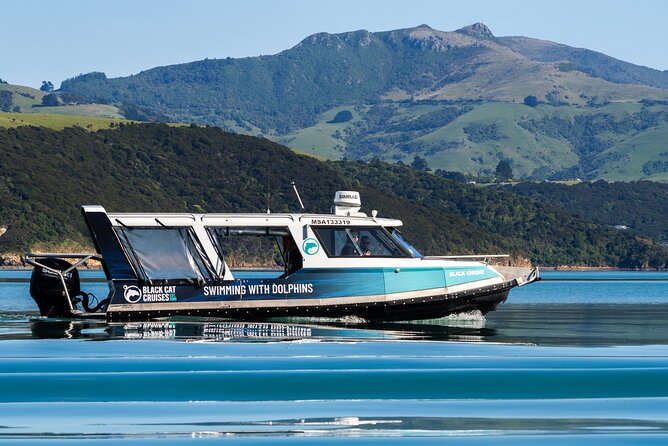
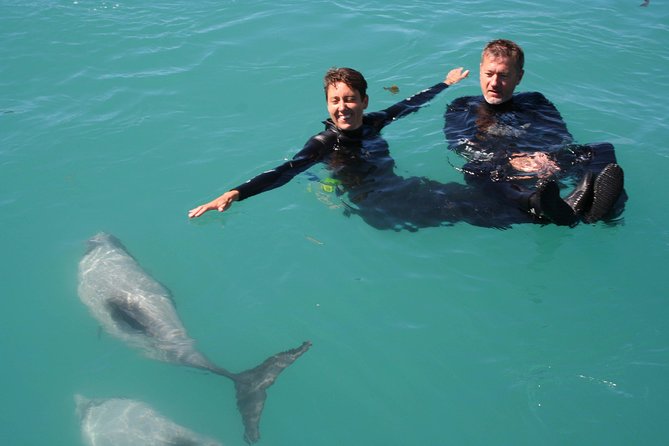
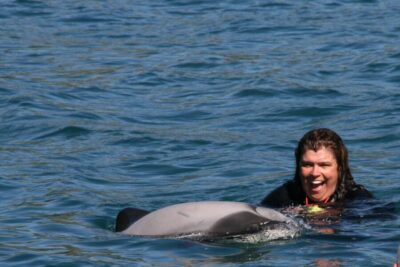
When the conditions and dolphin behavior line up, the group enters the water. You may spend a substantial period there, with one successful outing allowing about 45 minutes in the sea. The actual time varies with the animals, weather, and safety conditions.
You are not guaranteed close contact. The dolphins may circle at a distance, pass briefly, or come close enough for an exciting encounter. They may also ignore the swimmers entirely. The crew can encourage respectful interaction, but it cannot command a wild pod to stay.
That unpredictability is both the appeal and the risk. Some outings produce dolphins swimming around the group, with flips, jumps, and quick passes. On another day, you might see 20 or 30 dolphins from the boat but never enter the water because they are feeding or not showing suitable behavior.
The sea itself can be the bigger challenge. One outing described very rough water near the mouth of the bay, with dark, choppy conditions that made floating in a bulky wetsuit difficult. You should be confident in open water, not just a strong pool swimmer.
If you are prone to seasickness, take the possibility seriously. A motion sickness remedy taken before departure may help, but check that any medication is suitable for you. Rain is less important than wind and swell because you will already be wearing a wetsuit, but poor weather can still cancel the trip.
Wildlife rules are part of the value
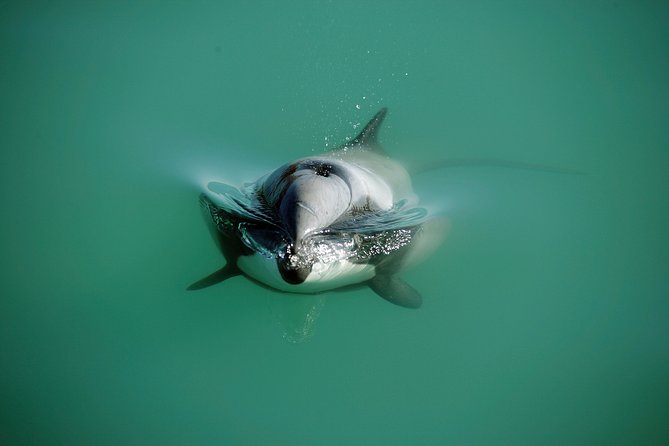
The best thing about this outing is also the reason it cannot promise a swim. The dolphins are wild, and the crew must put their welfare first.
That means a close sighting may still end with you remaining on the boat. The decision can feel disappointing after changing into a wetsuit and riding out into the harbour, but it is the right standard for a wildlife company. A less careful operator might treat any dolphin sighting as permission to enter the water.
The crew also provides conservation information during the trip. This helps you understand why the encounter is controlled and why the dolphins’ behavior matters more than a fixed schedule.
The experience supports local wildlife work through a portion of the ticket price, according to the tour information. For me, that makes the ethical side more meaningful, though you should still book with the understanding that the activity is nature-based rather than guaranteed entertainment.
The warm-up back at the wharf
After the boat returns, you can use the hot showers and warm up with a hot drink and cookies. This simple finish matters more than it might sound. Cold hands, wet hair, and a saltwater wetsuit can make the end of a sea trip uncomfortable if there is nowhere to change.
The crew also provides a debrief. This gives you a chance to ask about the wildlife you saw and get your bearings before leaving Akaroa. The activity ends where it began, so you do not need to arrange a separate return transfer.
If no dolphins are seen, the company offers a complimentary ticket for an Akaroa Nature Cruise on another day. This is useful if you are staying nearby, but it may have little value if you are visiting Akaroa for only a few hours or leaving Christchurch soon afterward.
Pay attention to the exact distinction: the swim is not guaranteed, and the supplied conditions state that unsuccessful swims do not receive refunds. A nature cruise ticket is offered when dolphins are not seen, while an outing where dolphins are seen but cannot be approached may be handled differently. Ask the operator about the current policy before departure if this point affects your decision.
Is $128.06 a fair price?
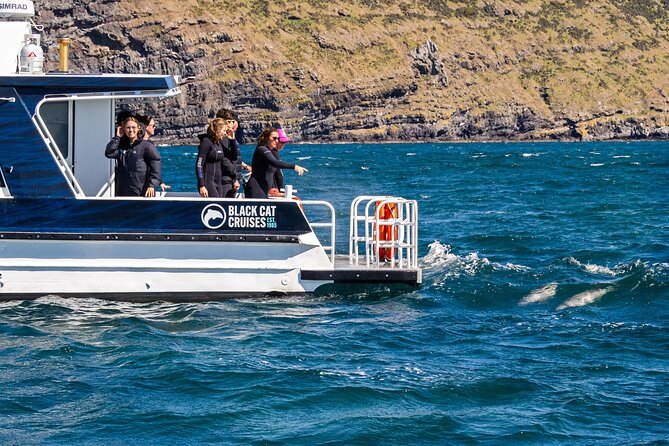
At $128.06 per person, this is not a cheap harbour cruise. You are paying for a small group, a purpose-built boat, guide and skipper support, wetsuit and mask hire, the swim attempt, and the facilities at the wharf.
The value is strongest when you care about responsible wildlife viewing and want the chance to enter the water. A standard cruise costs less if your main goal is scenery, seals, and dolphin sightings from a dry seat. This tour also carries more risk of disappointment because a dolphin sighting alone may not lead to a swim.
The small group improves the value. With only 12 swimmers, you are less likely to spend the entire outing behind a crowd. You also receive more direct guidance in the water, which is useful when you are trying to float, watch for dolphins, and follow safety instructions at the same time.
I would not book this as a guaranteed animal encounter. I would book it as a carefully managed attempt to meet wild dolphins, with a scenic harbour trip and other wildlife along the way.
Timing, transport, and weather planning
You need to reach the main wharf in Akaroa by 12:15 pm for the 12:30 pm departure. Akaroa can be reached by car, and shuttles operate daily between Christchurch city center and Akaroa. The drive from Christchurch International Airport is listed at about two hours.
Build in extra road time if you are driving from Christchurch. The experience is weather-dependent, and the company asks you to reconfirm the reservation the day before so you can receive weather updates.
If poor weather cancels the outing, you can choose another date or receive a full refund. For your own plans, avoid scheduling a tight airport connection or an important afternoon appointment immediately afterward. The tour is listed as three and a half hours, but marine conditions can make any sea activity feel less predictable than a museum visit.
Free cancellation is available up to 24 hours before the start time. Cancelling later or changing the booking within 24 hours does not qualify for a refund under the stated policy.
Who should book this experience?
I would recommend it to a confident swimmer who enjoys wildlife and accepts uncertainty. It suits you especially well if you want a small-group activity, like learning about conservation, and are happy to watch from the boat if the dolphins are not ready for contact.
It is also a good fit for families with children who meet the age and supervision rules. An adult swimmer must accompany children aged eight to 12, while teenagers aged 13 to 17 need an adult spectator. That means a family should plan carefully if only some members intend to swim.
I would choose the nature cruise instead if you need a life jacket, dislike open water, struggle with seasickness, or mainly want a relaxed sightseeing trip. The sea can be rough at the harbour mouth, and a strong pool swimmer may still feel uncomfortable in dark, moving water.
Should you book the Akaroa dolphin swim?
Book it if you understand the bargain: you receive a serious chance to swim with a rare wild species, not a promise of a dolphin performance. The small group, careful crew, included equipment, and warm post-trip facilities make this one of the more thoughtfully arranged wildlife outings in Akaroa.
The strongest reason to go is the possibility of dolphins coming close in their own environment. The strongest reason to hesitate is that weather, sea conditions, and dolphin behavior can cancel the swim even after you have paid and suited up.
For a confident swimmer with flexible plans, I think the experience is worth the $128.06. For anyone who needs certainty, calm water, or a guaranteed close encounter, choose the dry nature cruise instead.
FAQ
Where does the dolphin swim tour start?
It starts at Akaroa’s main wharf in Akaroa, Christchurch 7520, New Zealand.
What time does the tour depart?
The listed start time is 12:30 pm. You should check in 15 minutes before departure.
How long does the experience last?
The tour lasts approximately three hours and 30 minutes.
What equipment is provided?
A wetsuit and mask are provided. After the trip, you can use a hot shower and receive a hot beverage and cookies.
How many people can join the swim?
The tour allows a maximum of 12 swimmers.
What are the swimming requirements?
You must be able to swim at least 50 metres without assistance and feel confident in open sea conditions. The boat operates in water between 15 and 30 metres deep, and life jackets are not permitted for swimmers.
What happens if I do not see dolphins?
You receive a complimentary ticket for an Akaroa Nature Cruise to use another time. The swim itself is not guaranteed, and the stated policy does not provide refunds for an unsuccessful swim.
Can children participate?
Children must be at least eight to swim. Swimmers aged eight to 12 must have an adult swimmer with them. Children aged 13 to 17 must be accompanied by an adult spectator, and the minimum age for spectators is four.
Just added around New Zealand
- Half Day Dolphin & Wildlife Cruise – Tauranga★ 4.5 · 103 reviews
- Dolphin & Wildlife Encounters★ 5.0 · 6 reviews
- Captain Cook and Dolphin Cruise★ 4.5 · 26 reviews
- Bird Watching and Dolphin Eco-Tour to Blumine Island★ 5.0 · 55 reviews
- The Original Full day Bay of Islands Cruise with Dolphins★ 5.0 · 13 reviews
- Kaikoura Swim with Dolphins Tour from Christchurch★ 4.5 · 27 reviews
- Kaikoura Whale and Dolphin Overnight Tour from Christchurch★ 4.0 · 9 reviews
- Akaroa with optional dolphin cruise (Small Group Tour)★ 5.0 · 3 reviews
Akaroa Dolphin Tours, compared.
Akaroa: Swimming with Wild Dolphins Experience
Read our review →
Akaroa: Wildlife Cruise with Dolphins and Penguins
Read our review →Browse the lists this tour appears in