REVIEW · LANZAROTE
Whale & Dolphin Observation on Silent Catamaran with Hydrophone
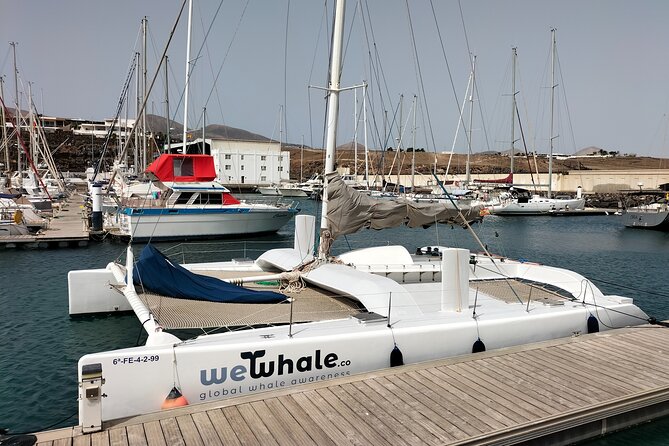
The most unusual part of this Lanzarote boat trip is the silent catamaran. Instead of heading out on a noisy motorboat, you sail on a 14-meter vessel designed to reduce disturbance to whales and dolphins. If a vocal group comes close, the crew can lower a hydrophone so you may hear the animals underwater, not just watch for a fin.
I like the small limit of 12 people, which gives you room to move and a better chance of seeing what is happening around the boat. I also like the conservation link through WeWhale Association, which supports marine campaigns. The main catch is simple: wildlife follows its own schedule. You could see dolphins and whales, or spend most of the morning scanning open water and only catch a distant spout.
Key points to know before booking
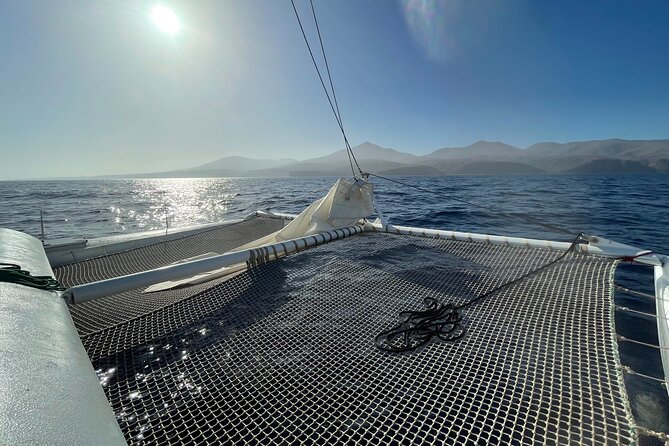
- Silent sailing from Puerto Calero: The boat is described as 100 percent silent and emission-free, making the ride quieter than a standard powered excursion.
- Hydrophone use depends on conditions: The crew generally lowers it only when dolphins or whales are nearby and vocal.
- Small group of 12: The limited capacity gives you more personal space on the 14-meter catamaran.
- Three to four hours at sea: You leave at 9:00 am and return to the same marina.
- Wildlife viewing is respectful, not forced: The boat keeps its distance and does not chase animals that choose not to approach.
- Snacks and drinks are included: Refreshments are offered during the sailing, but bring layers for a cool, cloudy stretch offshore.
Setting out from Puerto Calero at 9:00 am
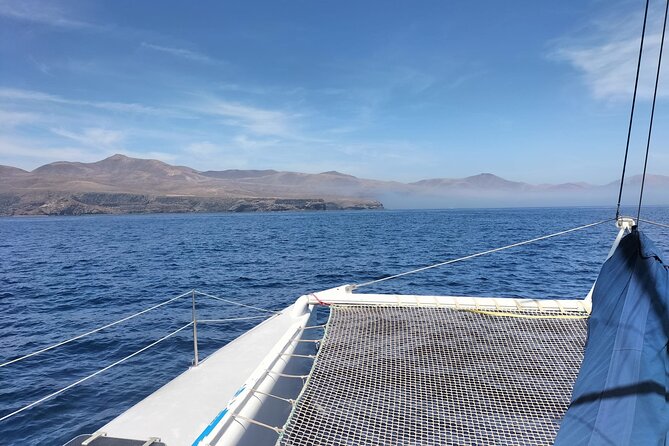
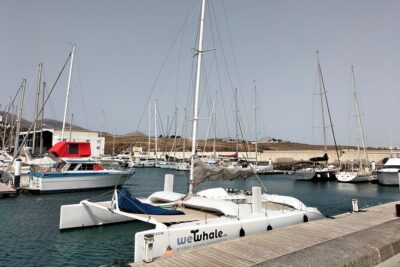
Your morning begins at WeWhale Lanzarote, at C. Pantalanes in Puerto Calero. The activity returns to this same meeting point after roughly three to four hours, so the outing is easy to fit into a day based in the marina area or elsewhere in Lanzarote if you can reach the port on time.
The early start makes sense for a wildlife trip. You get several hours on the water before the day is over, and the open sea is the main destination rather than a quick boat ride along the coast. The exact route depends on where the crew has the best chance of finding cetaceans.
I would arrive ready to board and dressed for changing conditions. One person reported that the sea breeze became chilly when clouds covered the sun. Lanzarote often feels warm on land, but an open catamaran can feel much cooler once it moves away from shore. A light jacket or extra layer is a practical addition.
More Dolphin Watching Catamaran Cruises in Spain
- Small Group Dolphin Sunset Tour on Electric Catamaran Lanzarote
★ 4.5 · 106 reviews - Lanzarote: Whale and Dolphin Watching Eco-Friendly Catamaran
★ 4.7 · 88 reviews - Gran Canaria: Catamaran Dolphin Watch Cruise with Snorkeling
★ 4.4 · 4,761 reviews
What the silent catamaran changes
The boat is presented as 100 percent silent and emission-free. That is the heart of this experience, not a minor feature. A quieter vessel can make it easier for you to notice natural sounds and can reduce the mechanical noise around marine life.
There is also a clear conservation reason for the approach. The operator’s wildlife policy is to avoid chasing animals. If a whale or dolphin does not come toward the boat, the crew keeps its distance rather than turning the sighting into a pursuit.
That means the trip may feel calmer and less action-packed than a standard wildlife chase. You are not buying a guaranteed close encounter. You are paying for a responsible attempt to find animals without treating them like a show.
The catamaran itself is 14 meters long, with a maximum of 12 people. That is a useful ratio for a small boat experience. You should have more room than on a crowded excursion, and it should be easier to move to a good viewing position when something appears.
Still, a small group does not guarantee a sighting. The ocean is wide, and whales and dolphins spend much of their time below the surface.
Searching the open sea for whales and dolphins
After leaving Puerto Calero, the boat heads toward open water. The search is the main event, so expect time spent looking across the surface for fins, blows, ripples, or a sudden change in the water.
A Bryde’s whale was spotted on one outing, but it stayed far enough away that the animal was difficult to see clearly without binoculars. This is an important detail to understand before booking. A whale can be present and still offer only a brief spout or a partial glimpse.
The crew has binoculars for spotting animals, and they can be available for passengers to use. Ask early in the trip if you would like a closer look. Bringing your own binoculars may also help, although the supplied information does not specify what models or quantities are carried onboard.
The crew’s decision to remain at a respectful distance is a strength, but it affects the visual payoff. If you want a close whale photograph, this may not satisfy you. If you value a gentler approach and accept that nature sets the terms, the distance is easier to appreciate.
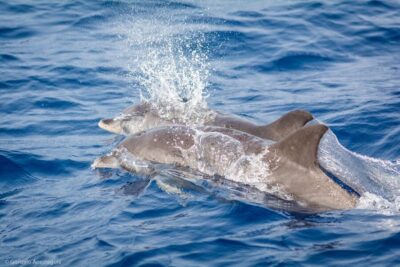
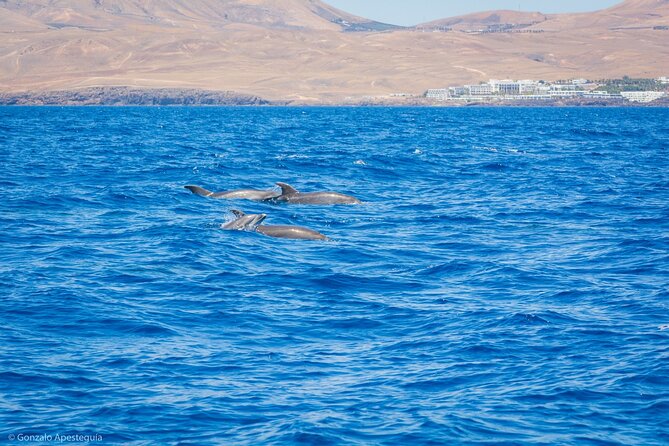
Dolphin sightings can be more rewarding because a group may stay near the boat and offer several chances to watch their movement. But you are not promised dolphins. One outing saw a Bryde’s whale and no dolphins, while other departures have seen both whales and dolphins.
The hydrophone: the feature that needs clear expectations
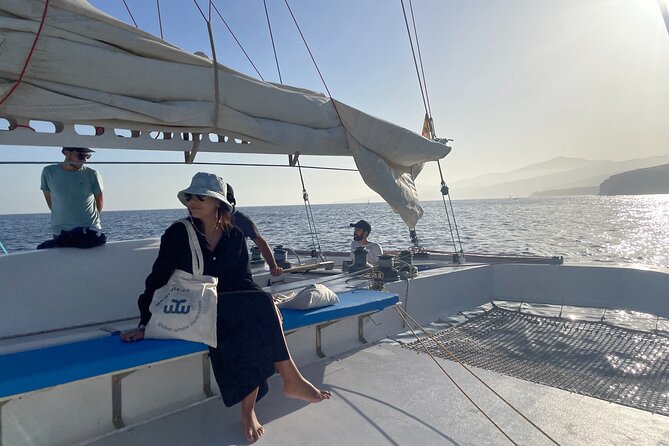
The hydrophone gives this trip a different purpose from a basic whale-spotting cruise. It is an underwater microphone that can let you hear cetacean sounds when animals are close enough and vocal enough for the equipment to pick them up.
That last part matters. The crew does not necessarily lower the hydrophone during every trip. It is generally used when the catamaran is among a group of dolphins or whales that are actively making sounds. Lowering it in empty open water would not offer much to hear.
So you should not think of the hydrophone as a scheduled part of the itinerary. Think of it as a special opportunity that depends on finding the right animals in the right conditions. If you book mainly to hear underwater sounds, the uncertainty may be frustrating.
I appreciate the logic. Using the equipment only when there is a real chance of hearing the animals keeps the experience focused. But the operator could make this condition clearer before departure. Ask the crew at the start how the hydrophone is used and what needs to happen before it goes overboard.
If dolphins gather near the boat and vocalize, this could become the most memorable part of the morning. You are not just watching a distant animal. You may hear the activity below the surface, adding another sense to the encounter.
More Whale and Dolphin Watching Tours in Spain
- Tenerife: Eco-Yacht Whale and Dolphin Watching and Swimming
★ 4.7 · 15,619 reviews - Los Cristianos Respectful No-Chase Whale and Dolphin Safari
★ 4.6 · 12,782 reviews - Costa Adeje: Whale & Dolphin Eco-Cruise with Snacks & Drinks
★ 4.6 · 5,096 reviews - Los Gigantes: Dolphin & Whale Watching Cruise with Swim Stop
★ 4.7 · 4,539 reviews
Snacks, drinks, and life aboard for four hours
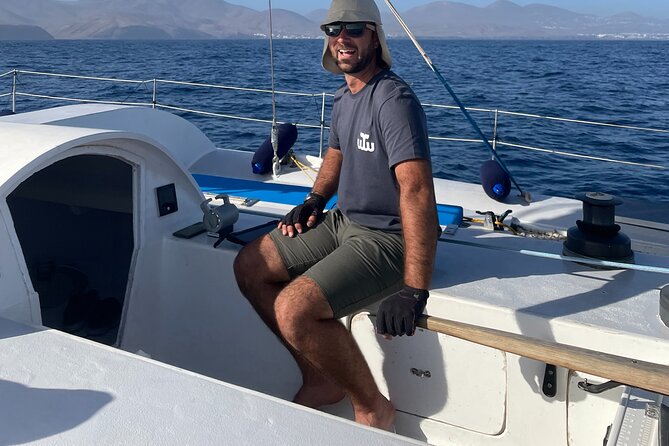
The crew offers snacks and refreshing drinks during the trip. That makes the long period at sea easier, especially since you may spend extended stretches waiting and watching.
Do not treat the snacks as a full meal unless the operator tells you otherwise. The supplied details describe them as snacks and drinks, not lunch. If you need a substantial breakfast, eat before boarding.
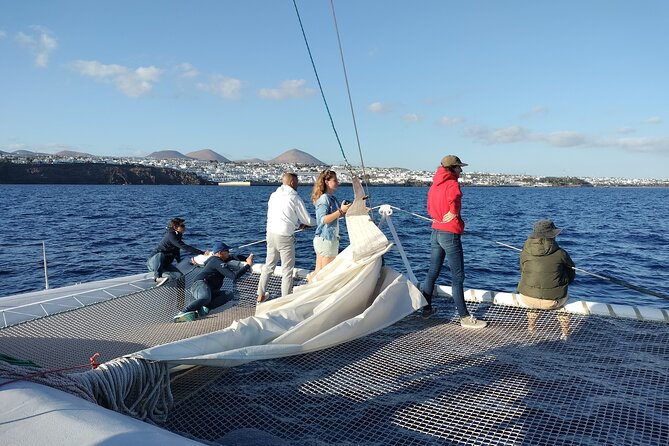
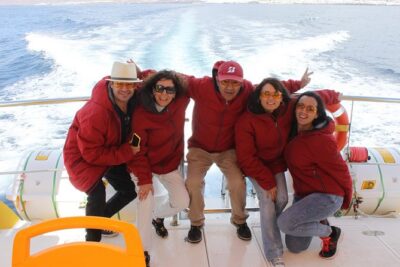
The small group should also make the boat feel less crowded. With only 12 people, you can spread out and enjoy the views without being packed shoulder to shoulder. A catamaran offers a broad platform for taking in the sea, though the exact seating and viewing layout is not specified.
The breeze is part of the experience. On a sunny morning, it should make the ride pleasant. When clouds move over the sun, it can turn cool quickly. Wear layers rather than assuming Lanzarote’s land temperature tells you what the boat will feel like.
This is a sailing and wildlife outing, not a luxury cruise. The value comes from the quiet vessel, small group, marine focus, and chance to see animals in the wild. The snacks add comfort, but they are not the reason to pay the fare.
Why the conservation work matters
A portion of the ticket price supports marine conservation campaigns through the WeWhale Association. One named campaign is Save The Iberian Orca, which works toward protecting cetaceans.
That link gives the ticket a purpose beyond a morning on the water. You are supporting an operator connected with conservation work while taking part in wildlife watching. The experience also reinforces a useful principle: the animals are not there to perform, and responsible viewing may mean staying far away.
You should still judge the tour on the experience itself. A conservation donation does not guarantee a sighting, a hydrophone session, or a close approach. At the same time, it is fair to include the conservation work when comparing this trip with a larger, more conventional boat excursion.
The strongest aspect is the combination of low-noise sailing and a clear effort not to chase wildlife. If those choices matter to you, they add real value.
Is $114.65 a fair price?
At $114.65 per person, this is not a cheap half-day boat ride. The price asks you to value more than the possibility of spotting a whale.
You are paying for roughly three to four hours on a 14-meter catamaran, a maximum group of 12, snacks and drinks, an emission-free operating approach, and the chance to use a hydrophone when conditions allow. Part of the fare also supports WeWhale Association conservation campaigns.
The price feels easier to justify if you want a quiet, small-group experience with a strong environmental focus. It is harder to justify if your only goal is to see a whale or dolphin at close range. No wildlife trip can promise that result, and one sighting may be distant or very brief.
The small capacity is especially important for the price comparison. A cheaper cruise with a much larger group may offer less room and a less personal experience. On this boat, the 12-person limit is a meaningful benefit rather than a marketing detail.
Book this as a nature experience, not a guaranteed wildlife photograph. That mindset gives you a better chance of appreciating the sailing, the search, and the responsible limits placed on the encounter.
Who will enjoy this Lanzarote outing?
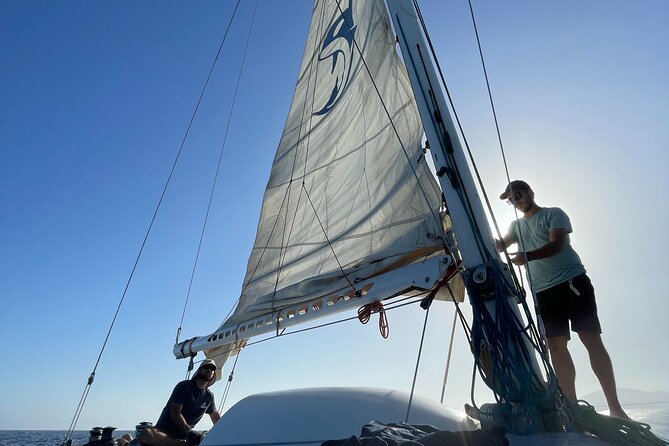
I would recommend it most to people who care about marine conservation and want a quieter way to look for wildlife. Couples, solo visitors, and small groups may appreciate the limited capacity and the slower pace.
It also suits anyone curious about how whales and dolphins sound underwater. Just remember that the hydrophone is conditional, so you may not hear it used.
The trip may be less suitable if you need a guaranteed sighting, dislike open-water uncertainty, or want a packed schedule of stops. There is no list of coastal attractions to tick off. You sail out, search, watch, listen when possible, and return to Puerto Calero.
Most people can participate, and service animals are allowed. The activity is offered in English. Since the boat is at sea for several hours, take the possibility of wind and cooler conditions seriously, especially if you tend to feel cold.
Practical booking details for Puerto Calero
The activity starts at 9:00 am at WeWhale Lanzarote, C. Pantalanes, 35571 Puerto Calero, Las Palmas, Spain. It ends back at the same meeting point.
Confirmation is provided when you book, and the maximum group size is 12. The experience requires good weather. If poor conditions force a cancellation, you can choose another date or receive a full refund.
You can cancel for a full refund up to 24 hours before the start time. Changes or cancellations made less than 24 hours before departure are not accepted for a refund, and the cut-off follows local time.
This tour is often booked well ahead, with an average booking time of about 19 days before departure. That does not mean every date sells out, but it is a useful warning if you are visiting Lanzarote during a busy period. The small boat has limited places, so I would not leave it until the last morning.
Should you book this whale and dolphin trip?
Book it if you want a small-group, low-noise wildlife outing and are comfortable with nature setting the schedule. The silent catamaran, conservation connection, snacks, and possible hydrophone session make it more thoughtful than a simple sightseeing cruise.
Skip it if you need a close encounter or would be upset by seeing only a distant spout. The hydrophone is not guaranteed, and the boat will not chase animals that keep their distance.
My practical advice is to bring warm layers, ask about the binoculars as soon as you board, and clarify the hydrophone conditions with the crew. With those expectations in place, this is a solid choice for a quiet morning at sea and a responsible attempt to meet Lanzarote’s whales and dolphins.
FAQ
Where does the whale and dolphin tour begin?
It begins at WeWhale Lanzarote, C. Pantalanes, 35571 Puerto Calero, Las Palmas, Spain.
What time does the activity start?
The scheduled start time is 9:00 am.
How long does the catamaran trip last?
The trip lasts approximately three to four hours.
Where does the activity finish?
It finishes back at the meeting point in Puerto Calero.
How many people can join the tour?
The maximum group size is 12 people.
Is the catamaran silent and emission-free?
The catamaran is described as 100 percent silent and emission-free.
Is the hydrophone used on every departure?
No. It is generally used when whales or dolphins are nearby and vocal enough for the crew to offer an underwater listening opportunity.
Are snacks and drinks provided?
Yes. Snacks and refreshing drinks are offered during the trip.
Is the tour offered in English?
Yes. The activity is offered in English.
What happens if bad weather cancels the tour?
You can choose a different date or receive a full refund if poor weather causes the cancellation.
More Dolphin Watching Catamaran Cruises in Lanzarote
- Shell Island Snorkel and Dolphin Catamaran Cruise with Island Time
★ 5.0 · 4,362 reviews - Whale and Dolphin Watching Catamaran with Transfer and Buffet
★ 5.0 · 2,712 reviews - Funchal Bay: Dolphin & Whale Watch Luxury Catamaran Cruise
★ 4.2 · 2,684 reviews - Dolphin Catamaran Snorkel and Sail with Open Bar
★ 4.5 · 2,291 reviews
More Whale and Dolphin Watching Tours in Lanzarote
- From Funchal: Ecological Catamaran Dolphin Whale Watching
★ 4.5 · 8,204 reviews - Funchal: Dolphin and Whale Watching Catamaran Cruise
★ 4.5 · 5,697 reviews - Morro Jable: Dolphin & Whale Watching Cruise, Drinks & Swim
★ 4.1 · 4,158 reviews - From Ponta Delgada: Whale and Dolphin Watching Trip
★ 4.7 · 4,109 reviews
Just added around Lanzarote
- Marine Safari Dolphins in their natural habitat★ 4.5 · 2 reviews
- Lobos Island – The dolphin route★ 4.0 · 76 reviews
- Dolphin Mini Cruise at Playa del Carmen★ 3.5 · 111 reviews
- Dolphin Watching Mini Cruise and Snorkeling from Lanzarote★ 4.0 · 72 reviews
- Dolphin Watching Cruise to Lobos Island★ 3.5 · 14 reviews
- Lanzarote: Whale and Dolphin Watching Eco-Friendly Catamaran★ 4.7 · 88 reviews
- Lanzarote: Dolphin Watching by speedboat★ 4.4 · 73 reviews
- Lanzarote Sunset Experience with dolphin spotting★ 4.6 · 45 reviews
Lanzarote Dolphin Tours, compared.
Lanzarote: Dolphin-Watching Sunset Cruise with Transfers
Read our review →
Puerto del Carmen: Dolphin-Watching Speedboat Tour with Swim
Read our review →
Lanzarote: 2.5-Hour Sunset and Dolphins Cruise
Read our review →
Lanzarote: Lobos Island Half-Day Dolphin Watching Trip
Read our review →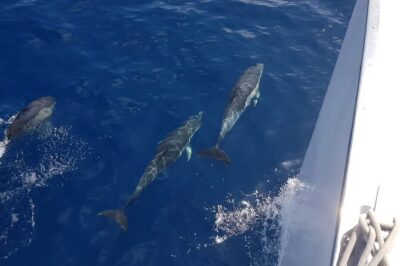
Small Group Dolphin Sunset Tour on Electric Catamaran Lanzarote
Read our review →