
REVIEW · LISBON
Lisbon: Dolphin Watching with a Marine Biologist – Ocean Safari
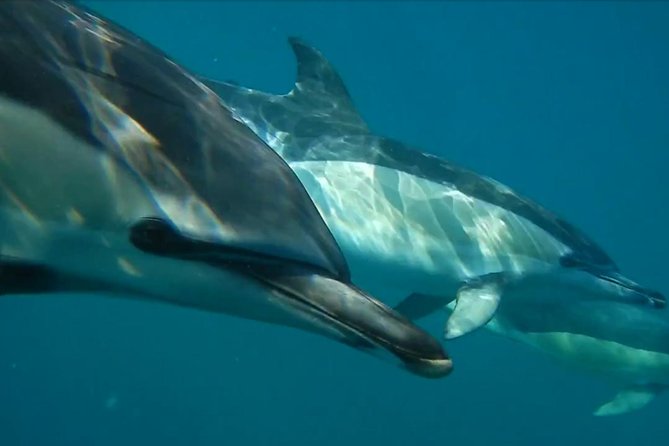
Seeing dolphins in the wild is the main event, but the fast RIB ride is part of the fun. You leave Lisbon under the 25th of April Bridge, pass Belem’s landmarks, and head toward the open Atlantic with a marine biologist explaining what to watch for. I like the small-boat setting and the chance to see more than dolphins, including sunfish, seabirds, and, on rare days, whales or porpoises.
I also like the central departure point at Doca de Santo Amaro and the useful safety touches, such as life jackets, jockey seats, and motion-sickness pills if needed. The catch is simple: dolphins are wild animals, not scheduled performers. The company reports a sighting success rate of about 95 percent, but it gives no guarantee, and the ocean can be cold, windy, or rough.
Key points to know before you go
- A real Atlantic outing: The boat leaves the Tagus Estuary and reaches open water near Bugio Lighthouse.
- Marine biology on the move: Your guide explains dolphin behavior, habitats, and ways to spot wildlife.
- An 8.5-meter RIB: The boat is quick and lively, with jockey seats that keep everyone facing the water.
- Good odds, no promise: Dolphin sightings are reported at around 95 percent, but nature can change the plan.
- Bring warm layers: Wind on the river and ocean feels colder than Lisbon’s streets.
- Central Lisbon meeting point: Start and finish at SeaEO Tours, Doca de Santo Amaro, beneath the 25th of April Bridge.
Why this Lisbon dolphin trip feels different
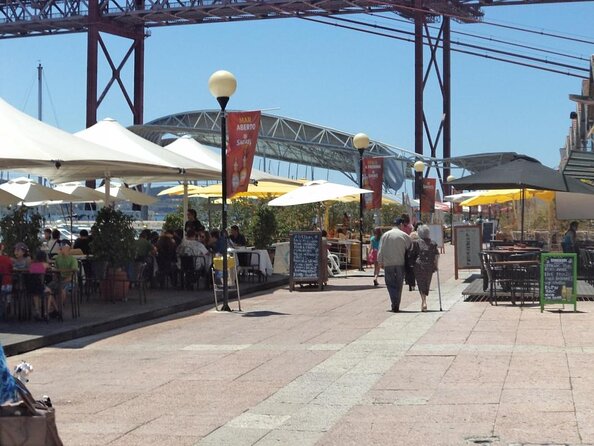
Many boat outings around Lisbon focus on monuments. This one uses the city as a starting point, then leaves the familiar waterfront behind. You begin in the Tagus, pass the grand waterfront sights, and continue toward the Atlantic in search of living wildlife.
That change of pace matters. You may begin by looking at Belem Tower, then spend the next hour watching the surface for a dorsal fin or a flash of silver beside the boat. The trip gives you both a city view and a genuine nature experience, without requiring a full-day excursion outside Lisbon.
The marine biologist is not just there to point and shout when dolphins appear. The guide explains how to look for movement, how pods behave, and why dolphins gather in particular areas. The information makes the waiting worthwhile, especially if the animals take time to find.
The crew has also been praised for being friendly, calm, and alert to safety. Names that come up from the operating team include Sid, Sarah, and Bart. You may not meet all of them, but the experience is built around a two-person crew, usually a skipper and a marine guide.
More Dolphin Trips with a Marine Biologist in Portugal:
- Portimão: Benagil Caves & Dolphins Watching with Biologist
★ 4.8 · 3,795 reviews - Lagos: Combo Dolphin and Benagil Tour with Marine Biologist
★ 4.7 · 2,352 reviews - Lisbon: Dolphin Watching with Marine Biologist
★ 4.9 · 1,853 reviews
From Doca de Santo Amaro under the 25th of April Bridge
The meeting point is at SeaEO Tours, Doca de Santo Amaro Gate, Av. Brasília 3, in Alcântara. The dock sits below the 25th of April Bridge, a useful landmark in a part of Lisbon that is easy to reach by public transport.
Arrive early. The company allows only five minutes of tolerance after the scheduled departure time, and the boat cannot wait long for late arrivals. Your activity ends at the same dock, so you do not need to arrange a separate return transfer.
The boat is an 8.5-meter RIB, or rigid inflatable boat. Unlike a large sightseeing vessel, it sits close to the water and responds quickly to the waves. That gives you a more direct sense of the river and sea, but it also means the ride can be bouncy.
You sit on comfortable jockey seats, straddling them much like a motorcycle seat. You can stand when the crew says it is safe and when wildlife appears, but much of the ride is seated. Wear trousers or shorts rather than a skirt, and choose shoes that feel secure.
The official maximum is 24 people. Some departures are smaller, and the compact design means there is no traditional front row that blocks everyone behind it. Still, do not expect the spacious deck of a sightseeing boat. This is an active boat ride, not a floating café.
Passing Belem Tower and the Tagus waterfront
The first part of the route gives you a moving view of Lisbon’s waterfront. Depending on the departure conditions and wildlife activity, the boat may pass Belem Tower and the Discovery Monument while the guide adds historical commentary.
This is a useful bonus rather than the main reason to book. You will not have time to explore the monuments, take a long set of photographs, or linger beside each one. The attraction is seeing them from the water before the city recedes behind you.
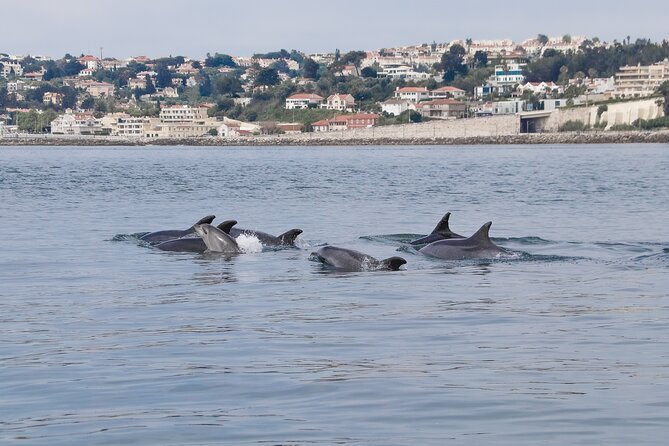
The Tagus Estuary can also be the first place you see dolphins. Some outings have found a pod within the first 10 to 15 minutes, including mothers with young calves. Other trips require more searching. That contrast is worth understanding: the route is not simply a straight run to the ocean, because the crew follows the animals and the conditions.
Fog can occur on the river, and it may clear as the boat reaches the Atlantic. The guide will adjust the search based on visibility, wind, waves, and signs of wildlife. You may also see sea birds working the water, which can help point toward fish and feeding activity.
Farol do Bugio and the edge of the Atlantic
Farol do Bugio is the lighthouse at the mouth of the Tagus. Reaching this area marks the shift from a Lisbon river trip to an Atlantic wildlife outing.
The lighthouse is a natural turning point in the route. Beyond it, the water can feel more exposed, and the RIB’s speed becomes more noticeable. You may bounce over waves as the skipper covers ground in search of pods. For some people, this is the best part of the tour. For others, it is the part that requires the most preparation.
The sea can be cold even on a sunny day. Bring a warm jumper or jacket, and remember that the wind created by the boat’s movement adds to the chill. The crew has lent jackets to people who arrived without enough clothing, but I would treat that as a safety net, not a packing plan.
Conditions can also change the route. One outing may reach open water and find dolphins quickly. Another may stay nearer the river or turn back earlier because the ocean is too rough. The boat ride can still be enjoyable, but anyone expecting a calm cruise should choose carefully.
More Safaris in Portugal:
- Dolphin Safari and Cave Tour in Vilamoura
★ 4.1 · 342 reviews - Sealife Sea Safari, Dolphin Watching with Marine Biologist’s Lagos
★ 5.0 · 313 reviews - Safari & Boat Tour – Mountains & Dolphins
★ 4.5 · 85 reviews - Nazaré: Dolphin Safari
★ 4.7 · 48 reviews
What you might see beyond dolphins
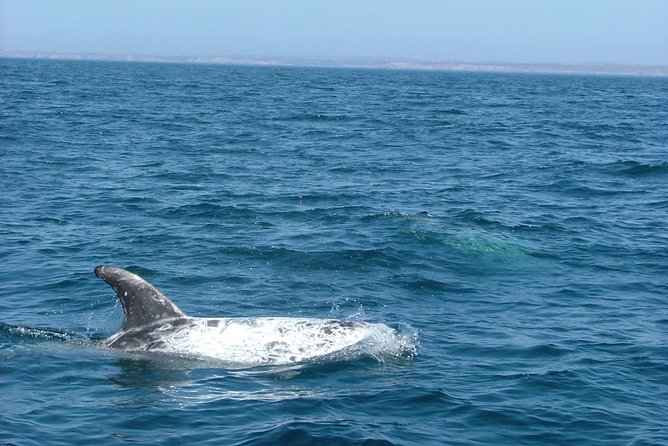
Dolphins are the focus, and the sighting rate is given as about 95 percent. That is a strong reason to consider the trip, but it is not a promise. The company specifically says it cannot be held responsible if no dolphins appear.
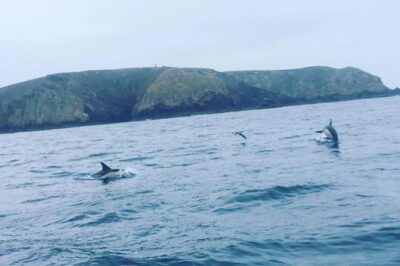
When dolphins do show up, the experience can vary widely. You might see common dolphins traveling in a fast pod, bottlenose dolphins moving closer to the boat, or several groups spread across the water. Some have swum beside the RIB, under it, or directly into the bow wave.
Young dolphins have been seen with their mothers. Pods can number only a few animals or dozens. On especially active days, large groups have been spotted feeding near seabirds. The marine biologist can help you notice behavior that would be easy to miss if you were simply scanning the horizon.
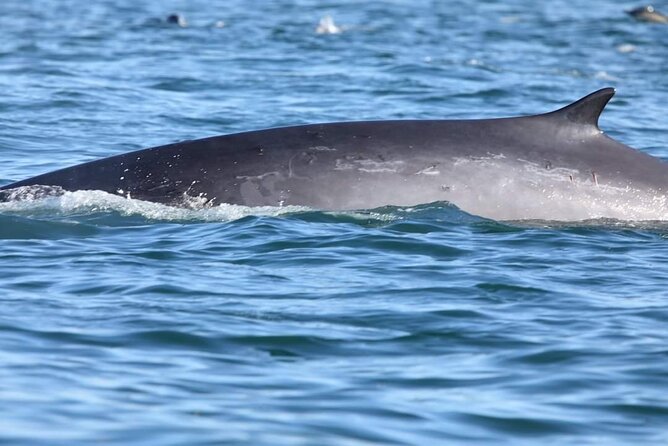
Dolphins are not the only possible wildlife. The trip has produced sightings of sunfish, harbour porpoises, sharks, and fin whales. These are occasional encounters, not promised features, so consider them lucky additions rather than part of the standard package.
The bird activity can be memorable on its own. When birds plunge into the sea, they may be following fish near the surface. A feeding scene can bring several kinds of wildlife together, giving you a better sense of the Atlantic food chain than a quick dolphin pass would.
The ride itself is part of the attraction
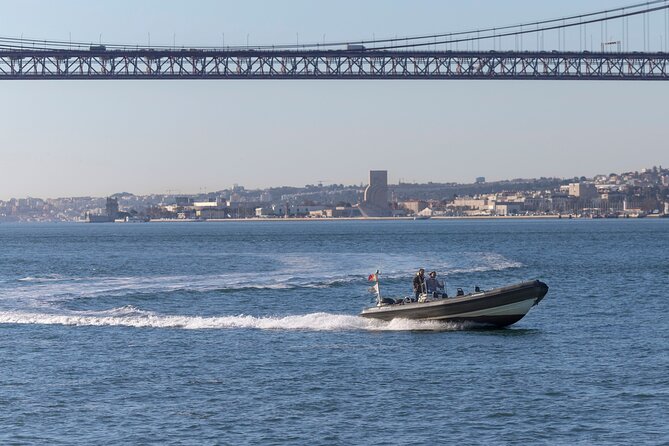
I would not book this activity only if you want a quiet boat tour. The RIB is fast, and the crew may cover a broad area while searching. You can expect spray, wind, turns, and movement over waves.
That physical element is a major strength for the right person. The ride feels more like a short sea expedition than a sightseeing transfer. You are not watching the Atlantic through a large window. You are outside in the air, close to the water, with the boat’s motion under you.
It is also the main drawback for anyone prone to seasickness. The company recommends avoiding a milk or yogurt-based breakfast, eating properly, and including bread and an apple. Motion-sickness pills are available if necessary, though you should follow the crew’s advice and your own medical needs.
The jockey seats help you stay secure, but they do not make the ocean flat. If you have back, neck, balance, or mobility concerns, ask the operator before booking. Most people can participate, service animals are allowed, and the activity is not suitable for babies under five.
A three-hour schedule with room for nature
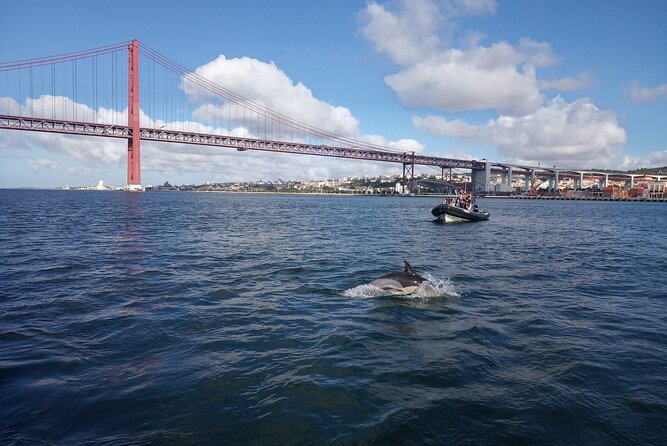
The advertised duration is about three hours. That includes boarding, leaving the dock, passing through the Tagus, searching near the river mouth and Atlantic, and returning to Doca de Santo Amaro.
Wildlife timing is never exact. You might find dolphins almost at once, then spend time watching a pod. On another trip, the crew may need to search longer. One account describes the team staying out longer while working through difficult conditions, but you should not treat an extended trip as guaranteed.
The guide may pause the boat so you can watch animals without the engine dominating the moment. You are generally seated, but you can stand to view wildlife when instructed. Keep your camera ready, since dolphins can appear and vanish in seconds.
Photography is not included as a service, so bring your own camera or phone if you want pictures. A waterproof case is sensible, though the supplied information does not promise dry storage. I would also avoid relying on a long telephoto lens. The boat moves, the animals move, and the best moments often happen close to the bow.
Is $62.88 a fair price?
At $62.88 per person, this is not the cheapest way to look at Lisbon from the water. You are paying for a three-hour outing, a skipper and marine biologist, safety equipment, insurance, and a small RIB that can travel beyond the usual city sightseeing route.
The value improves if you care about wild animals and want an active outing rather than a standard monument cruise. The guide’s explanations add purpose to the search, and the chance to see several dolphin species, seabirds, or other marine life gives the trip more depth than a simple ride along the waterfront.
The price is harder to justify if your main goal is a guaranteed close-up dolphin encounter. No operator can control wild animals, and this company makes that clear. You are buying a well-organized search with a high reported success rate, not a guaranteed performance.
The mobile ticket and central meeting point also save time. Since the trip begins and ends in Lisbon, you do not need to spend most of a day reaching a distant marina. For a three-hour slot, the cost can fit neatly into a busy city itinerary.
What to wear and bring
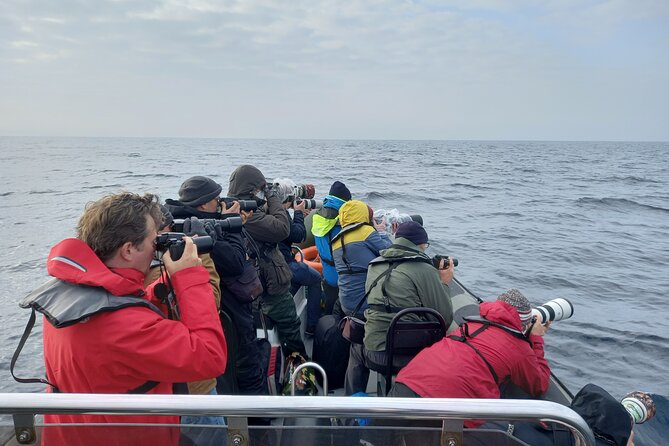
The most important item is a warm jacket. Even if Lisbon feels mild on land, the wind across the Tagus and Atlantic can be sharp. Closed, secure shoes are a good choice, and comfortable trousers or shorts work better than skirts on the jockey seats.
Bring a camera if you want photographs, but protect it from spray. You receive a life jacket and a seat on the boat. Public liability insurance, all fees and taxes, and a marine biologist guide are included.
The company can provide a motion-sickness pill if necessary. If you are concerned about nausea, eat a proper meal with bread and an apple, and avoid a breakfast based on milk or yogurt according to the operator’s advice.
The crew may have spare jackets, but I would not count on a perfect fit or unlimited supply. Dress for the ocean, not for the pavement outside your hotel.
Who should book this Atlantic safari?
This is a strong choice for couples, families with children over five, and anyone who enjoys a little speed with their wildlife. It can work well for mixed-age groups because the boat ride, city views, and animal search offer different kinds of interest.
It is especially good for people who want a guide with a scientific focus. You will get more from the trip if you care about dolphin behavior, feeding patterns, habitats, and the wider sea life around Lisbon.
I would think twice if you want a calm cruise, have serious motion-sickness concerns, or need a fully predictable schedule. The boat is small, the ride can be rough, and poor weather may force a cancellation or change of date.
Free cancellation is available up to 24 hours before departure. Cancellations made inside that window are not refunded, and changes are not accepted. If bad weather cancels the trip, you can receive a different date or a full refund. The same applies if the minimum number of participants is not met.
Should you book the SeaEO dolphin tour?
I would book it if you want a lively three-hour outing that combines Lisbon’s waterfront with a real search for marine life. The strongest reasons are the marine biologist’s commentary, the direct feel of the 8.5-meter RIB, and the high chance of seeing dolphins without leaving the city for a full day.
Go prepared for cold wind, a bumpy ride, and the possibility that nature does not cooperate. If you bring warm clothes, arrive early, eat with seasickness in mind, and accept that the sightings cannot be guaranteed, the $62.88 price offers good value for an active Lisbon experience.
FAQ
Where does the dolphin tour depart from?
The tour starts at SeaEO Tours, Doca de Santo Amaro Gate, Av. Brasília 3, 1350-353 Lisboa, Portugal. The dock is in Alcântara, beneath the 25th of April Bridge.
Where does the tour end?
The activity ends back at the same meeting point at Doca de Santo Amaro.
How long does the dolphin tour last?
The tour lasts approximately three hours.
What kind of boat is used?
SeaEO uses a fast, safe RIB measuring about 8.5 meters. The boat has jockey seats, and passengers can stand when permitted by the crew.
How many people can join the tour?
The activity has a maximum capacity of 24 travelers.
Are dolphins guaranteed?
No. The operator reports a sighting success rate of around 95 percent but cannot guarantee that you will see dolphins.
What wildlife might I see?
Possible sightings include common dolphins, bottlenose dolphins, seabirds, sunfish, harbour porpoises, sharks, and fin whales. These encounters are not guaranteed.
Is the tour suitable for young children?
The tour is not suitable for babies under five years old. Most other people can participate, subject to the operator’s stated conditions.
What happens if the weather is too poor for the trip?
If poor weather cancels the activity, you will be offered a different date or a full refund.
Just added around Portugal
- X Plorer – Caves (Benagil) & Dolphins Cruise★ 4.5 · 116 reviews
- Vilamoura: Boat Tour Dolphin Quest & Marine Life Search★ 4.9 · 71 reviews
- Azores: Swim with Dolphins Atlantic Experience★ 4.4 · 29 reviews
- Dolphin Watching and Cave Tour from Vilamoura★ 4.0 · 63 reviews
- Vilamoura Tour to Benagil and the Dolphins★ 4.0 · 14 reviews
- Dolphin Quest & Marine Life Search★ 5.0 · 90 reviews
- Terceira Island: Swimming with Wild Dolphins | Natural Habitat★ 5.0 · 17 reviews
- Terceira Island: Whale & Dolphin Watching | Best Wildlife Tour★ 4.0 · 24 reviews
Lisbon Dolphin Tours, compared.

Lisbon: Tagus River Cruise to the Ocean & Dolphin Watching
Read our review →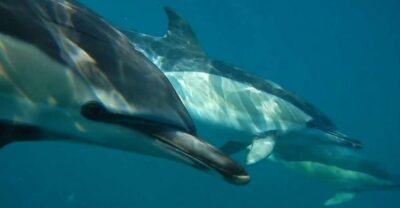
Lisbon: Dolphin Watching with Marine Biologist
Read our review →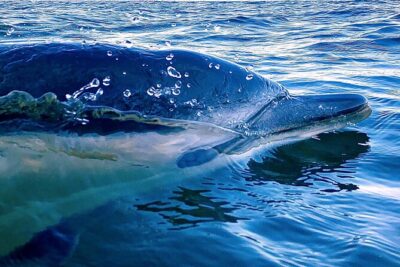
Lisbon: Dolphin Watching with Marine Biologist – Small Group
Read our review →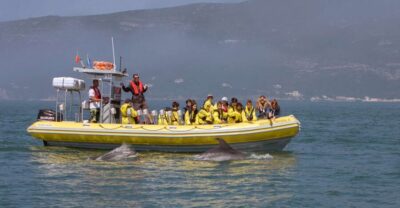
Lisbon: Arrábida Natural Park Dolphin Watching Boat Tour
Read our review →Lisbon: Dolphin Watching with Marine Biologist – Small Group
Read our review →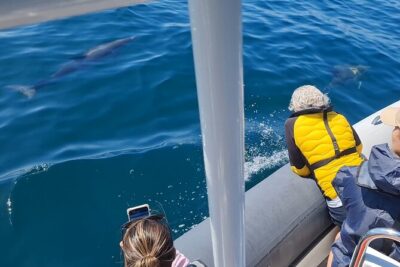
Meet the Lisbon Dolphins – Dolphin Watching in Lisbon
Read our review →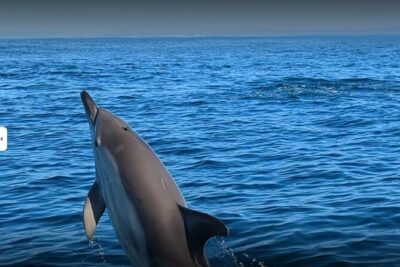
Browse the lists this tour appears in