
REVIEW · LAGOS
Sealife Sea Safari, Dolphin Watching with Marine Biologist’s Lagos
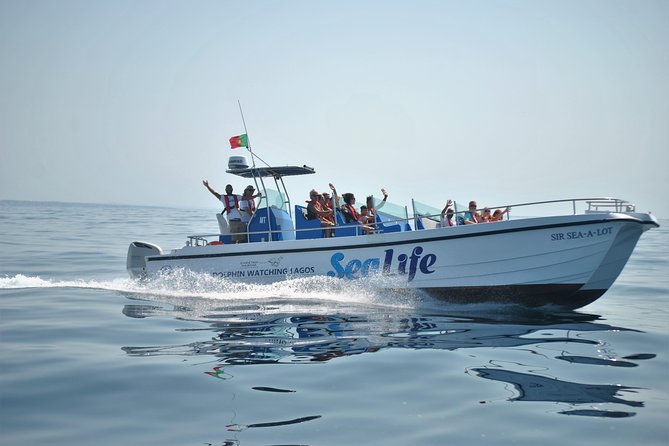
Seeing a pod of wild dolphins race beside a boat is the main draw here, but the best part is the way the crew handles the encounter. The captain may cut the engine and wait for the animals to approach, rather than chasing them around the Atlantic. Common and bottlenose dolphins are the usual stars, though whales and turtles have also appeared.
I like the marine biologists on every trip, since you get more than a quick wildlife sighting. I also like the small-group setup and the choice of speedy rigid inflatables or a catamaran. The catch is simple: these are wild animals, so you may spend time searching or see dolphins only at a distance.
Key points before you book
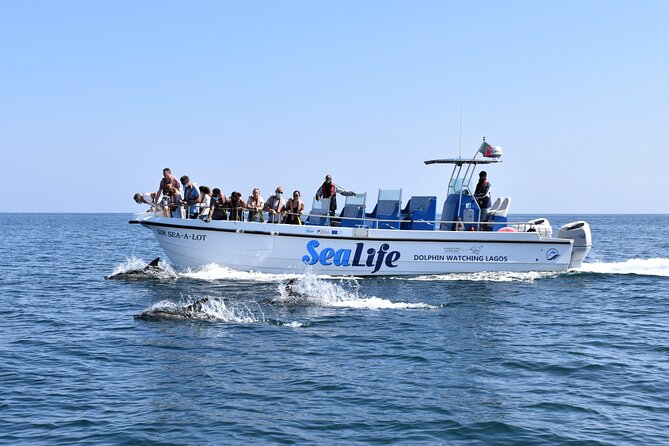
- Certified marine biologists lead every trip, with Daniela and Mafalma among the guides praised for clear explanations and warm attention.
- Dolphins are watched in the wild, not fed or trained, and the boat may stop its engine to let them choose the distance.
- The 90-minute trip can be lively, especially in a rigid inflatable boat or on a windy day.
- Sightings can be varied, from common and bottlenose dolphins to calves, loggerhead turtles, and even a minke whale.
- Groups are capped at 20 people, though some departures may be much smaller.
- Bring a jacket outside summer, since the open Atlantic can feel cool even when Lagos is warm.
Leaving Lagos Marina for the Atlantic
You meet at Sealife Dolphin Watching, Marina de Lagos, Loja 10. The marina is near public transportation, and the trip begins and ends at the same spot, which makes it easy to fit into a day of exploring Lagos.
The boats leave the calm water of the marina and head toward the open Atlantic. This transition matters. You are not being taken to a fixed dolphin pen or a controlled viewing area. The crew must search for animals that are moving through a large stretch of sea, and the route changes according to conditions and sightings.
That unpredictability is part of the bargain. A dolphin trip is not a sightseeing bus with a guaranteed stop. Some departures reach a pod quickly. Others require a longer search before the crew finds anything worth watching. The guides keep looking and use their experience to judge where wildlife may be active.
The advertised trip lasts about 1 hour and 30 minutes. That is long enough to allow time for the outward run, the search, a wildlife encounter, and the return to Lagos. If the animals are nearby, you may spend a useful stretch of time watching them instead of constantly moving from one spot to another.
More Dolphin Trips with a Marine Biologist in Portugal:
- Portimão: Benagil Caves & Dolphins Watching with Biologist
★ 4.8 · 3,795 reviews - Lagos: Combo Dolphin and Benagil Tour with Marine Biologist
★ 4.7 · 2,352 reviews - Lisbon: Dolphin Watching with Marine Biologist
★ 4.9 · 1,853 reviews
Choosing between the three boats
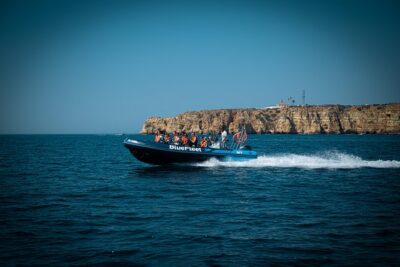
Sealife uses several boats, and each creates a slightly different ride. The rigid inflatable boats, named Lord of Dolphins and Prince of Whales, are designed for speed and give the outing a lively feel. The catamaran, Sir Sea-a-Lot, offers more room while still moving quickly.
A fast boat helps the crew cover more water during a short trip. It also makes the ride part of the experience. Several people describe the run across the waves as exciting, while others found the water choppy but still comfortable.
That said, an open boat is exposed to wind and spray. On a windy day, people at the front may get misted. On cooler days, especially outside the high season, you will want a jacket or jumper. The same Atlantic air that feels refreshing beside the marina can feel cold once the boat is moving at speed.
The boat choice may depend on the departure schedule and group size, so do not assume you can select a particular vessel. If you are sensitive to motion, prepare for a brisk ride and changing sea conditions. The trip is not described as a quiet cruise.
The search for dolphins
Once the boat reaches open water, the crew begins the real work. You may scan the surface for fins, splashes, or a sudden burst of movement. The marine biologist provides information during the search, which gives the time a purpose even before the first sighting.
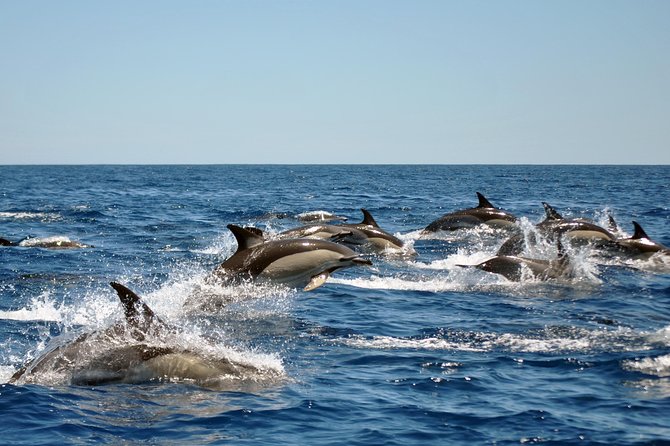
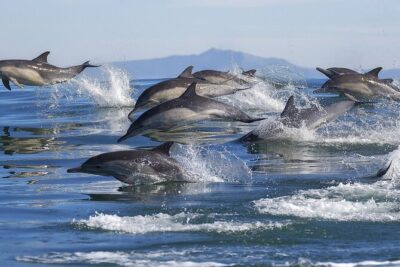
The dolphins recorded on these trips include common dolphins and bottlenose dolphins. Group sizes can vary widely. You might see a small pod, around a dozen animals, or a much larger group of 30 or more. One sighting involved roughly 100 dolphins, while another included several pods moving through the area.
You may also see young animals. Calves have been spotted with adults, including a mother and newborn and groups with two babies. These moments are especially moving, but they also underline why the crew needs to act carefully. A pod with young animals may react differently from a group traveling quickly through open water.
Other possible sightings have included a loggerhead turtle and a minke whale. Those animals are not promised, and dolphin sightings themselves are not guaranteed. Your best reason to book is the chance to watch marine wildlife in its own setting, not the expectation of a particular species or number.
Watching wildlife without chasing it
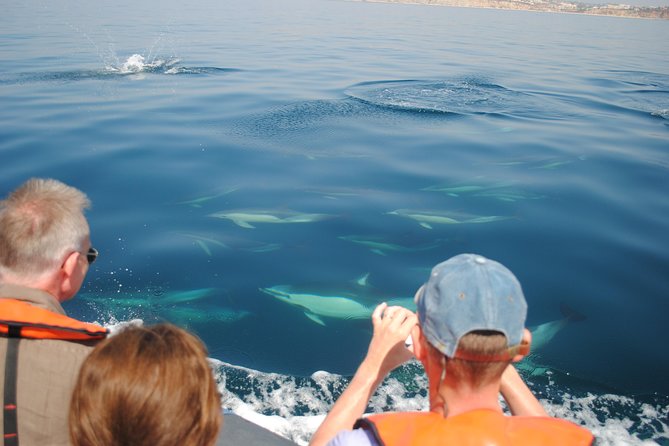
The strongest part of the experience is the viewing method. When dolphins are found, the boat does not need to keep forcing its way toward them. The captain may turn off the engine and allow the animals to decide whether to approach.
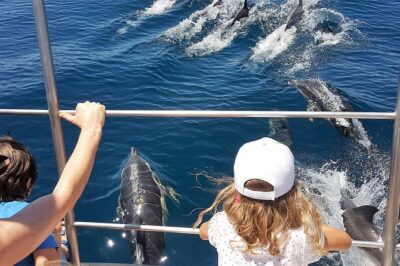
That can produce remarkably close moments. Dolphins have swum beside the hull, circled the boat, passed underneath it, and joined a group already nearby. Some pods have stayed around for half an hour, giving you time to watch their movement rather than grabbing one quick glimpse before heading away.
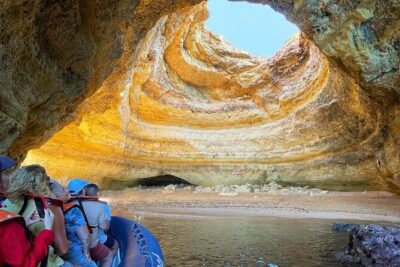
The animals remain free to leave. If they are uninterested, the boat may only see them at a distance. One outing ended with a few distant sightings, followed by a scenic look near the Lagos grottos on the way back. That is not a failure of the crew. It is the honest result of watching wild animals.
I appreciate this approach because it keeps the encounter on the animals’ terms. The trip is not about making dolphins perform. You may see them leap, play, or swim under the boat, but those actions are natural behavior rather than something produced with food or training.
More Safaris in Portugal:
- Lisbon: Dolphin Watching with a Marine Biologist – Ocean Safari
★ 5.0 · 812 reviews - Dolphin Safari and Cave Tour in Vilamoura
★ 4.1 · 342 reviews - Safari & Boat Tour – Mountains & Dolphins
★ 4.5 · 85 reviews - Nazaré: Dolphin Safari
★ 4.7 · 48 reviews
What the marine biologists add
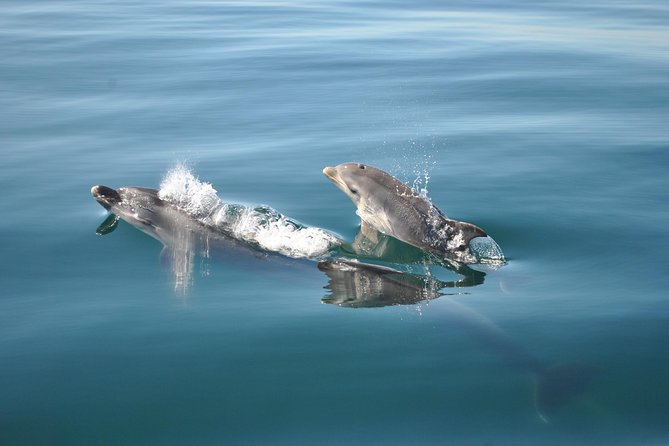
The guides are not there only to point at fins. They explain dolphin biology and behavior throughout the trip, answer questions, and help you understand what you are seeing.
You may hear about how dolphins sleep with one eye open, why different species behave differently, and how to identify common dolphins versus bottlenose dolphins. The exact talk will depend on the animals found and the questions asked, but the presence of a marine biologist gives the ride more substance than a simple speedboat outing.
Daniela is singled out for precise explanations, patience, and a friendly manner. Mafalma is also praised for helping the crew locate dolphins while keeping the animals’ welfare in mind. Another guide took extra time to explain things to a deaf passenger, a small but important sign that the crew can adjust its communication when needed.
The tour is offered in English. If you enjoy asking questions, stay engaged with the biologist rather than treating the trip as a photo stop. The scientific context is one of the main reasons this outing offers more value than a basic boat ride.
Group size, children, and comfort
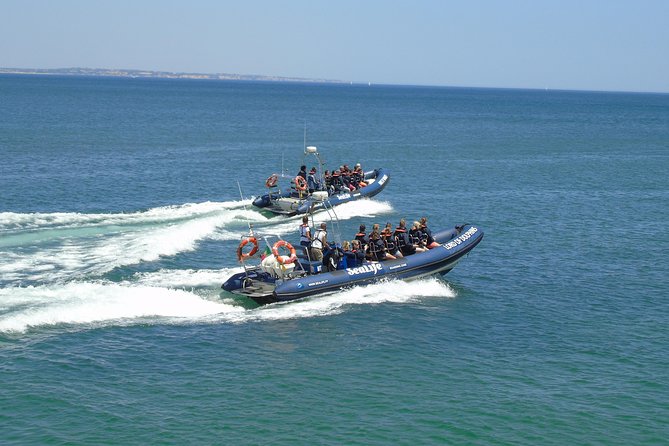
The maximum group size is 20 people. That is still a group outing, but it is far more manageable than a large sightseeing boat. A small group gives the guide more room to answer questions and makes it easier to see in several directions when dolphins appear.
Some departures may be much smaller. One outing had only four people, which made the boat feel almost private without the cost of hiring a private vessel. You cannot count on that number, but the 20-person limit keeps the experience from becoming unwieldy.
Children can take part, and the trip has worked well for children aged eight and ten. The crew is also described as helpful with young children during boarding. Still, remember that the ride can be fast and choppy. Families should be comfortable with an open-water boat trip before booking.
The boats are described as safe and comfortable, but comfort depends partly on the sea. Calm conditions can make the ride smooth and exciting. Rougher water can make it bumpier, even when the boat itself handles well. If you are prone to seasickness, this is worth considering.
Is $48.39 good value?
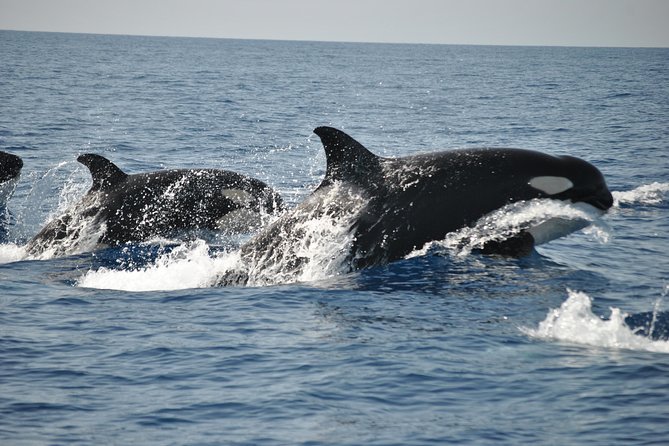
At $48.39 per person, the trip sits below the price of a private wildlife boat and avoids the feel of a crowded tourist cruise. You are paying for a 90-minute search, a fast boat, a trained guide, and the chance to see wildlife in the open sea.
The value is strongest when you care about how the animals are treated and want useful explanation along with the sighting. A close encounter with a pod of 20 or 30 dolphins can make the price feel modest, particularly when the crew lets the animals approach and spends time observing them.
The value is less certain if you need a guaranteed sighting or dislike open-water rides. A wild dolphin safari cannot promise a performance. You may spend much of the trip searching, and the animals may remain far from the boat. That risk is part of the cost of seeing wildlife honestly.
Compared with a private boat, the small maximum group and marine biologist on board offer a practical middle ground. You receive personal attention without paying for an exclusive vessel. Compared with a basic cruise, you get a more focused purpose and a crew trained to interpret what you see.
Practical advice for your departure
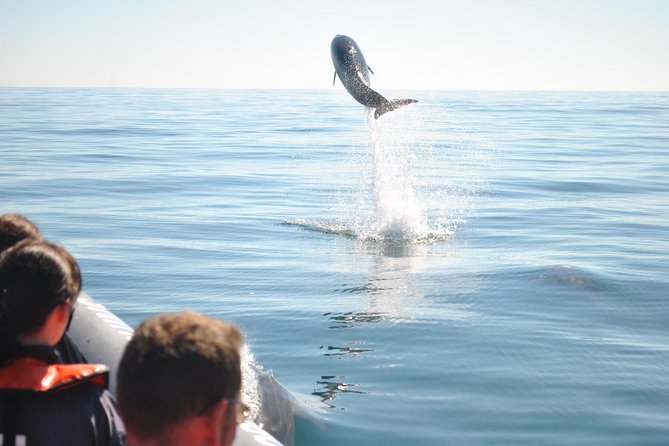
Book with the weather in mind. The trip requires suitable conditions, and poor weather can lead to a new date or a full refund. It also requires a minimum number of people, so a departure may be changed if that minimum is not reached.
Bring a jacket outside the high season, even if Lagos feels warm on land. Wind and spray can make the boat feel much cooler. On a windy day, the front may be more exposed to mist, while the open design means you should expect some contact with the elements.
Allow the full 90 minutes and avoid planning a tight connection immediately afterward. The boat returns to the Lagos Marina meeting point, but wildlife searches depend on conditions and the route taken.
The tour is offered in English, and confirmation is provided at booking. You can cancel for a full refund up to 24 hours before the start time. Changes or cancellations inside that 24-hour window are not accepted for a refund.
Who should book this dolphin safari?
I would choose this trip if you want wild animals, a small group, and a guide who can explain the biology behind the sighting. It suits families with older children, couples looking for an active outing, and anyone who prefers a responsible wildlife encounter to a staged animal show.
It is also a good fit if you enjoy boats as much as wildlife. The fast ride across the Atlantic is part of the fun, especially on the rigid inflatables or catamaran.
I would hesitate if you need a calm, dry, predictable excursion. The boat can be choppy, the weather can change, and the dolphins may not cooperate. You should book with curiosity rather than certainty.
Should you book Sealife Sea Safari?
Book it if you can accept the basic rule of wildlife watching: the crew can search well, but it cannot command the sea. The combination of certified marine biologists, a 20-person maximum, fast boats, and respectful viewing makes this a strong choice in Lagos.
The most memorable possibility is not simply seeing dolphins. It is watching a pod choose to swim alongside the boat, circle underneath, or approach after the engine is switched off. Add the chance of calves, turtles, or a whale, and you have a worthwhile Atlantic outing even when the sightings are brief.
If you go, bring a jacket, keep your expectations flexible, and listen to the guide. That is how you get the most from a short trip built around wild animals.
FAQ
Where does the dolphin tour begin?
The tour begins at Sealife Dolphin Watching, Marina de Lagos, Loja 10, 8600-315 Lagos, Portugal.
Where does the activity end?
The boat returns to the same meeting point at Lagos Marina.
How long does the trip last?
The experience lasts approximately 1 hour and 30 minutes.
How much does the tour cost?
The listed price is $48.39 per person.
What language is the tour offered in?
The tour is offered in English.
How many people can join the boat?
The maximum group size is 20 people.
Are marine biologists present on every trip?
Yes. Sealife states that certified marine biologists are on every trip.
What animals might I see?
Possible sightings include common dolphins, bottlenose dolphins, young dolphins, loggerhead turtles, and minke whales. Sightings are not guaranteed because the animals are wild.
What should I bring in cooler weather?
Bring a jacket or jumper outside the high season, since it can feel chilly on the Atlantic.
Can I cancel for a full refund?
Yes. You can cancel at least 24 hours before the start time for a full refund. Poor weather or failure to meet the minimum number of participants may also result in a new date or full refund.
Just added around Portugal
- X Plorer – Caves (Benagil) & Dolphins Cruise★ 4.5 · 116 reviews
- Vilamoura: Boat Tour Dolphin Quest & Marine Life Search★ 4.9 · 71 reviews
- Azores: Swim with Dolphins Atlantic Experience★ 4.4 · 29 reviews
- Dolphin Watching and Cave Tour from Vilamoura★ 4.0 · 63 reviews
- Vilamoura Tour to Benagil and the Dolphins★ 4.0 · 14 reviews
- Dolphin Quest & Marine Life Search★ 5.0 · 90 reviews
- Terceira Island: Swimming with Wild Dolphins | Natural Habitat★ 5.0 · 17 reviews
- Terceira Island: Whale & Dolphin Watching | Best Wildlife Tour★ 4.0 · 24 reviews
Lagos Dolphin Tours, compared.
Dolphin Watching from Lagos with Marine Biologists
Read our review →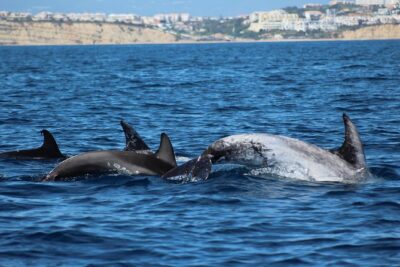
From Lagos: Dolphin Watching Cruise on a Catamaran
Read our review →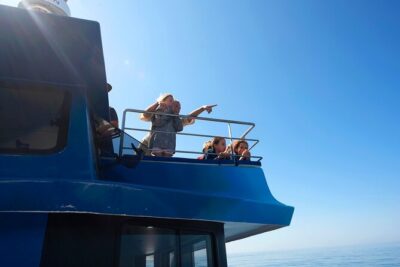
NEW Lagos-Watching Dolphins and Benagil Cave with Biologists
Read our review →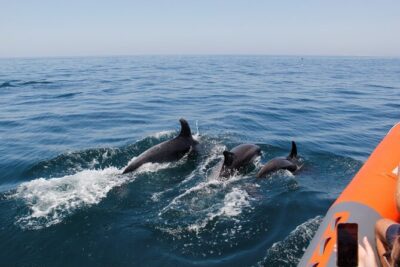
Benagil and Dolphin Watching Boat Tour with Marine Biologists
Read our review →Browse the lists this tour appears in